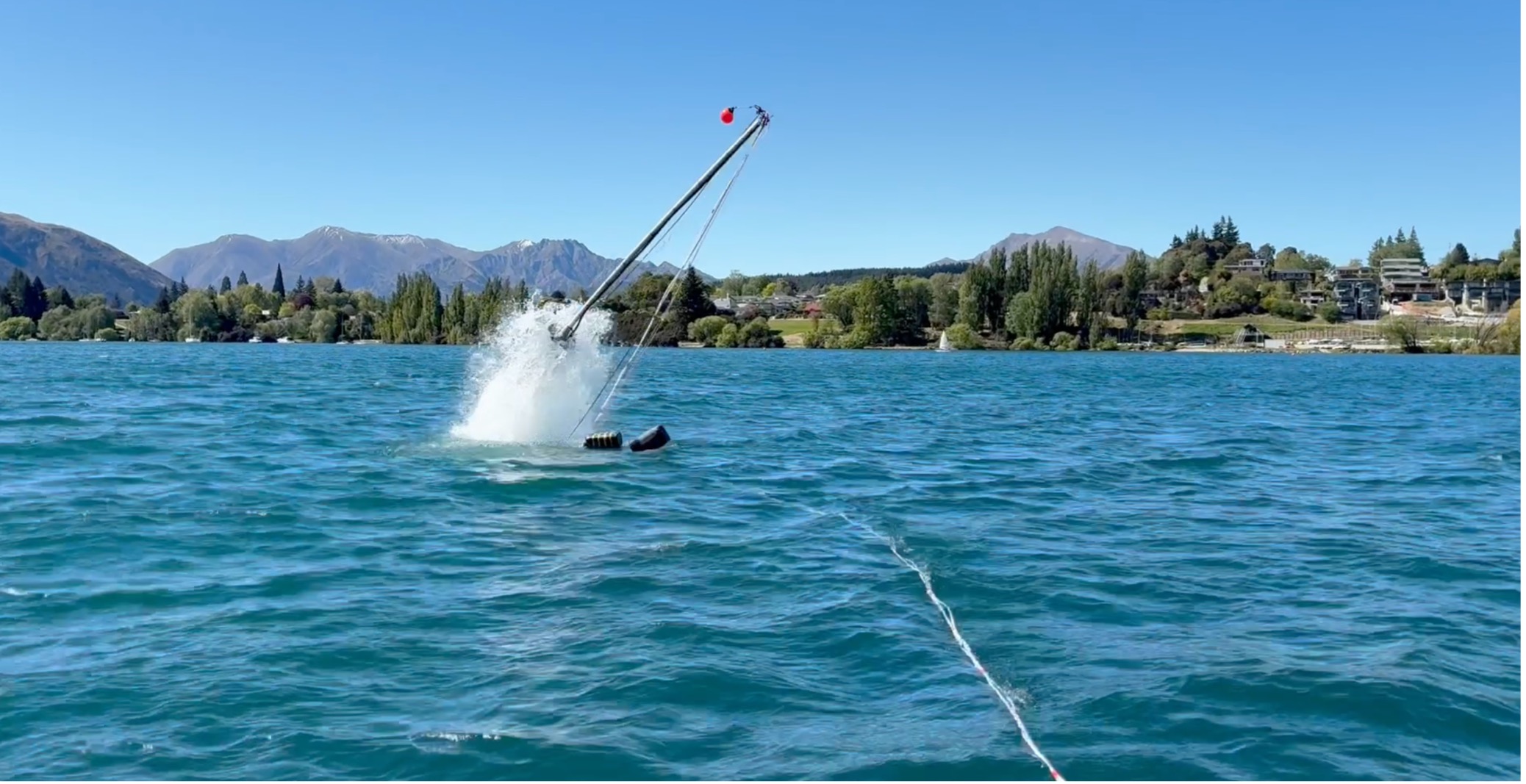
Findings of an independent study led by Lincoln University, were completed over the past year, co-funded by Otago Regional Council and the Ministry for Cities, Environment, Regions and Transport. These will be presented to Otago Regional Councillors at the 18 November Council meeting.
Senior Scientist – Lakes, Hugo Borges says the study analysed layers of sediments in core samples taken from the bed of the lake, dating back over 1,000 years. Scientists used biological, chemical, and physical indicators preserved in the lake’s sediments to understand the lake and surrounding environment over that period.
“By examining pollen, microscopic fossils, environmental DNA and detailed images of the sediment, we can see how the environment around Lake Wānaka has changed over time.”
Evidence from the cores reveal significant changes in catchment vegetation lake following Māori arrival about 700 years ago, and later changes from about 1850 with the arrival of European settlers.
The study also shows that the lake has changed over time. By analysing DNA and microscopic remains preserved in lake sediments, researchers found that the pace of change has increased over the past few decades. These changes were evident in both Roys Bay and Glendhu Bay and were seen across a wide range of organisms, including algae, bacteria and other aquatic life.
The study found clear signs of change in both bays. Roys Bay has changed noticeably since the 1980s, including an increase in lake snow, while Glendhu Bay has shown increasing change since about 2000, coinciding with more sediment entering the lake. These findings indicate that pressure on the lake has increased over recent decades.
Mr Borges says, “There are clear signs that the lake ecosystem has changed over time. We found major changes in the small organisms that are sensitive to environmental pressures such as increased sediment and nutrients entering the lake. This is consistent with increasing catchment pressures, but the specific factors driving this are less certain. We don’t know yet if the lake is changing gradually, whether these changes will continue, and how this will affect the lake, such as changes in clarity.”
“The study provides strong evidence that the lake has undergone change, which continues today. Lake Wānaka’s water quality is good and it’s classified as microtrophic, meaning it has very low nutrient concentrations and generally clear water.”
This study has given us a historic understanding of what’s happened in the lake and provides important context for the lake condition observed today.
Lake Wānaka is part of Otago Regional Council’s deep lake monitoring programme which provides near real time data on the lake’s water quality. This monitoring helps to identify any current trends or concerns with water quality.