The funding increase follows the Government's May Budget announcement of an additional $79 million for the National Wilding Conifer Control Programme, taking total Government funding for the programme to $109 million over three years.
Chair of Otago’s Wilding Regional Control Group, Cr Matt Hollyer welcomed the funding news saying, “This is a timely and significant increase in funding which will allow wilding control to ramp up across Otago. The three-year commitment gives us an opportunity to plan further ahead, build on the work already being done.”
“While ORC coordinates the national programme in Otago and manages the programme funding, we work with the Whakatipu Wilding Conifer Control Group, Central Otago Wilding Conifer Control Group and Upper Clutha Wilding Tree Group, as well as landowners, contractors and other partners and rely on their knowledge, relationships and practical experience. The additional funding, combined with this local knowhow, will be critical to continuing this work and protecting gains made.”
The funding is allocated across mapped management units where wilding conifer control is a national priority. Otago has 21 management units, 13 currently active under the National Programme.
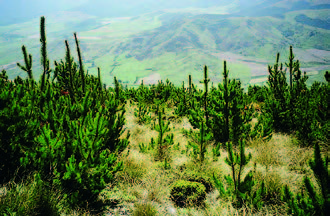
A new development is the activation of the Wānaka Management Unit, which will receive National Programme funding for control work for the first time. “Wānaka is an area where wilding conifers are still at an earlier stage of invasion, so this will be an opportunity to get on top of the problem before it becomes much more established and much more difficult and expensive to control,” says Cr Hollyer.
“There has already been a huge amount of work done by the Upper Clutha Wilding Tree Group, who have received funding from ORC, and Wai Wānaka, as well as landowners and the community. This funding provides an opportunity to build on that work and tackle the spread at a much greater scale.”
Building on years of control
The increased investment builds on many years of work by Otago's wilding conifer control groups, landowners, volunteers and contractors.
The Whakatipu (WCG) and Central (CWP) groups have been coordinating landscape-scale wilding conifer control since 2009 and 2013 respectively, working alongside landowners, communities, contractors and government agencies.
That sustained effort has delivered noteworthy results. The WCG successfully moved the Shotover Management Unit, covering around 66,700 hectares, into a maintenance-only phase in 2024 following many years of sustained control. The CWP has also made meaningful landscape-scale gains across Central Otago, including pioneering a successful Contorta Shelterbelt transition scheme in the Styx Valley.
Maintaining the gains
Wilding conifer control is not a one-off exercise. Following initial control, crews need to return to remove new seedlings and remaining seed-producing trees before they can re-establish infestations.
The national programme reports that around 75% of the known wilding conifer infestation in New Zealand has received at least one round of control. Much of the recent national control effort has focused on maintenance work to protect those gains.
Combined with contributions from landowners and community partners, ORC is anticipating around $6 million of wilding conifer control work across the Whakatipu, Central Otago and Upper Clutha areas.
Get in touch
Landowners and land managers in the Whakatipu, Central Otago and Upper Clutha areas who are experiencing wilding conifer spread are encouraged to contact ORC or their local wilding conifer control group.
The National Wilding Conifer Control Programme has also announced it will offer $1 million in contestable funding for wilding conifer control projects led by community and Iwi groups. Details of the funding and application process are still being developed, with a call for applications expected by the end of 2026.