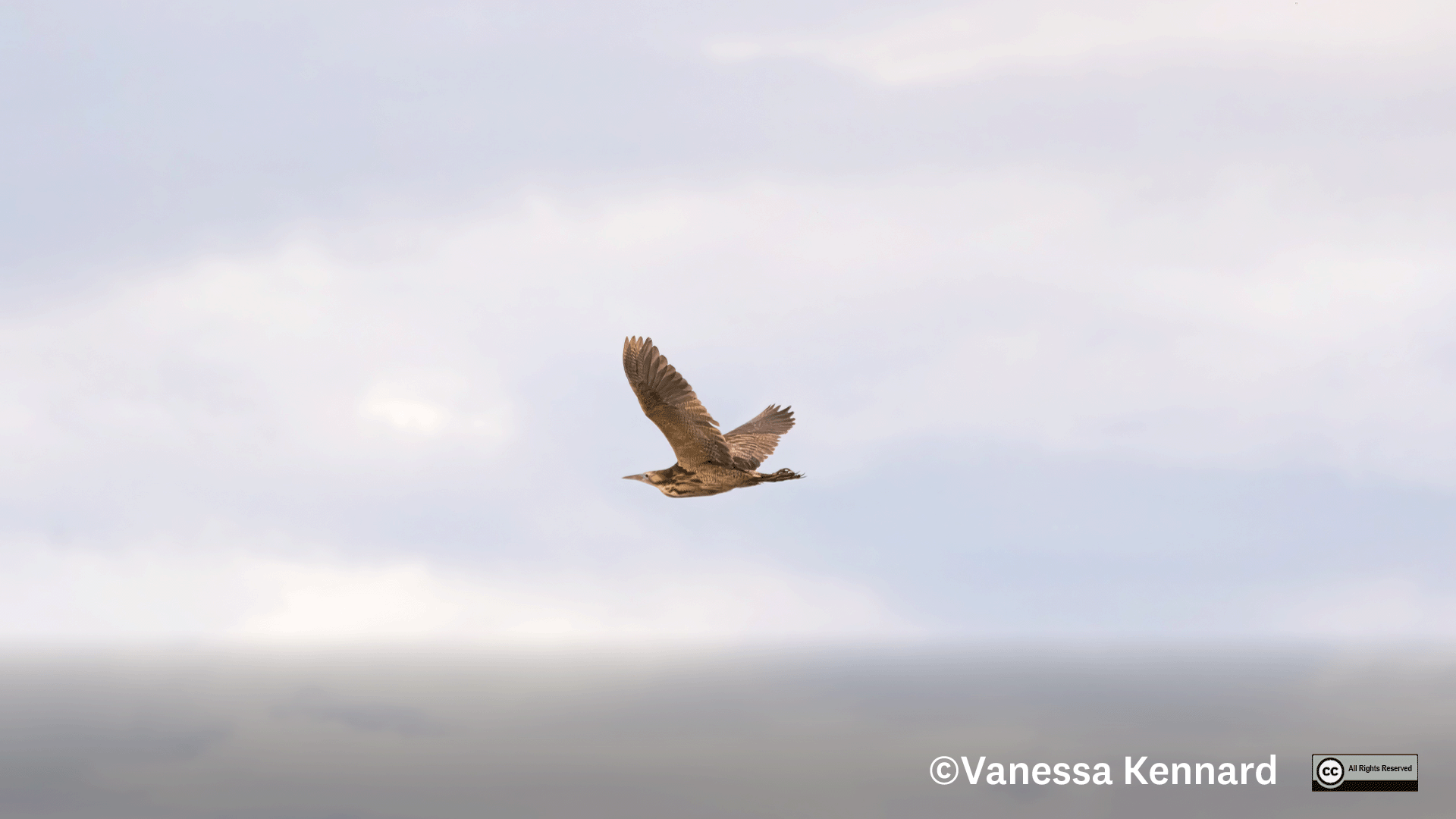
Funded by ORC and led by the Otago Branch of Birds New Zealand, the project is working to identify wetlands used by matuku-hūrepo across Otago. The information collected will improve understanding of where these highly mobile birds occur and help support their future management and conservation.
The project is also supported by the Department of Conservation – Te Papa Atawhai (DOC), Forest & Bird, Tiaki Maniototo, Te Nukuroa o Matamata, landowners, and community groups across Otago.
Now entering its final year, the five-year project has already recorded matuku-hūrepo in the Catlins, Coastal Otago, the Maniototo, Central Otago and the Whakatipu Basin.
ORC Terrestrial Ecologist, Dr Scott Jarvie, says the project has demonstrated the value of community-led monitoring in improving knowledge of matuku-hūrepo distribution across the region.
“Matuku-hūrepo are one of our most threatened wetland birds, and finding out where they are across Otago is an important first step towards understanding how we can better protect them.”
Birds New Zealand Regional Representative for Otago and Project Lead, Dawn Palmer, says the birds can be particularly difficult to detect because of their behaviour and appearance.
“Matuku-hūrepo are masters of disguise. Their streaky brown-and-cream plumage allows them to disappear among wetland vegetation, while their unusual ‘freeze’ pose can make them almost impossible to spot. When threatened, matuku-hūrepo may stand motionless with their bill pointed skyward, blending in with raupō and other wetland vegetation.”
Because matuku-hūrepo are highly mobile and exceptionally difficult to see, the project relies on their distinctive calls, along with observations from the public, landowners, and community groups. During spring and early summer, males become much easier to detect by sound, producing a low-pitched booming call at dawn and dusk that can travel several kilometres across wetlands.
Birds New Zealand member Bruce McKinlay says acoustic monitoring has been valuable for detecting these elusive birds, using recording devices in and around wetlands to capture the distinctive calls of booming males.
Working with University of Canterbury postgraduate students Vanessa Kennard and Deborah Menton, who analysed the recordings, the project has recorded at least 50 matuku-hūrepo detections.
“Every detection helps build a better picture of where matuku-hūrepo occur in Otago. Continued monitoring will help us better understand how these birds use wetlands across the region,” Mr McKinlay says.
Tiaki Maniototo’s Caitlin Daley says community observations also help identify sites for further investigation.
“Reports from landowners and members of the public have helped identify wetlands where recording devices have subsequently been deployed and matuku-hūrepo detected.”
Forest & Bird’s Tautuku Restoration Project Manager Francesca Cunninghame says sightings of matuku-hūrepo reinforce the importance of protecting and restoring wetland habitat.
“Knowing that matuku-hūrepo are using these wetlands further highlights the importance of
this habitat. We hope that our conservation mahi to better understand wetland biodiversity and restore the wider wetland environment will benefit matuku-hūrepo and other threatened wetland species.”
People across Otago can also contribute by taking part in the Great Matuku Muster, which encourages volunteers to listen for the distinctive calls of male matuku-hūrepo during the breeding season.
Forest & Bird’s Catriona Gower says regional coordinators can help volunteers find suitable listening locations.
“You don’t necessarily need to see a matuku-hūrepo to contribute – hearing and recording its distinctive boom can provide valuable information about where these birds are present.”
The next two Great Matuku Muster periods are Friday 23 October to Sunday 1 November and Friday 20 November to Sunday 29 November.
Find out more on the Love Bittern webpage and if you are interested in getting involved in Otago, please contact birds.otago@birdsnz.org.nz.
The project team is grateful to the landowners, community groups and members of the public who have provided access to wetlands, deployed or hosted acoustic recording devices, and shared their observations. Their contributions help to build a better understanding of matuku-hūrepo across the Otago Region.