ORC’s Spatial Analyst for Natural Hazards, Andrew Welsh, says Otago and parts of Fiordland, are the only regions without full LiDAR* coverage, so MfE’s contribution is invaluable in helping achieve full coverage across Otago in the near future.
Presently there’s about 10,200 sq km of existing LiDAR data over 28% of Otago; with coverage including Dunedin and Mosgiel, down the coast from the Waitaki River to the Catlins, in parts of the Central Otago and Queenstown Lakes districts, plus the Clutha and Waitaki rivers’ catchments.
“The new project and flyovers of four inland and the alpine lakes areas will collate a further 23,000 sq km of data, or 72% of Otago. Combined with the earlier flyover data, there’ll be 100% LiDAR coverage of the province; all eventually accessible to the public.”
“The data LiDAR generates is invaluable in understanding and preparing for natural hazards, such as flooding, erosion or landslips, as well as assisting with infrastructure management, hydrology and catchment planning,” Mr Welsh says.
The LiDAR mapping information will be made publicly available for anyone to use once it is captured and processed.
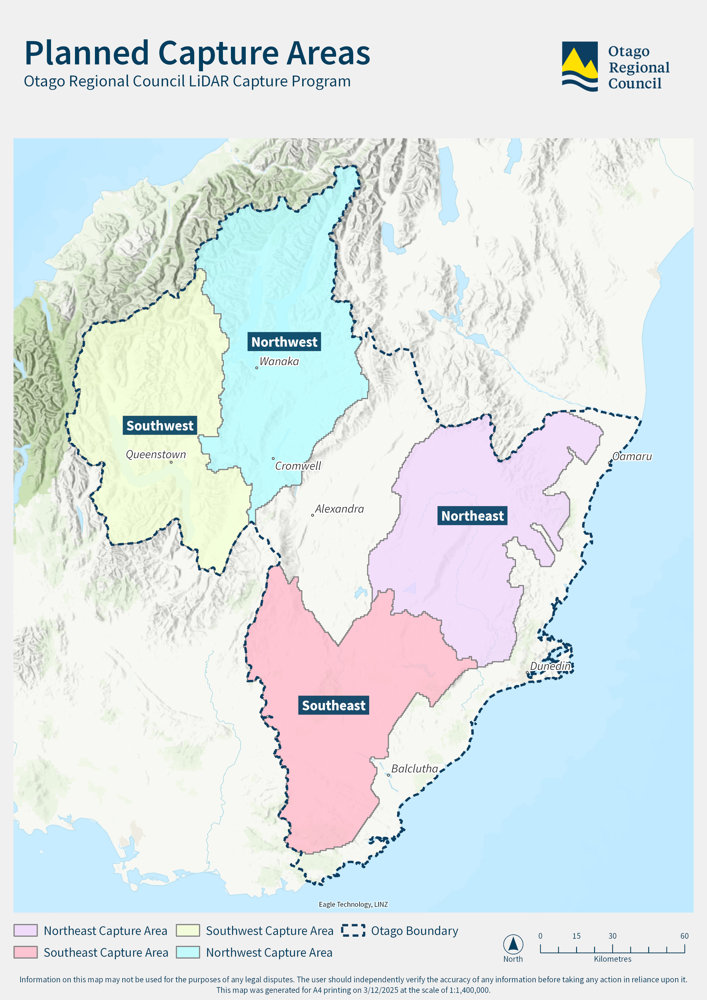
Otago and parts of Fiordland are the only regions in the country without full LiDAR coverage.
Mr Welsh says with the contract recently signed, flights have already begun around the Southwest area, with the entire project expected to be completed over 2-3 years. Budgeting each year has been included in ORC’s Long-Term Plan.
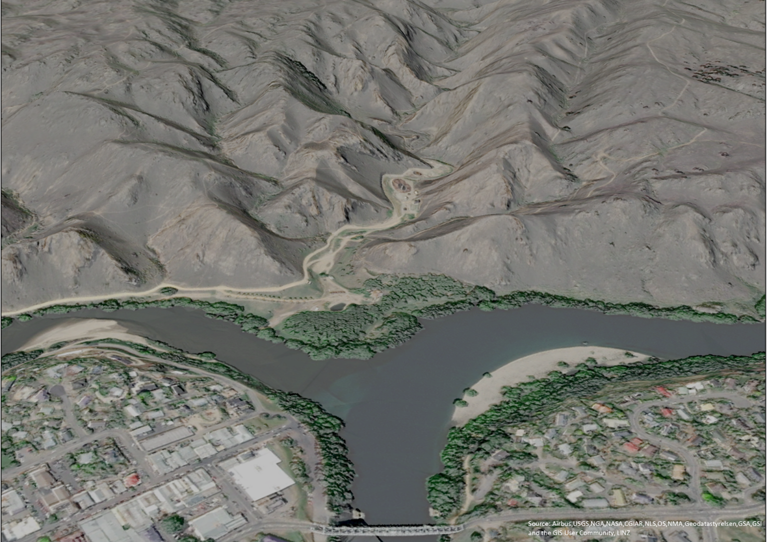
*LiDAR (light detection and ranging) mapping improves ground elevation datasets.
LiDAR involves sending a beam of light from a device on a low-flying plane, which bounces back from the ground to give a measurement of land elevation. The technique is used to create elevation maps for large land areas.
Links for examples of LiDAR
- More about the Toitū Te Whenua LINZ LiDAR elevation data programme
- See topographic data from throughout New Zealand on the LINZ Data Service


