Understanding the debris flood hazard, options to manage, and reduce risks to the Roxburgh community.
Julion from our Natural Hazards team explains what an alluvial fan is and why debris floods occur.

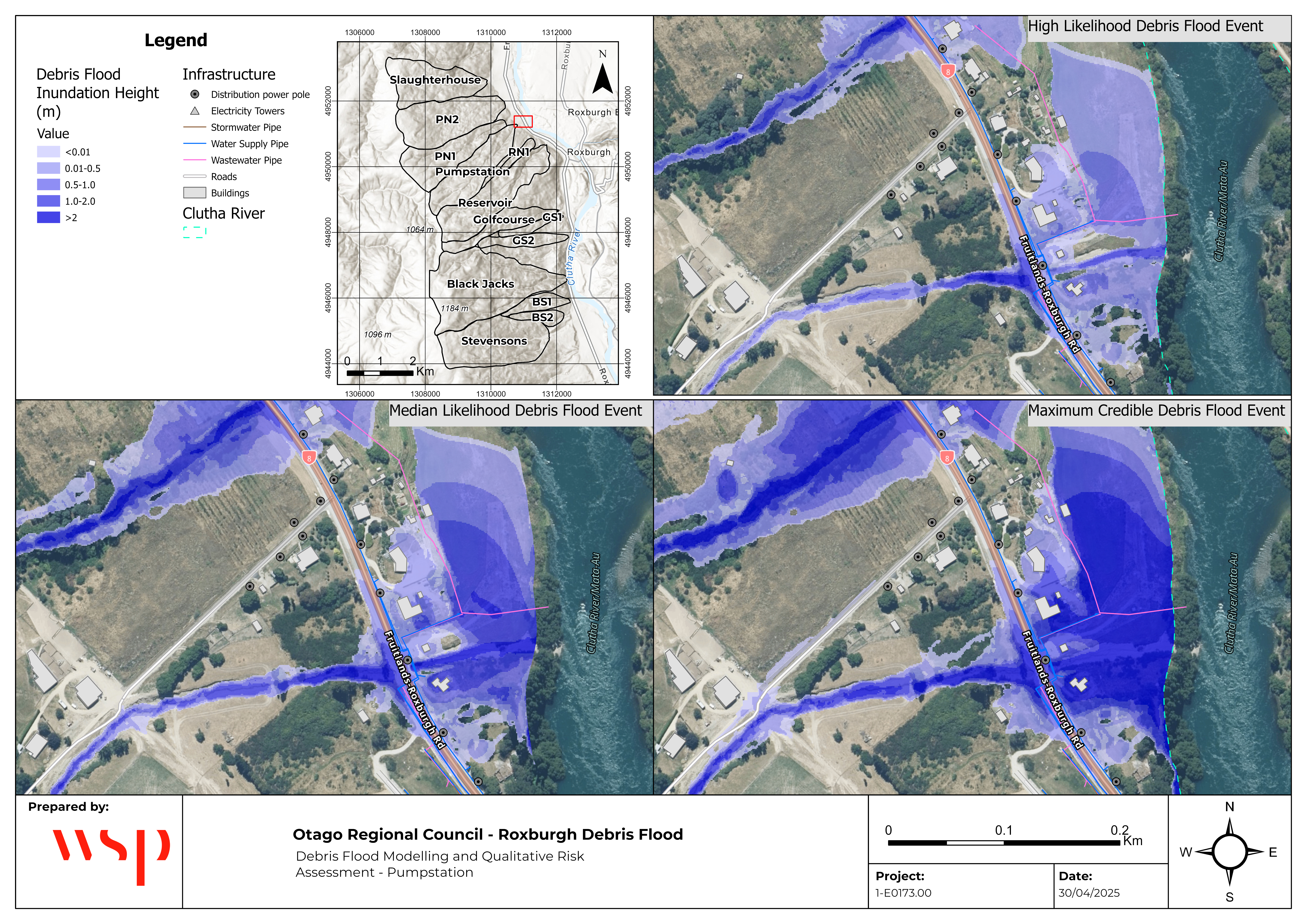
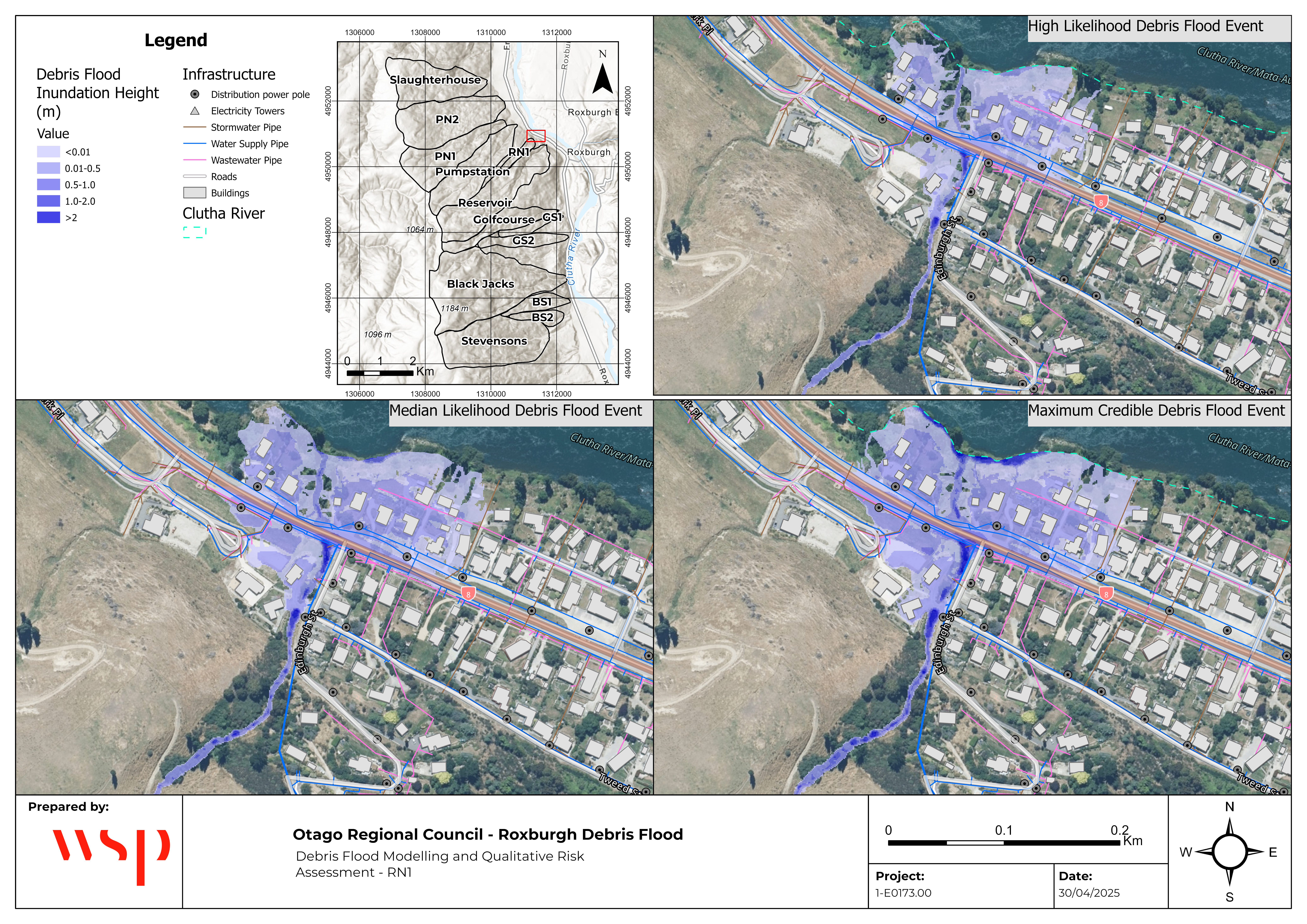
A study has been completed for 13 catchments in the Teviot Valley looking at debris flood hazard and risks. The new mapping identifies areas more likely to be affected by debris floods and the possible effects on people, places and key infrastructure. Read the study report and summary:

February 2026
PDF | 1007 KB

January 2026
PDF | 23 MB
Hydrogeomorphic Modelling and Quantitative Risk Assessment Report. WSP New Zealand Limited (WSP) has been engaged by ORC to complete hydrogeomorphic hazard modelling and risk assessment for 13 alluvial fans that lie adjacent to the Clutha River along the base of the Old Man Range in Roxburgh. The study has been carried out in stages, and this report presents the hydrogeomorphic modelling and the findings of the risk assessment for the 13 catchments.
Kia ora Teviot Valley community
Thank you to everyone who attended the Roxburgh community sessions on 18 February 2026 and shared your questions and feedback.
We heard a wide range of views– curiosity, concern and valuable insights from across the community. Your input is important and helps guide our next phase of work.
We have shared responses to key questions in the Teviot Bulletin (2 April 2026). Below is a full set of responses to community questions asked during the community sessions, along with key information for the Teviot Valley community.
If you have further questions or would like to speak with our Natural Hazards team at Otago Regional Council, please call 0800 474 082 or email customerservices@orc.govt.nz.
No. The new study does not require anyone to move or relocate. It does not make decisions about land use, property ownership, or managed retreat.
The study provides information about where debris floods are more likely to occur, so people, communities, and agencies can better understand risk and plan for the future.
Being in a higher-risk area does not mean a debris flood will definitely happen, or that your home is in immediate danger.
No. This study is about understanding debris flood hazard and risk. It does not make decisions about managed retreat or relocation.
Any decisions about land use or future options would require further work and community input.
A new study has been completed for 13 catchments in the Teviot Valley looking at debris flood hazard and risks. The new mapping identifies areas more likely to be affected by debris floods and the possible effects on people, places and key infrastructure.
Regional alluvial fan hazard information for the Teviot Valley has been published by Otago Regional Council) since 2009, including on Otago Natural Hazards Database Portal.
The new detailed mapping for 13 alluvial fans is complementary to and refines the regional data.
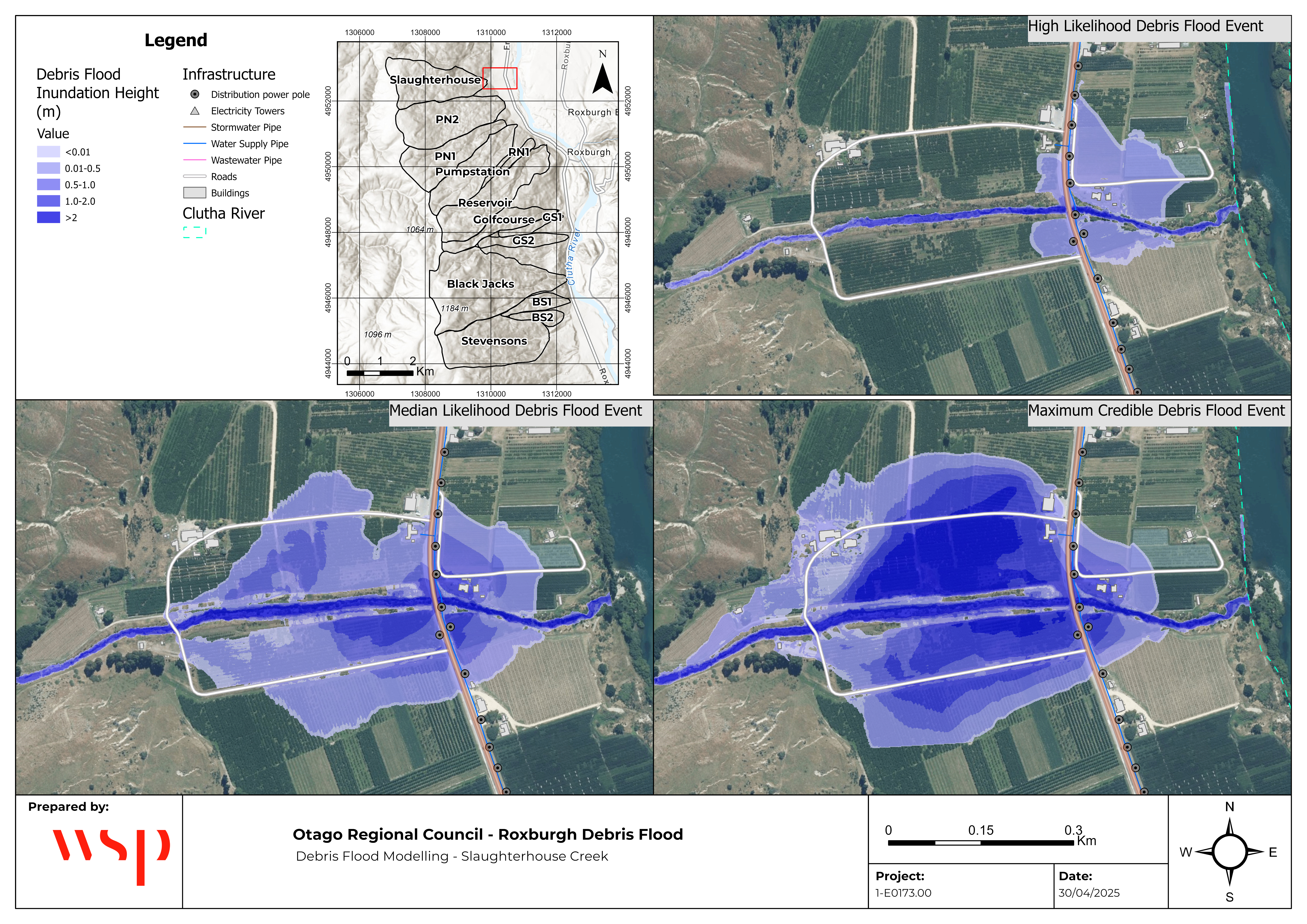
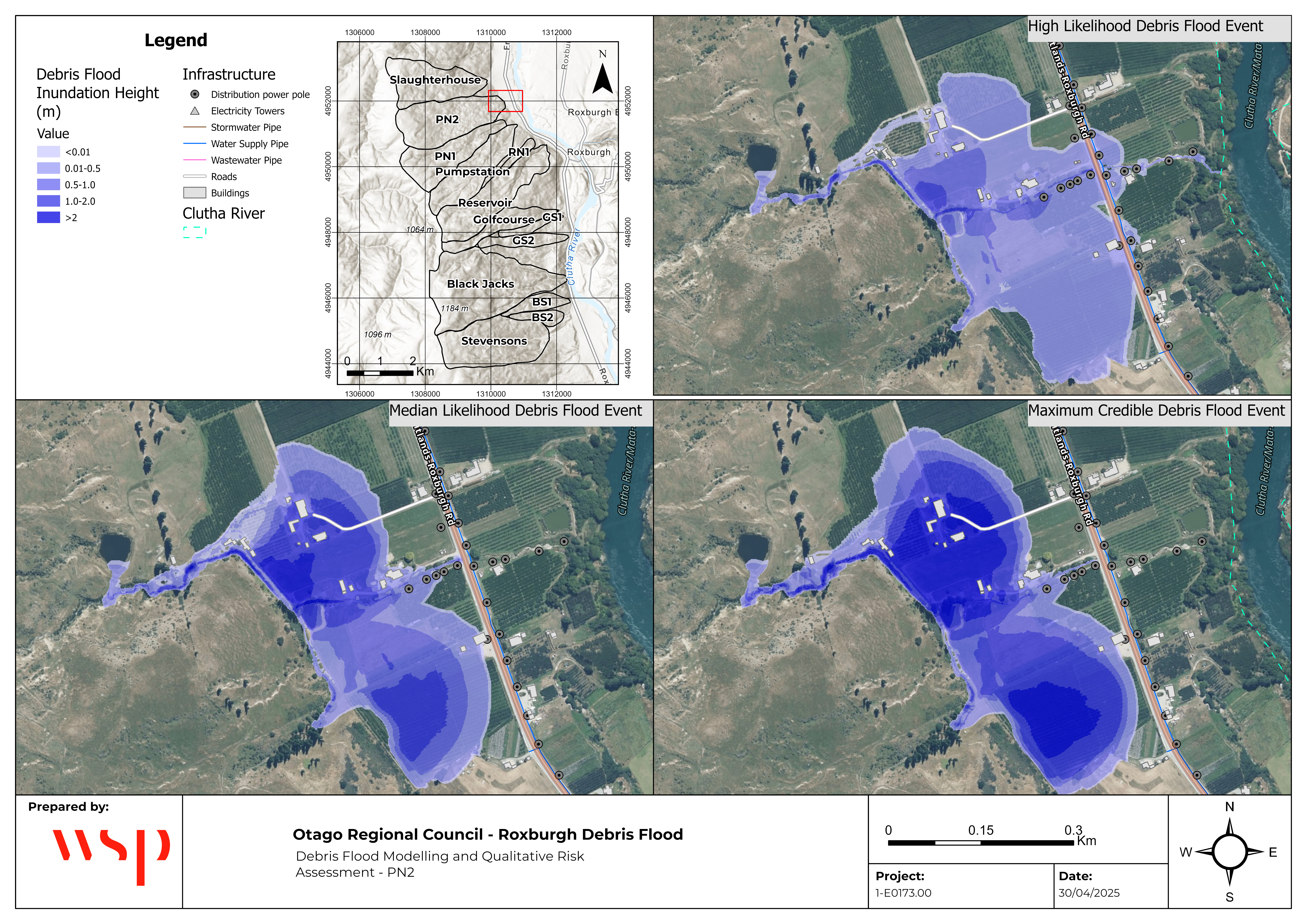
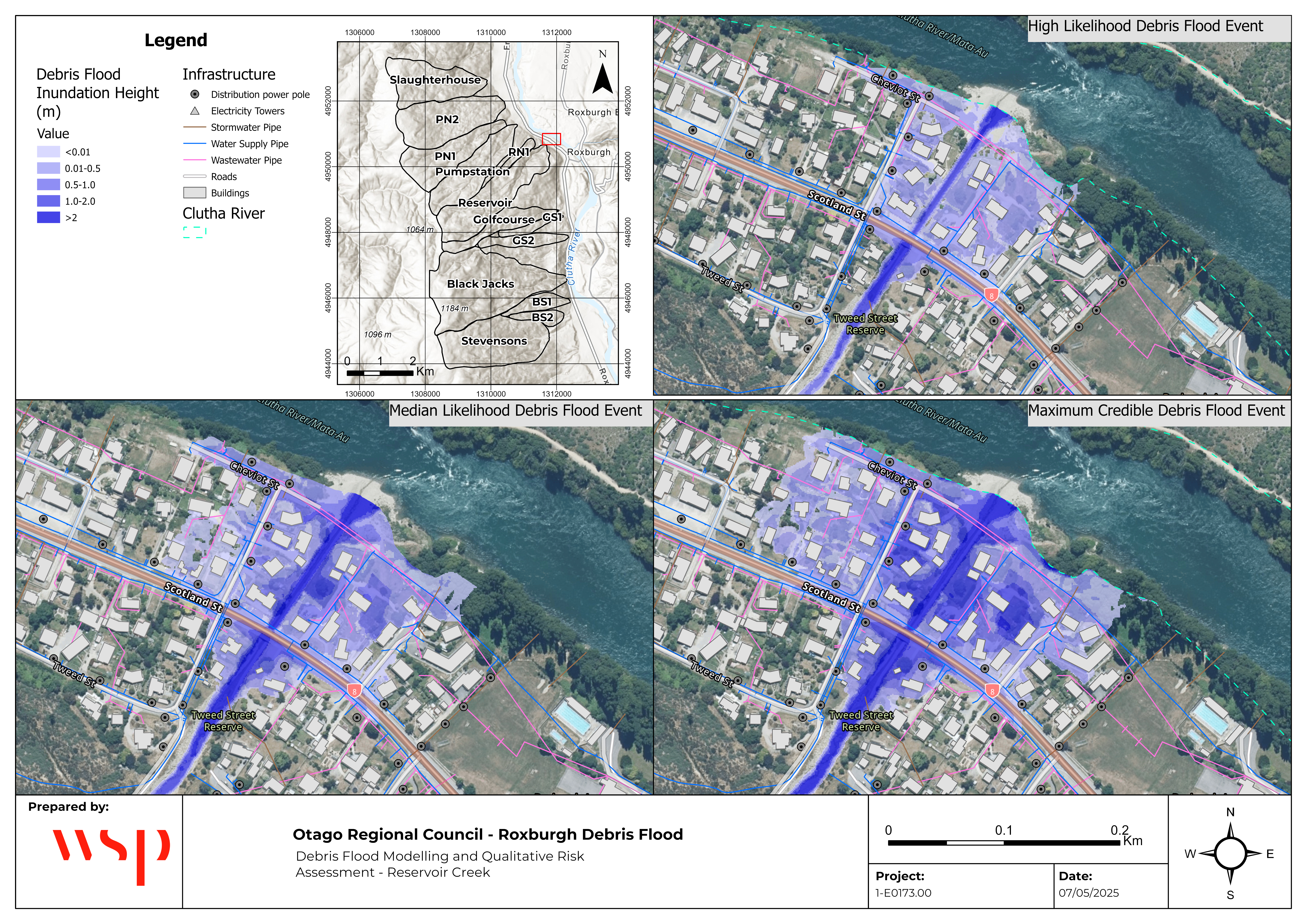
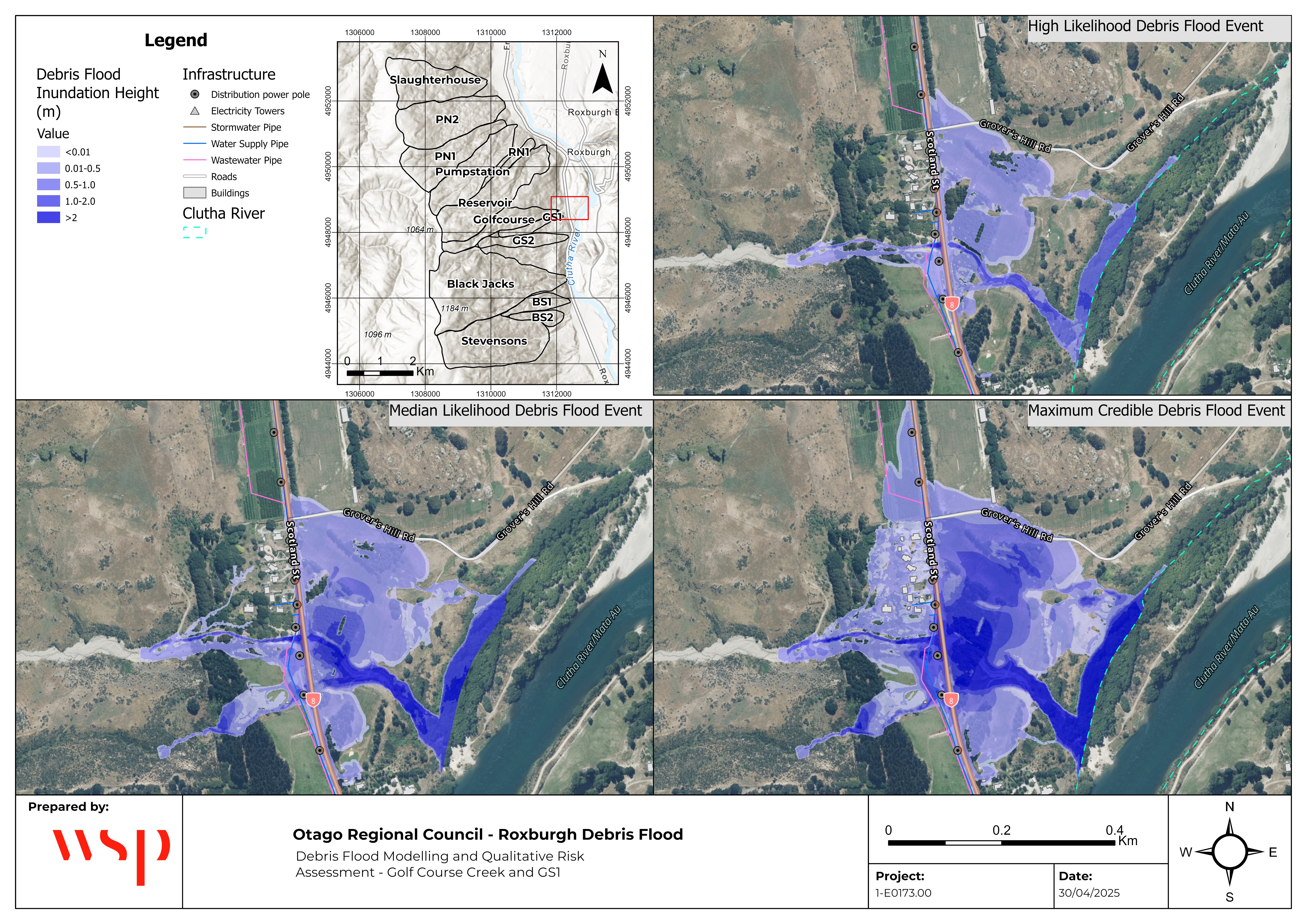

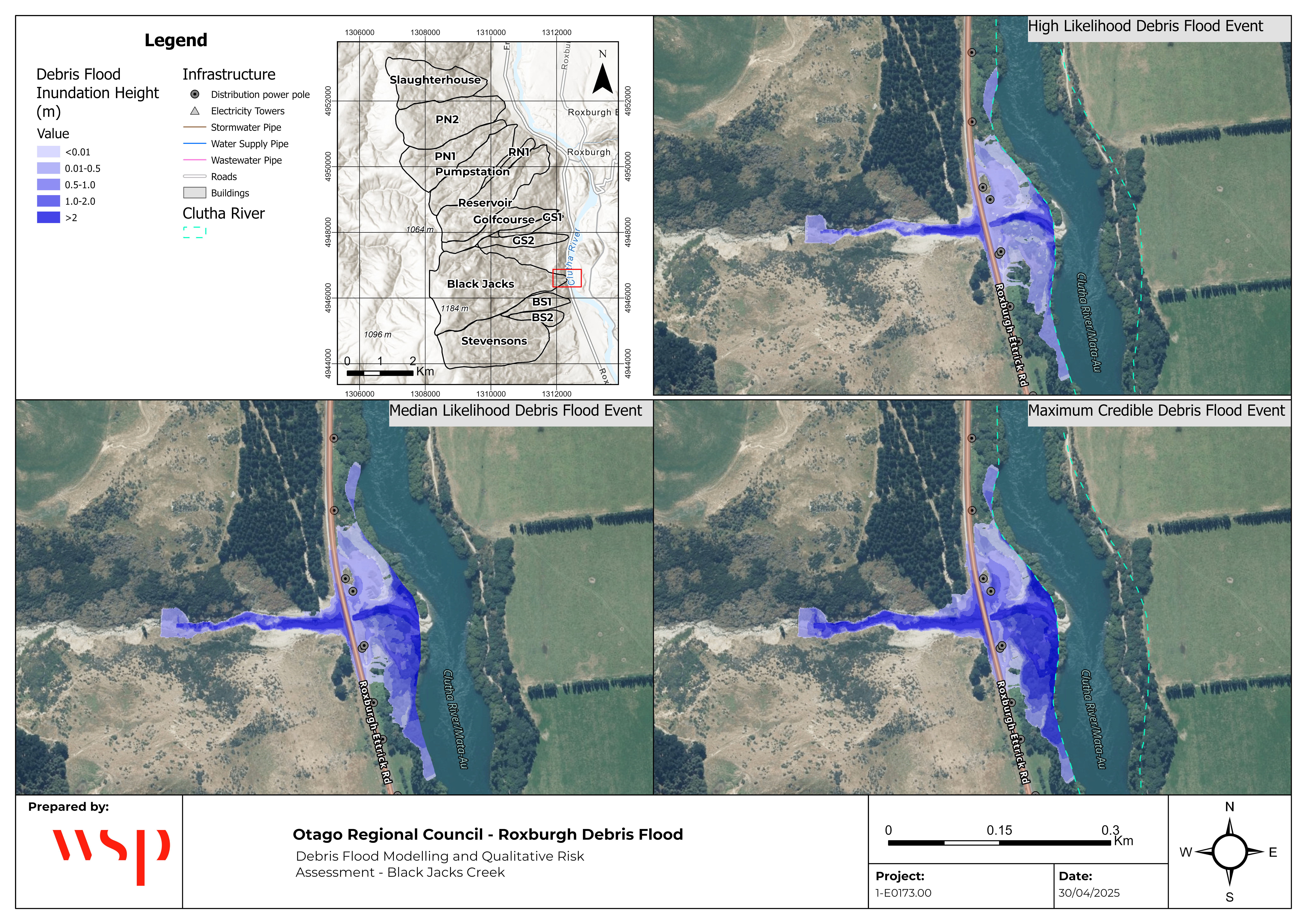
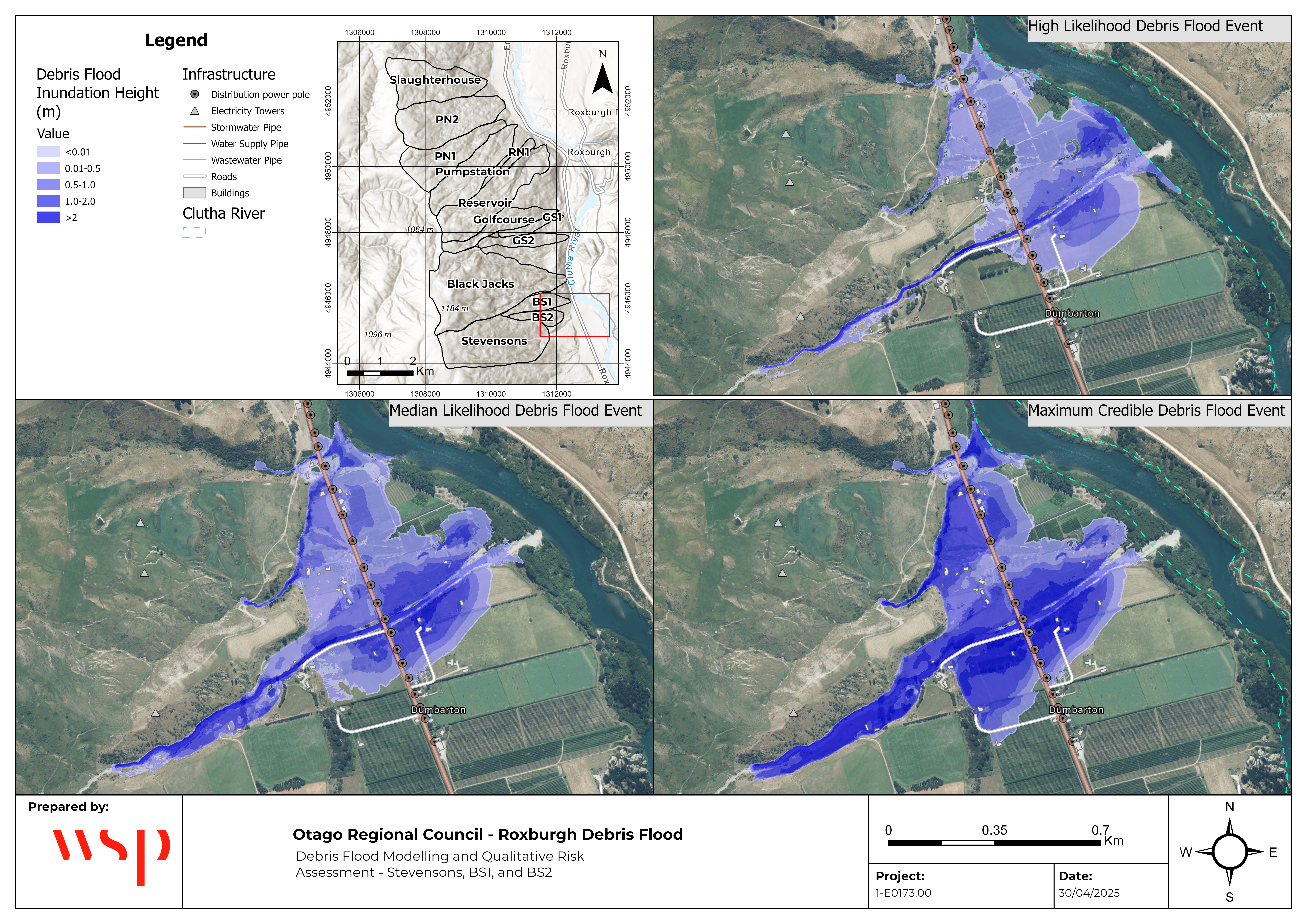
The modelling included a range of debris flood events- from smaller, more frequent events (similar in size to November 2017) to very large, rare events. This helps us understand how the catchments behave under different conditions.
Yes. The modelling incorporated three rainfall scenarios to trigger the range of possible debris flood events in the Teviot Valley.
The potential impacts of climate change are included, as required by partially operative Otago Regional Policy Statement (pORPS).
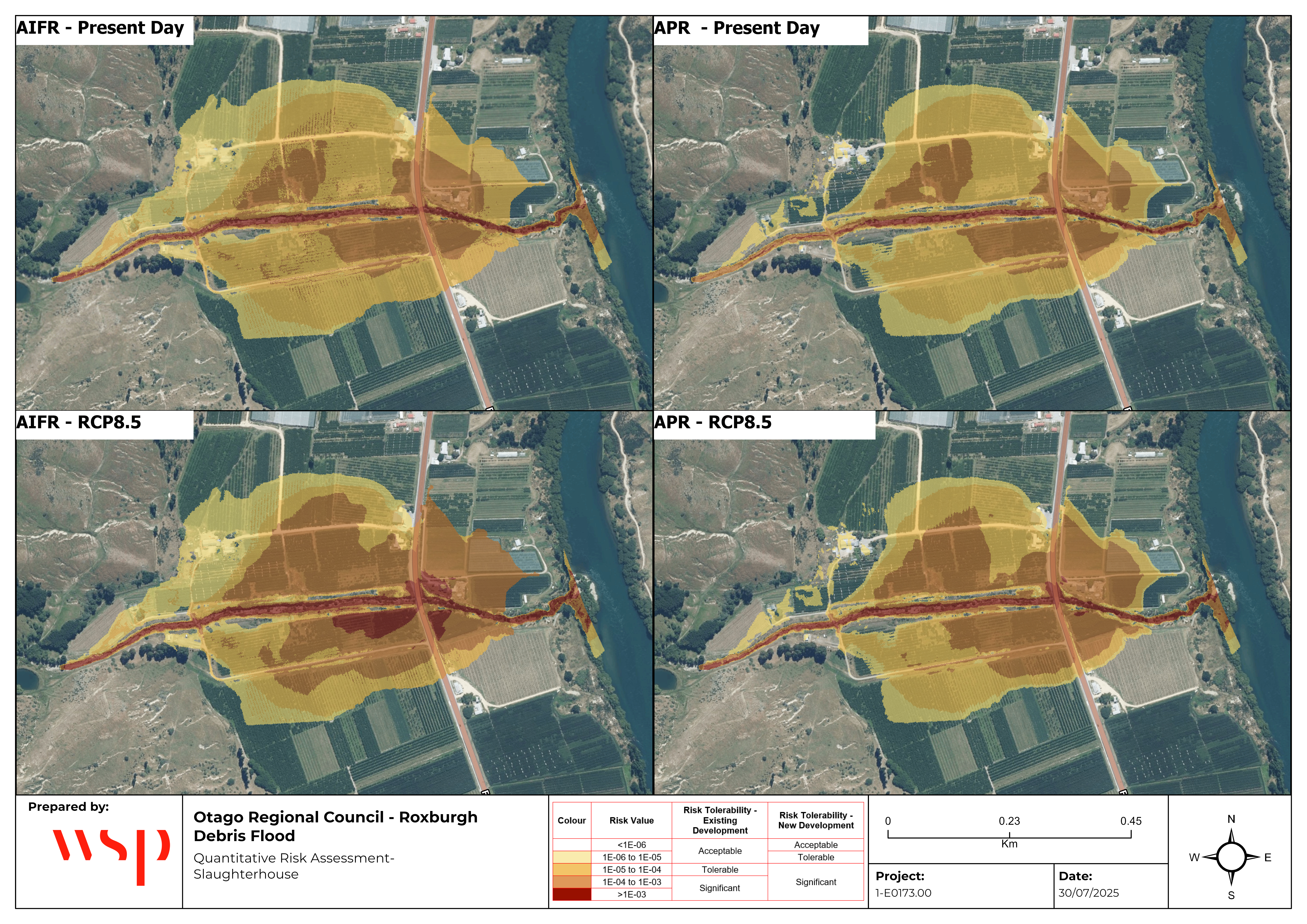
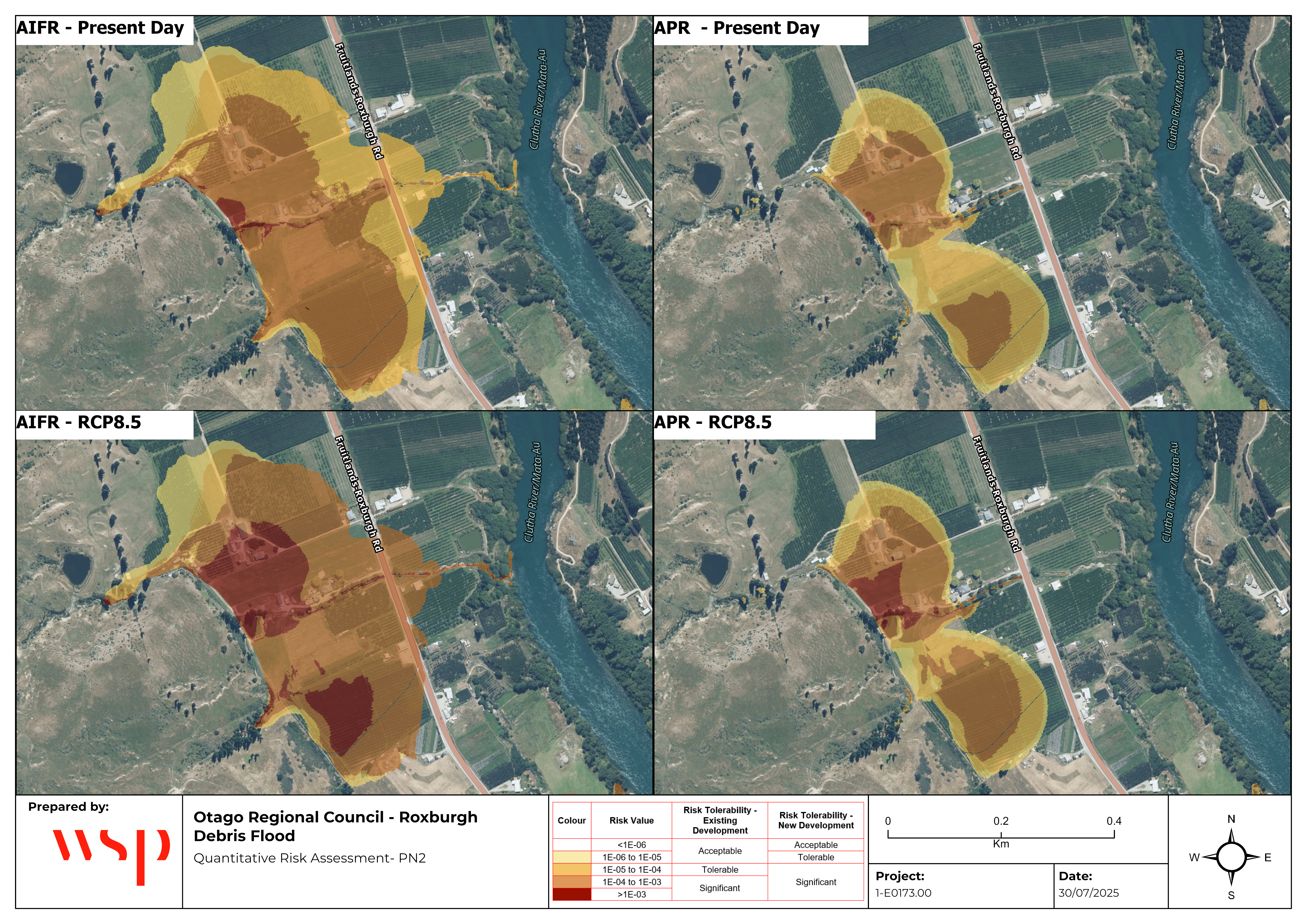
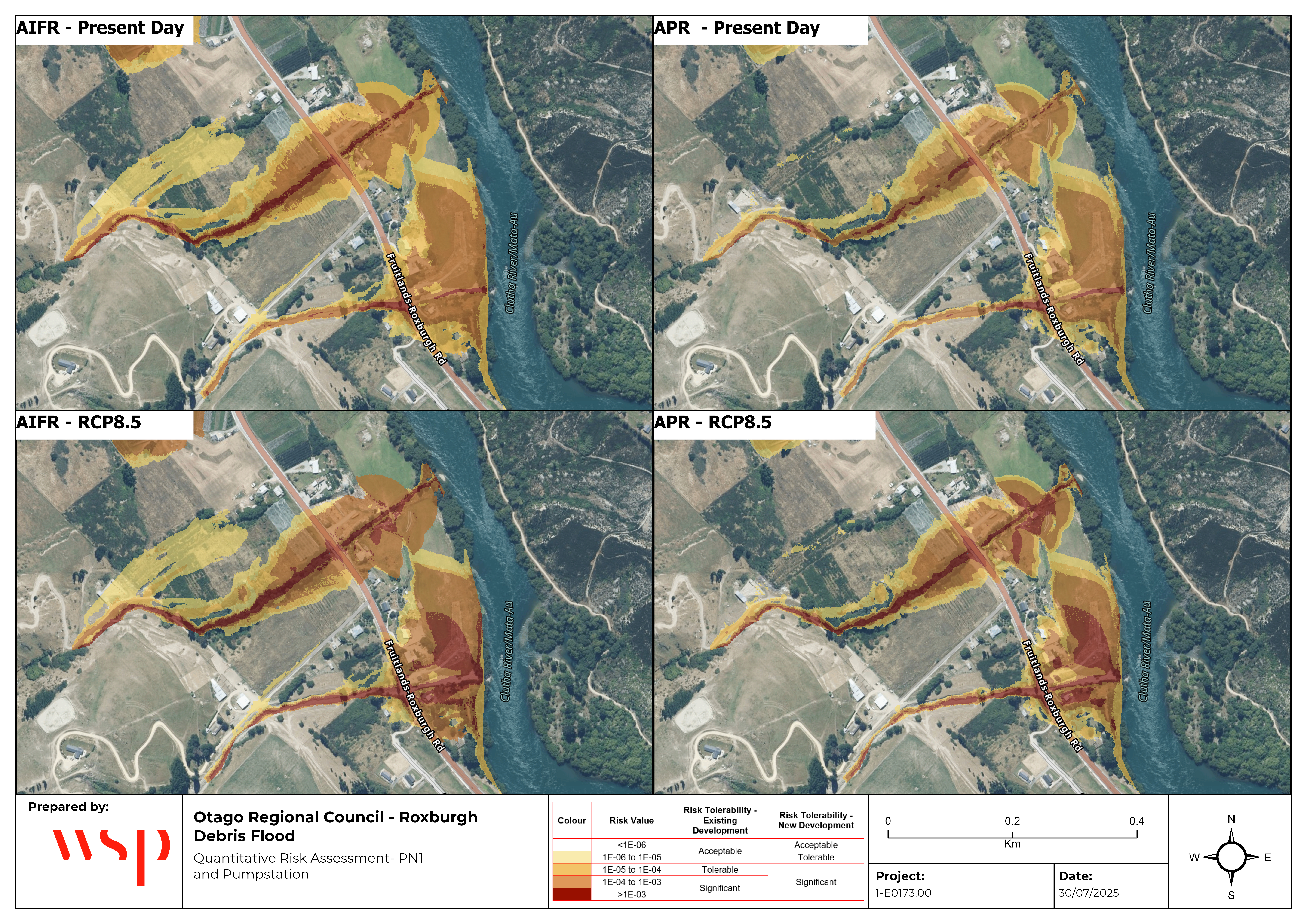
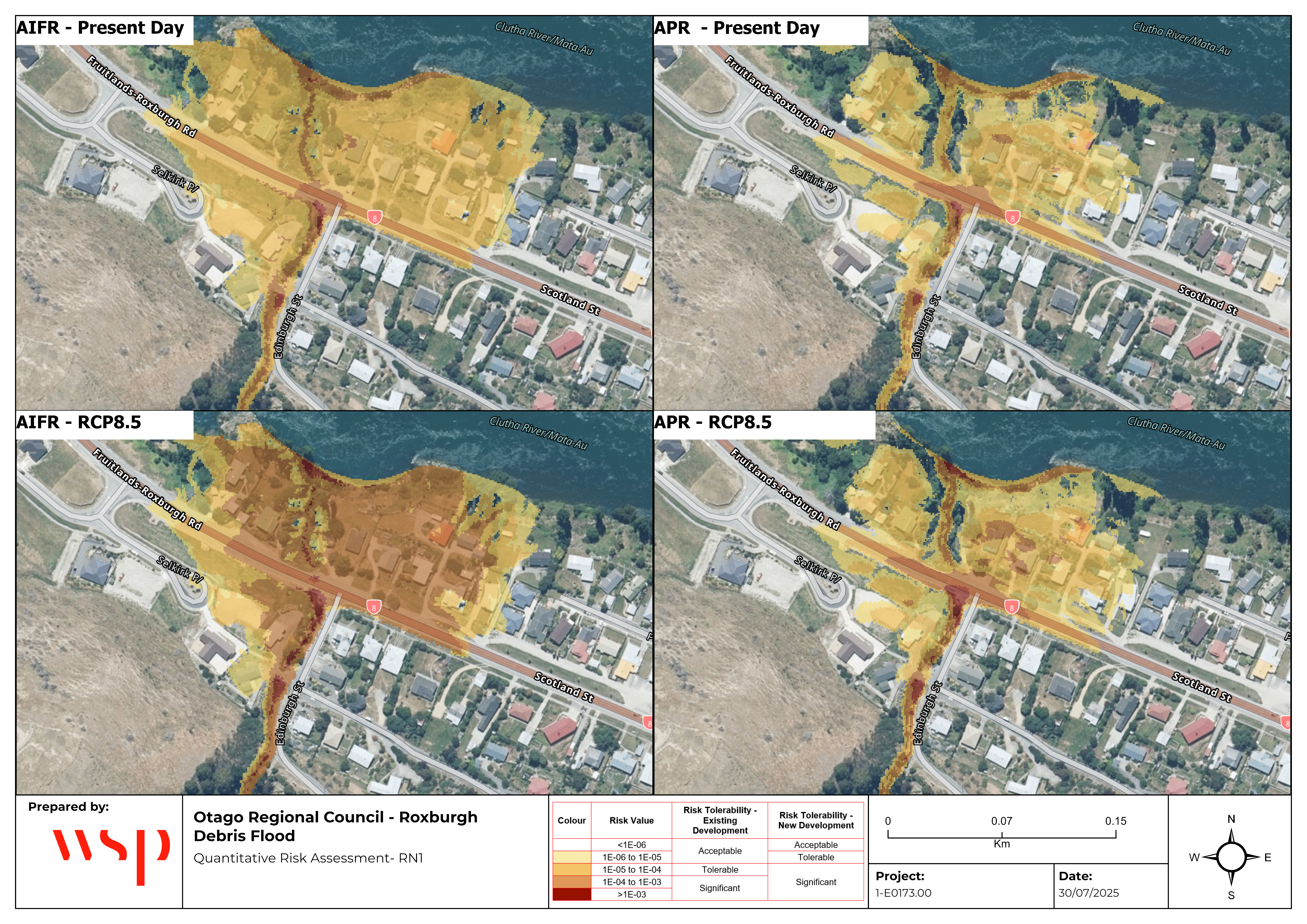
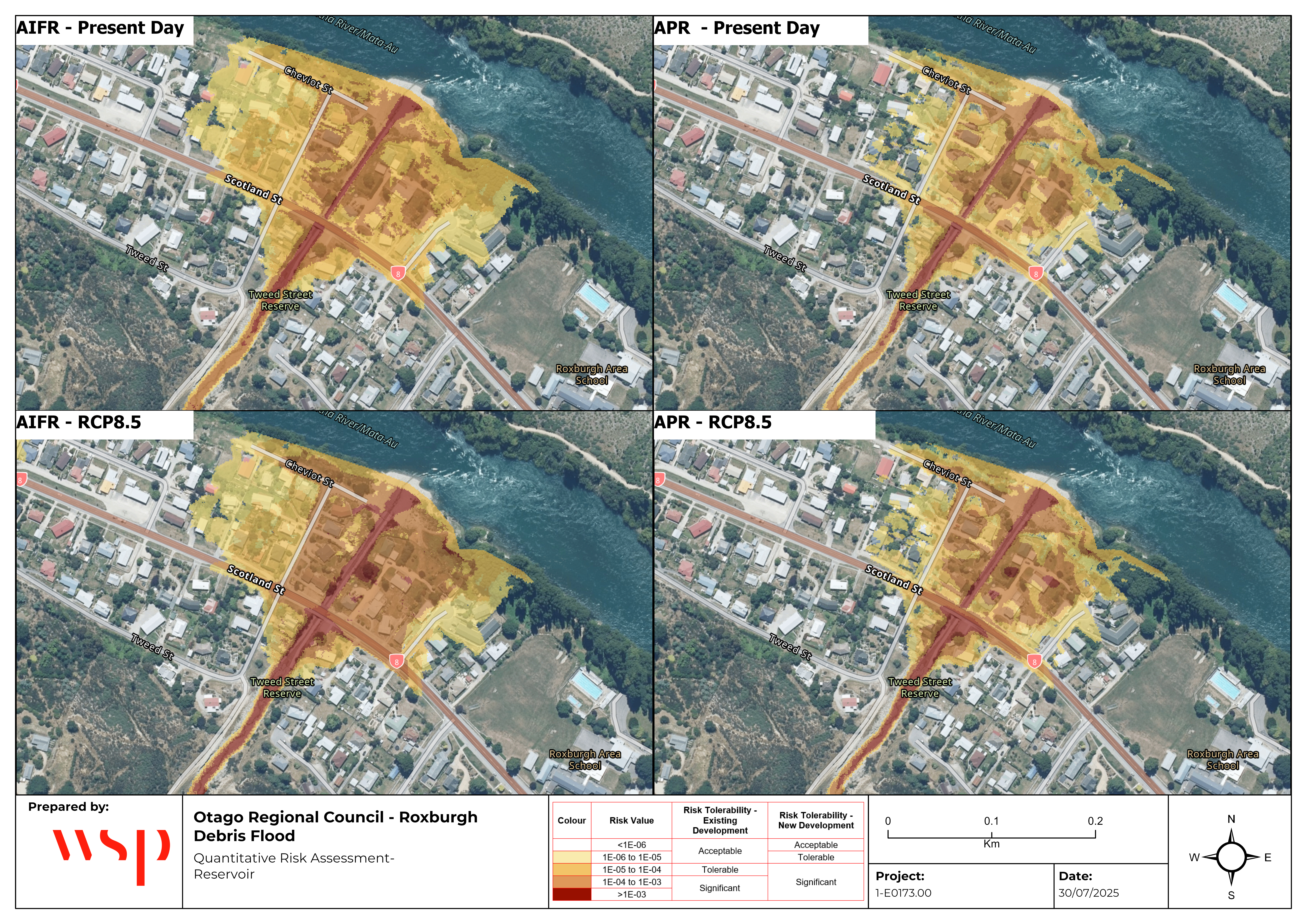
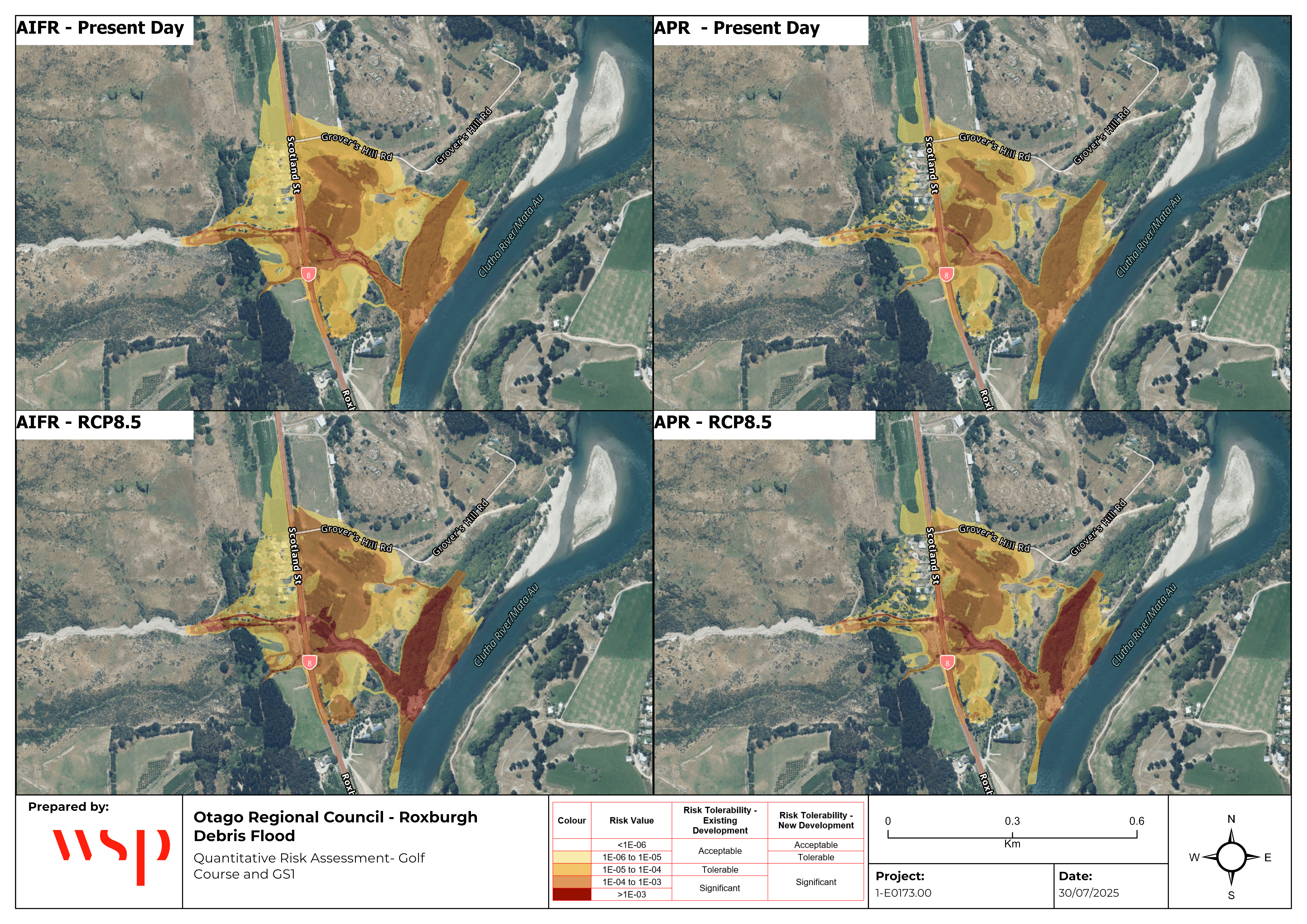

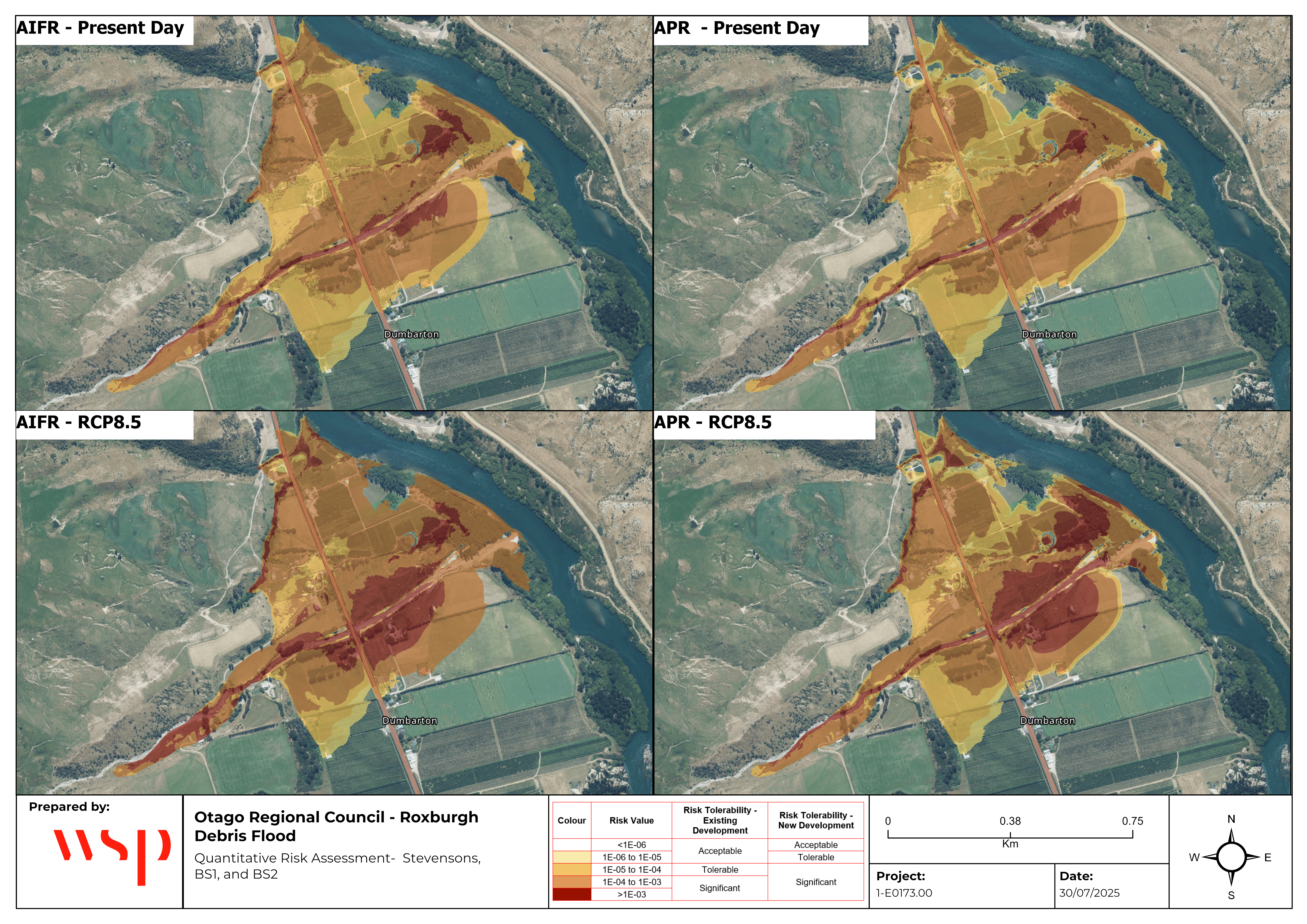
Debris flood risk maps are shown for two scenarios, Present Day and RCP8.5 (high climate emissions track).
A trigger for debris floods is intense rainfall in one hour. Triggering rainfall may occur more often under climate change scenarios.
We used both present-day conditions and a high-end climate scenario (where greenhouse gas emissions remain high, resulting in greater changes in climate), following national guidance. This helps ensure planning is robust for future uncertainty.
These represent the maximum limits of what the catchments could produce. They are very unlikely and have low influence on overall risk but help us understand and prepare for extreme scenarios.
The “high likelihood” scenario used in the debris flood modelling is most similar in size and extent to the November 2017 debris flood event.
The modelling is based on a range of possible events, rather than a single historical event like November 2017.
Differences can occur due to variations in rainfall intensity, catchment behaviour and debris movement between events.
There are limits to available data, including:
- Limited catchment specific rainfall records.
- No reliable flow measurements.
- Uncertainty in debris volumes from past events.
Testing too many rainfall scenarios can give a false sense of accuracy, so the modelling focuses on representative scenarios.
The study methodology for natural hazard risk assessment is consistent with ORC partially operative Otago Regional Policy Statement (APP6 in pORPS).
APP6 specifies a 4-step process, including an initial Qualitative Risk Assessment as a screening tool. For higher risk areas, the last step is a Quantitative Risk Assessment where risk levels are calculated spatially and output is maps of Annual Individual Fatality Risk (AIFR) and Annual Property Risk (APR). This type of detailed approach is consistent with best practice such as GNS Landslide Planning Guidance 2024.
The debris flood hazard maps show where debris floods could occur and how likely they are.
The risk maps show the estimated risk values for the affected area of each fan. The risk value represents the chance buildings or individuals have of being impacted by a debris flood in a given period.
Areas of higher hazard and significant risk are identified in all 13 creeks. Risk is generally higher closer to the creek channel but each fan is unique.
Communities and residents are encouraged to get familiar with the new maps and findings, and share knowledge with neighbours.
Detailed debris flood risk and hazard mapping is available above for the 13 catchments.
The new study does not require anyone to move or relocate.
Communities and residents are encouraged to get familiar with the new maps and findings, and share knowledge with neighbours. Contact us for help understanding what the information means for you and your property.
If you are in a hazard area, consider preparing your household and your work by having an emergency plan Get prepared — Get Ready (NZ Civil Defence) — Emergency preparedness in New Zealand.
We saw a range of reactions at the community information sessions in February:
- Some people already knew they were at risk.
- Some were relieved to be outside mapped areas.
- Others felt concerned or uncertain.
This is completely understandable.
Regional alluvial fan hazard information for the Teviot Valley has been published by Otago Regional Council (ORC) since 2009, including on Otago Natural Hazards Database Portal.
The new detailed mapping for 13 alluvial fans is complementary to and refines the regional data. The new information is consistent with the regional data.
Insurance companies often use a range of information when they assess risk, and hazard reports are only one part of that picture.
The new hazard and risk maps does not automatically change your insurance. We cannot say how individual insurance policies may be affected, as decisions are made by insurers on a case-by-case basis. If you have concerns, you may choose to discuss your cover with your insurer or a broker.
Debris floods cannot be completely prevented, as they are natural processes. However, it is possible to reduce their impacts through a combination of:
- Structural measures (e.g., channels to redirect flows or barriers).
- Non-structural measures (e.g., early warning systems, community awareness, clearing of the existing stream channels and culvert, erosion/runoff controls).
- Planning tools (e.g., like zoning rules).
- Long-term adaptation and resilience (e.g., preparing communities and households, allocating resources to strengthen resilience).
In general, when the Clutha River flows are low, sediments may build up in the lower sections of the creeks during a debris flood event. When the Clutha River flows are high, sediments are more likely to be transported away from the lower sections of the creeks.
Sediment accumulation and transport depend on conditions in both the Clutha River and the local creeks.
The Clutha River is not expected to act like a dam under typical conditions.
This effect was not identified in previous GNS Science work after the 2017 event.
As debris flows approach the river, the fan naturally flattens, causing debris to slow and deposit before reaching the main channel. In addition, the Clutha River generally has sufficient capacity to transport sediment, even at lower flows.
ORC will continue to work closely with Central Otago District Council (CODC) and NZ Transport Agency Waka Kotahi (NZTA) on how best to use the new findings to manage creeks effectively.
Since 2017, ORC have monitored 5 creeks (Stevensons, Black Jacks, Golf Course, Reservoir and Pumpstation), but this report provides information on a further 8 creeks.
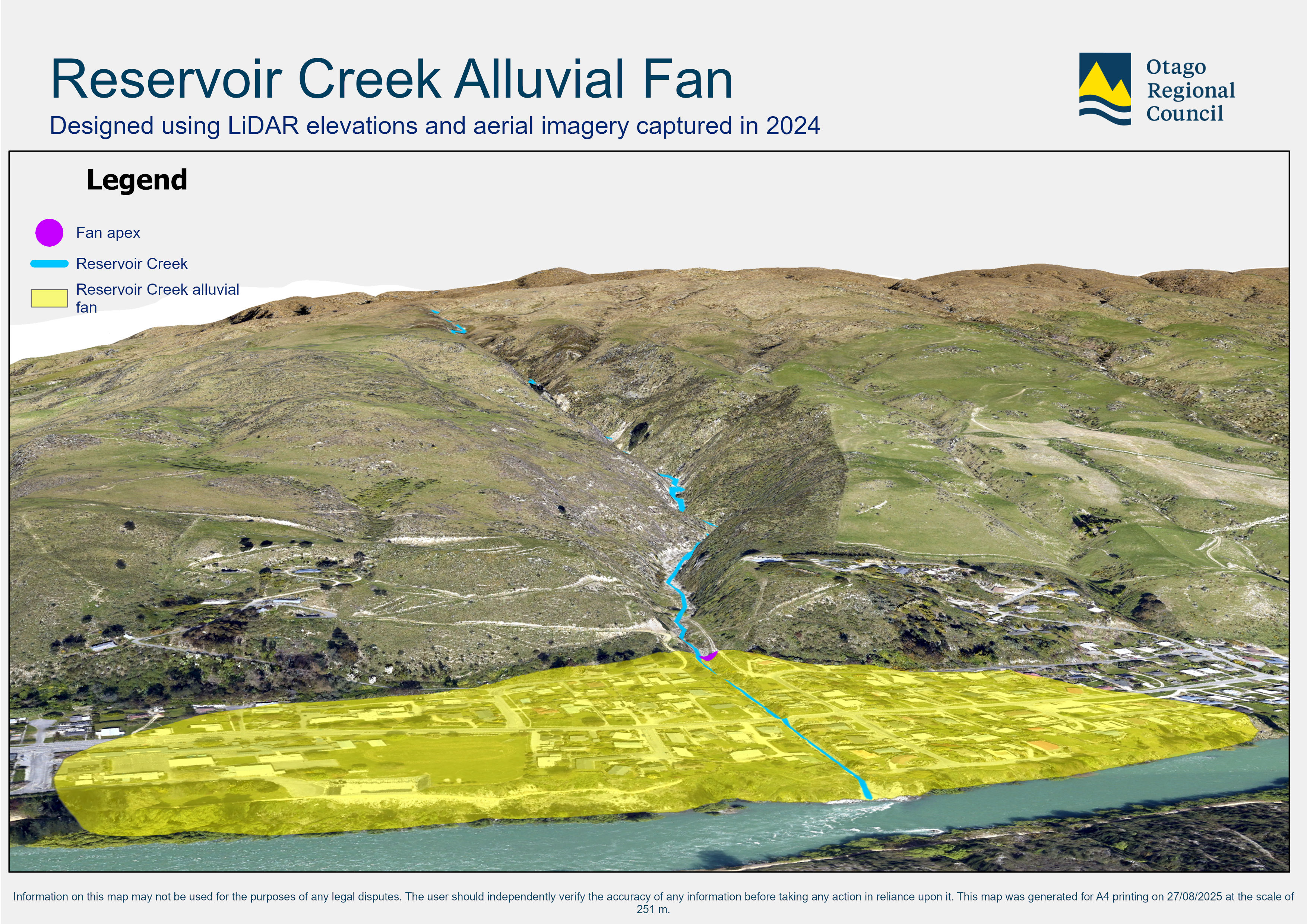
CODC owns, maintains and manages the Reservoir Creek chute.
NZTA is responsible for State Highway 8 maintenance and management as infrastructure provider. NZTA works with ORC to monitor the debris flood impacts on State Highway crossings following flood events. NZTA will also carry out necessary works such as removal of debris and structure repair when and if needed.
ORC maintain the outflow of the creeks to the Clutha river including clearing debris and gravel managment activities.
We are moving into the next phase of work (optioneering phase), which will assess current maintenance and consider whether any changes and additions are needed.
No decisions have been made at this stage. At the community information sessions, we heard concerns about the amount of sediment taken out and that creek cleaning may not be happening often enough or consistently across all creeks.
This will be considered as part of the optioneering phase, which will assess current maintenance practices and whether additional work is needed.
We will continue working with Central Otago District Council (CODC) and NZ Transport Agency Waka Kotahi (NZTA) to manage sediment effectively. ORC, CODC and NZTA all play a role in managing creeks and infrastructure in the area.
Central Otago District Council owns, maintains and manages the Reservoir Creek chute.
ORC do channel shaping above the chute and mouth opening as required below the chute.
The study focused on 13 catchments based on their geomorphic characteristics, history of debris flows, and the exposure of infrastructure and property to potential debris floods.
Other catchments in the area are included in the regional hazard mapping. You can view this mapping here: Otago Natural Hazards Database Portal.
NZ Transport Agency Waka Kotahi upgraded several culverts following debris floods in November 2017 to enhance capacity and resilience.
However, WSP notes that culverts along State Highway 8 (SH8) have historically impeded debris flood flows, causing inundation upstream and laterally from the culvert location in the channels.
As part of the new study, WSP carried out a Qualitative Risk Assessment that includes an assessment of the potential impact on lifelines, consistent with ORC methodology (pORPS APP6). Inundation of sections of SH8 is identified for all catchments. Shallow debris flood inundation is likely to be cleared quickly (<1 day). Deeper and more extensive inundation is associated with greater damage and longer service outage.
The pump station is elevated and it needs to be close to its water source.
NZ Transport Agency Waka Kotahi advise that we have both arch bridges and flat bridges in NZ and many bridges that are a combination of both forms and are designed for NZ conditions.
Arch bridges act in compression, which makes them very strong.
Stone arch bridges are vulnerable to earthquake damage (there is no steel cables to tie them together), they are vulnerable to sidewall (spandrel wall) collapse and vulnerable to foundation scour and settlement.
Steel arch bridges are strong and low cost; however, they are prone to corrosion.
Flat bridges, or bridges with beams or slab decks, have a combination of compression and tension members. The tension members have steel beams or steel reinforcing; if not designed appropriately the steel components can be vulnerable to fatigue and corrosion.
Flat bridges can be prefabricated off-site; this makes them quick to install (less traffic management costs) and with appropriate design and workmanship they can last 200 years plus.
A box culvert has greater waterway area compared to a round culvert or arch structure, for the same excavation and span size.
NZ Transport Agency Waka Kotahi have no record of a power cable being installed within the Black Jacks box culvert.
The pedestrian/footbridge near the mouth of Reservoir Creek was installed after the 2017 event and is designed to be removable so it does not become an issue during flooding.
The study was commissioned by Otago Regional Council to support emergency planning, natural hazards management, land-use planning, infrastructure planning, and building decisions.
Responsibilities are shared across:
- Otago Regional Council– natural hazards management and five creeks (Stephensons, Black Jacks, Golf Course, Reservoir and Pumpstation) maintenance.
- Central Otago District Council– local roads management and Three Waters, as well as owns and maintains the concrete chute at Reservoir Creek.
- NZ Transport Agency Waka Kotahi– State Highway 8 maintenance and management.
We heard community concerns about historical watercourse changes and culverts and informal earthworks.
We will continue to look into these issues and work with relevant parties where needed. This includes meetings with local landowners such as those at Coal Creek Flat to discuss these concerns.
Yes. ORC continues to monitor landslides and catchment conditions over time.
We will continue to work closely with Central Otago District Council, Civil Defence Emergency Management Otago, New Zealand Transport Agency Waka Kotahi, and the Teviot Valley communities.
We are now using the results of the debris flood study to explore potential additional debris flood management and mitigation options. It will take time to work through this process, and we are committed to sharing timely updates with the community. As our programme for this work becomes clearer, we will share this in one of our regular updates.
Yes. We held 1:1 conversations during the community sessions on 18 February 2026 and are happy to meet again with individuals or groups.
People had different levels of awareness and concern. We:
- Walked through debris flood hazard and risk maps with people.
- Explained the different scenarios.
- Suggested using the Otago Natural Hazards Database Portal to check their property.
You can also contact our Natural Hazards team on 0800 474 082 or email us at customerservices@orc.govt.nz
If you or your group has specific concerns we can get together for a chat.
ORC webpage for self-study Debris flood hazard in Roxburgh.
ORC Natural Hazards Database hazard mapping (search by address or place) Otago Natural Hazards Database Portal.
This will be considered further in the next phase of work (optioneering).
Yes, new natural hazard information with go on LIMs.
Local Government (Natural Hazard Information in Land Information Memoranda) Regulations 2025 sets the requirements for providing natural hazard information in LIMs.
You can:
- Apply for a LIM from CODC.
- Use the Otago Natural Hazards Database Portal.
- Contact ORC for support.
We are happy to help explain what the information means for you and for your property.
If you are in a hazard area, consider preparing your household and having an emergency plan Make a household plan — Get Ready (NZ Civil Defence) — Emergency preparedness in New Zealand.
Check information from your local community response group.
Sign up for Civil Defence Emergency Management Otago (CDEM) alerts (https://www.otagocdem.govt.nz/useful-stuff#emergency-mobile-alert-ema)
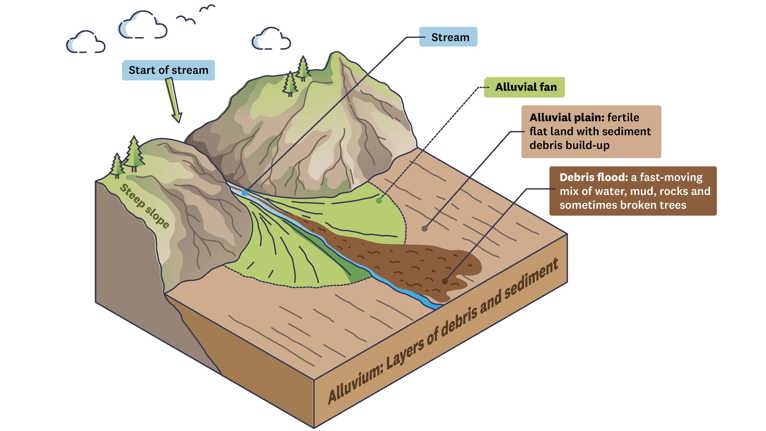
Roxburgh sits on land known as alluvial fans. Alluvial fans are formed by the sediment from mountain streams accumulating over a long time. This creates fertile soil and natural drainage, making the area well-suited for farming, gardening and everyday living.
Living on these alluvial fans comes with challenges. The Roxburgh area is exposed to natural hazards- such as debris flows and debris floods. These can be dangerous because they are unpredictable; they can happen quickly and with great power, posing a risk to infrastructure, homes and lives.
Alluvial fans, debris floods and debris flow-type processes have always been here and are naturally occurring. We're working to understand more about the risks and the impact they could have for the community.
Otago Regional Council (ORC) is leading a work programme to better understand these alluvial fan hazards and look at ways to manage and reduce their impact on the Roxburgh community.
This work is carried out in partnership with Central Otago District Council, NZ Transport Agency Waka Kotahi, Civil Defence Emergency Management, hand in hand with the Roxburgh community. ORC is working closely with mana whenua representatives, including Aukaha and Te Ao Mārama.

Debris flood hazard in Roxburgh
Learn about the debris flood that affect the Roxburgh area, why they occur, and what risks they pose.

Debris flood hazard management programme
This section outlines the goals, approach and progress of the hazard management programme so far.

Investigations and reports
Find key programme progress reports presented to Council, along with presentations presented at community meetings, then explore the range of technical studies undertaken by Otago Regional Council and specialist consultants.

Get Involved
Stay up to date with the latest news, opportunities to give feedback and attend events.

Who’s on the Team
Meet the people working together on the Roxburgh Debris Flows Hazard Management Programme.


