Media release

Free webinars offered for 2026 ECO Fund applicants

Monday 23 February 2026

Ecofund 1920X1080 Web Tile Southern Lakes Sanctuary Takahe Release

Landowners, iwi, community groups and environmental organisations are invited to learn more about Otago Regional Council’s (ORC) ECO Fund and how to submit a strong application, with two free webinars taking place on 3 and 10 March.

ORC councillor Chanel Gardner says the 2026 ECO Fund will open for applications on 16 March with a total $919,800 available - a similar amount to last year.

“The ECO Fund information webinar on 3 March is about clarity. We want potential applicants, including those who have applied before, to understand what the fund is designed to achieve in 2026, what’s changed, and how to position their project well before applications open,” says Cr Gardner.

The following week, ORC will host a Preparing a Strong Funding Application webinar at 7pm on Tuesday, 10 March, designed to help applicants strengthen their submissions and maximise their impact.

“The second webinar is practical. Good environmental projects deserve strong applications. Whether you’re new to funding or experienced, this session will walk through what makes a proposal clear, credible and aligned with Council priorities. We encourage all applicants to take part.”
Webinar details

  1. ECO Fund information webinar
    When: 7pm, Tuesday 3 March 2026
    Where: Online — orc.govt.nz/ecowebinar

Topics include:

  • An overview of the ECO Fund
  • What’s changing for the 2026 funding round
  • What types of projects will be supported

  1. Preparing a strong funding application webinar
    When: 7pm, Tuesday 10 March 2026
    Where: Online — orc.govt.nz/ecowebinar2

Topics include:

  • Grant-seeking best practice
  • Practical grant-writing tips
  • Building and maintaining strong funder relationships

The ECO Fund webinar will be recorded and made available on ORC’s website at orc.govt.nz/ecofundwebinar. If you are unable to make the live event, the Preparing a strong grant application webinar will be available by request via ecofund@orc.govt.nz.

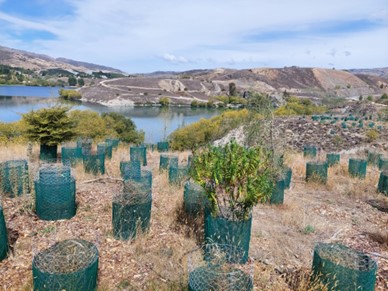
Native planting by the Mōkihi Reforestation Trust in Cromwell.


Updated funding categories for 2026

Two ECO Fund categories have been updated this year:

  • Hill country erosion management, replacing Critical Source Area Management on private land, focuses on reducing sediment and soil loss through erosion control measures. This includes stock-exclusion fencing and tree planting for erosion control.
    Total funding available: $51,100
  • Scaling up for biodiversity, replacing Large-scale Biodiversity Projects, supports projects that protect and enhance native biodiversity at a larger scale. It also aims to help community groups build delivery experience and transition towards the Large-Scale Environmental (LSE) Fund or other long-term funding sources.
    Total funding available: $306,600

Four existing ECO Fund categories will continue unchanged:

  • General — total funding up to $306,600
  • Sustained rabbit management incentives — up to $102,200
  • Biodiversity enhancement on protected private land — up to $102,200
  • Weed removal and revegetation — up to $51,100

There are some new requirements when applicants apply for funding.

“We’ve introduced a quote requirement this year. It’s a straightforward step that strengthens accountability and helps ensure ratepayer money is used carefully, while still keeping the process accessible for community groups and landowners,” says Cr Gardner.

“The ECO Fund is one of the largest regional council environmental funds of its kind in New Zealand. Every dollar allocated comes from an Otago home or business. That means we have a responsibility to continually demonstrate value and maintain public confidence in how the fund operates.”

More information about the webinars and the ECO Fund is available at orc.govt.nz/ecofundwebinar.

Background on the ECO Fund process

Established in July 2018, ORC’s ECO Fund supports work that protects, enhances and promotes Otago’s environment to enable iwi, communities’ and private landowners’ environmental activities. An annual review process occurs, to set up the funding categories for each year which align with Council’s strategic directions.

Since 2018, the ECO fund has supported 194 projects from 420 applications, distributing just over $3.64 million (out of $10.45 million requested) across 11 application rounds. Each round has averaged 38 applications and has been oversubscribed by an average of 300%.