The study shows what could happen now and in the future during very heavy rainfall. A community event will offer two formats: the chance for a one-on-one chat, followed by an evening presentation on 18 February at the Roxburgh Golf Club.
ORC Manager Natural Hazards Dr Jean-Luc Payan says ORC has been working with the Roxburgh community for some time.
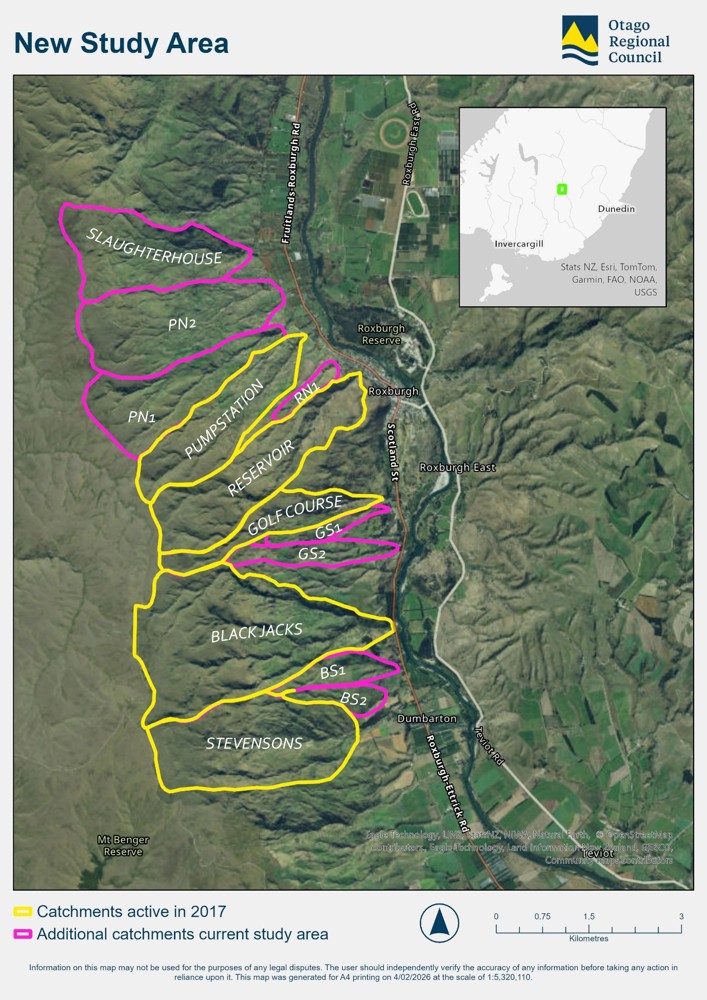
“This new study, commissioned by ORC’s Natural Hazards team and carried out by consultants WSP, looked at 13 catchments that feed water into the area between Coal Creek Flat and Dumbarton. The new mapping identifies areas where debris floods are more likely to occur and assesses the level of risk for people and property.”
“There will be a community event this month where the Roxburgh community can learn more about the new findings and discuss them with staff. The full report and an easy-to-understand summary are available online from today (see the link below). There’s no reason to be alarmed — we’re simply sharing information so the community can understand the risk, stay safe, and make informed, early decisions.”
There are no planning changes or mitigation measures proposed at this stage, Dr Payan says.
“Any future decisions about land-use planning, adaptation or mitigation options would need to be community-led and require significant input from our partners at Central Otago District Council, Waka Kotahi NZ Transport Agency, and other stakeholders such as Otago Civil Defence Emergency Management.”
“Our website answers some common questions, and we invite Roxburgh residents to attend the public event on 18 February, where staff will present the findings of this new assessment and answer questions alongside our Central Otago District Council colleagues.”
Upcoming community session
An opportunity for the Roxburgh and Teviot Valley community to learn more about the new findings and discuss them.
Drop-in session
3:00–6:00 pm, Wednesday 18 February 2026
Roxburgh Golf Club, 280 Scotland Street
- Come anytime, stay as long as you like
- Chat one-on-one or in a group with staff from ORC, CODC, CDEM and NZTA
- Explore detailed hazard and risk maps
- Share your concerns, questions and ideas
Community presentation
6:30–9:00 pm, Wednesday 18 February 2026
Roxburgh Golf Club, 280 Scotland Street
- Presentation with Q&A
- Staff and technical experts will present new findings and answer questions
- Informal chats over refreshments
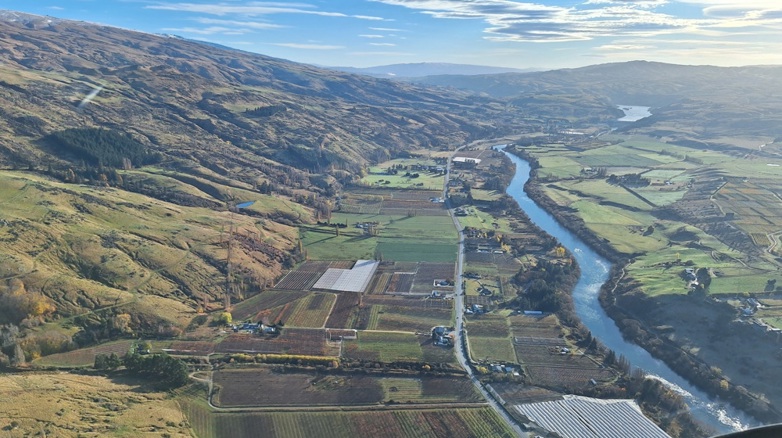
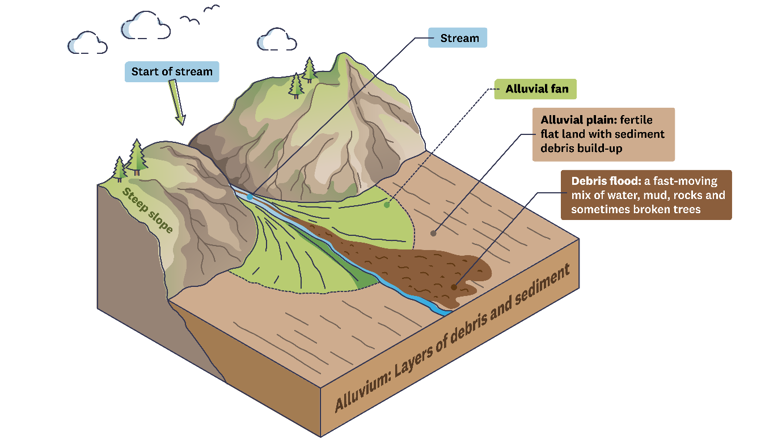
Roxburgh sits on alluvial fans — cone-shaped landforms built up over many years by loose material (such as rocks, gravels and silt) washed down from the Old Man Range. These fans help make the area great for growing produce and are also where some buildings and infrastructure are located. But they also mean that when intense rainfall happens, flows of water, mud, rocks and trees can move down the catchments quickly, sometimes spilling out of the usual creek channels.
Understanding this helps the community stay safe and make informed, early decisions.
Debris floods are fast-moving flows of water and debris that can cause harm to people, property and infrastructure if they reach developed areas. These types of floods are triggered mainly by very heavy rainfall (such as from severe thunderstorms), with the floodwater picking up loose material in the catchment and channel and moving it downstream.
In 2017, debris floods occurred in Pumpstation, Reservoir, Golf Course and Black Jacks creeks. Rocks, soil, silt, and trees travelled downslope toward the Clutha River/Mata-Au, causing disruption to roads, properties and power.
Debris floods are known to have previously occurred at many of the catchments studied.
These events were not unprecedented — debris floods are a natural part of how alluvial fans evolve. Climate change means intense rainfall events like this may become more frequent.
Alongside the full technical report and summary, ORC’s Natural Hazards team has prepared answers to questions people living in the area may have.
One of the biggest questions people will naturally have is ‘What do the new findings mean for me and my property?’
The key points are:
- Being on an alluvial fan does not mean a debris flood will happen on your property.
- For each of the 13 alluvial fans in the study area, the new mapping identifies areas where debris floods are more likely to occur.
- If you are close to one of the creek channels or downslope of State Highway 8 (SH8), the risk may be higher.
- The study shows where debris flooding could travel, how deep it might be, and who or what could be affected.
- Three different-sized debris floods were mapped for each alluvial fan. Smaller floods are more common, while very large floods are rare.
This information is intended to help people understand where hazards exist and support early awareness and preparedness. It does not mean that a debris flood will definitely happen or that homes are in immediate danger.
Other creeks in the Teviot Valley may also have debris flood and similar alluvial fan hazards. To view mapping for alluvial fans in the Teviot Valley area and the potential hazards affecting them, visit the Otago Natural Hazards Portal: Alluvial Fans | ORC AGOL Natural Hazards Portal . New findings will be published from 12 February 2026.
If you need help, ORC staff can talk through the maps with you. Please contact us on 0800 474 082 or email customerservices@orc.govt.nz.
No.
The new study does not require anyone to move or relocate. For each of the 13 alluvial fans in the study area, the new mapping identifies areas where debris floods are more likely to occur.
Being in a higher-risk area does not mean a debris flood will definitely happen, or that your home is in immediate danger. Any future decisions about land-use planning, adaptation, or mitigation options would involve further work and full community engagement.
The full technical report, the report summary and FAQs are available at orc.govt.nz/roxburghhazards
You can also contact our Natural Hazards team on 0800 474 082 or email us at customerservices@orc.govt.nz.

Roxburgh community drop-in session
This drop-in session offers an informal opportunity to view detailed debris flood hazard and risk maps and talk directly with staff about what the findings mean for the Roxburgh area.

Roxburgh community presentation
This community presentation will outline the findings of the new debris flood hazard study for the Roxburgh area, explain next steps for managing the risk, and provide an opportunity to ask questions.

Roxburgh Debris Flood Hazard Management
Roxburgh sits on alluvial fans- fertile land shaped by streams over time. But this landscape is prone to natural hazards, including debris flows. Learn about the types of hazards that affect the area, why they occur and what risks they pose.


