Monday 12 January 2026
With the summer boating season in full swing on harbours, lakes and waterways, the Otago Regional Council is giving people the opportunity to air their views about boating safety.
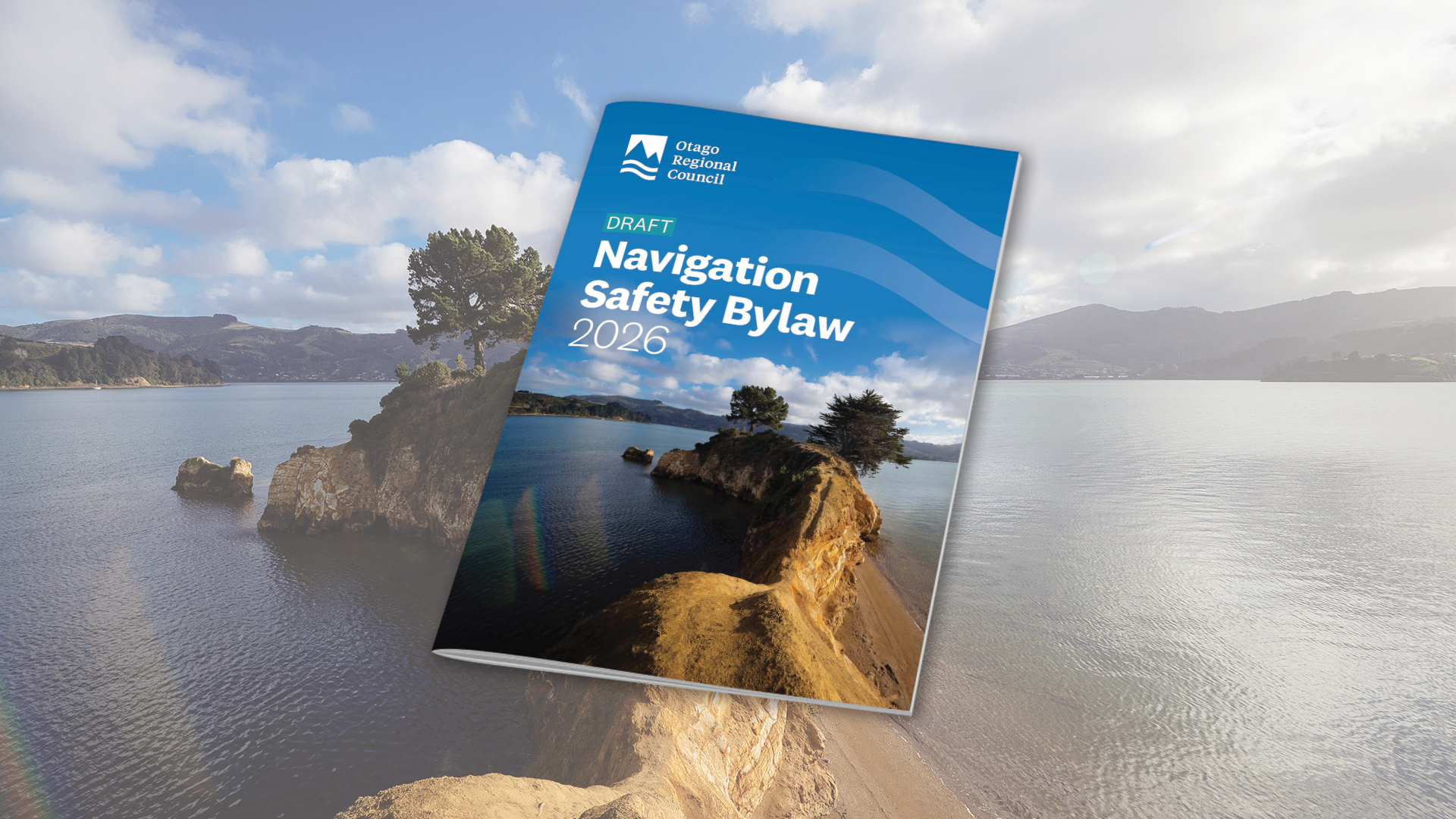
From today (12 Jan), the draft Navigation Safety Bylaw and a survey seeking public feedback on the draft is available on the Otago Regional Council’s website (orc.govt.nz/navsafety).
The bylaw regulates the movement of vessels on waterways such as Otago Harbour to improve safety; also, it provides rules and regulations such as wearing lifejackets for vessels in harbours or at sea up to 12 nautical miles out from the Otago Coast.
The bylaw also governs these same activities on Lake Dunstan and rivers such as the Clutha and Taieri, but not lakes Whakatipu, Wānaka and Hāwea, or rivers surrounding them, as these are managed by the Queenstown Lakes District Council. Lake Waihola is also governed by the proposed bylaw.
Otago Regional Councillor Andrew Noone says it is important that people who use our harbours and waterways read all or parts of the 38-page draft bylaw that interest them and provide their feedback. People have until February 12 to give their views.
“I have no doubt that there will be people who have views on how we can improve navigational safety. We want to hear from them if there’s anything we’ve missed, or if people believe these rules and regulations generally head in the right direction.”
Otago Regional Council Harbourmaster Steve Rushbrook, who is responsible for ensuring boaties comply with the safety rules, says most of the previous 2020 bylaw is expected to remain in place in the draft, with a few new additions. Aspects such as the need to always wear life jackets on the water, for example, will remain unchanged.
One new proposal that is in the draft bylaw is for all commercial vessels carrying 12 or more passengers both day and night, and all vessels 15-plus metres, is to carry a new mandatory automatic identification tracking system (AIS).
“The AIS technology, which we are proposing to be carried by all boats, will mean vessels’ whereabouts can be plotted on a geo-tracking system, and this will help them safely navigate around each other in the channels without mishap,” he says.
“A lot of fishing boats already have these. The purpose of these tracking devices is to improve navigational safety and vessel management. The information will not be used for any other purpose. It is planned to provide a better navigational traffic picture to ensure safer outcomes for passenger-carrying recreational and commercial boaties and their passengers.”
An AIS system could cost a boat owner up to $2500.
The legislative background is that Council has a responsibility to manage navigation safety under the Maritime Transport Act 1994 (MTA). This Act empowers regional councils to make navigation safety bylaws to ensure maritime safety.
Another proposal in the draft is to enact a 60-day period whereby boat users and owners cannot anchor in Otago harbour after they have utilised a 14-day allowance to anchor in one place. This is aimed at boaties continuously upping anchor and shifting to different locations around Otago Harbour.
Provide an online incident report process/option that is currently not available.
Consultation will open for the Otago Navigational Safety Bylaw review on January 12, accompanied by a short online survey.
Read the draft bylaw, complete the survey and have your say.
Otago’s waterways are safer thanks to the plans and bylaws we follow. Speed limits, life jacket mandates, navigation aids, and exclusion zones ensure responsible boating practice.
On this page are any plans and projects currently open for public feedback. This page also includes consultation on plans and policy statements that are required by the Resource Management Act 2019 (RMA). Find out what consultations are open now, how to have your say, and what happens after that.
