Media release
Otago catchment programme to be accelerated with strong local focus
Thursday 26 March 2026
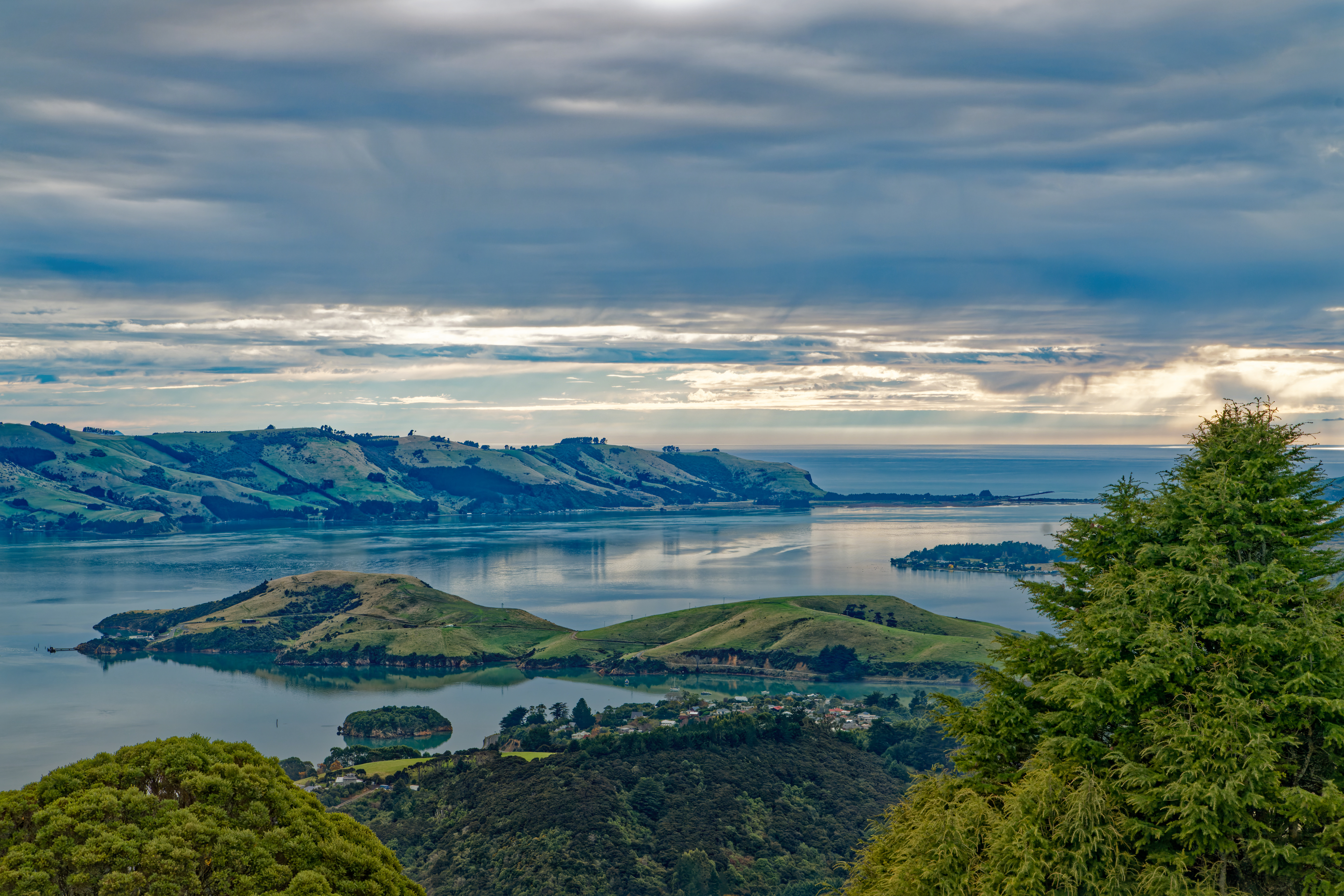
All of Otago’s catchments will have Catchment Action Plans in place in less than two years.
Thursday 26 March 2026
All of Otago’s catchments will have Catchment Action Plans in place in less than two years.
ORC councillors yesterday approved the acceleration of its Integrated Catchment Management Programme to co-develop Catchment Action Plans with community and mana whenua across the region by December 2027—almost two years ahead of the original schedule.
A Catchment Action Plan is a non-regulatory plan for the management and conservation of an entire catchment or catchments, building on the work that iwi, communities, catchment groups and local government are already doing to protect and manage their place. These plans cover freshwater as well as terrestrial and saltwater environments, along with land, soils and key human values.
Councillor and chair of ORC’s new Integrated Catchment Management Governance Board Andrew Noone says the original programme had nine Catchment Action Plans being delivered by October 2029.
“Two are complete and a third is underway. The six remaining catchment areas will be consolidated into four larger, connected catchments and prepared in this order: Dunedin and Coast, Upper Clutha/Mata-au, Lower Clutha/Mata-au and North Otago,” he says.
“Under this approach, the Clutha/Mata-au catchment would be split into Upper and Lower areas, alongside the Dunedin and Coast and North Otago catchment areas. This structure is designed to reflect local communities and environments, while still recognising the connections across the wider catchment.”
Cr Noone says this strikes the best balance between efficiency and effective engagement.
“This structure balances faster delivery with meaningful local engagement. By keeping the Clutha/Mata-au catchment in two distinct areas, the plan ensures that local voices and priorities are reflected, while also enabling efficiencies and coordinated planning across connected catchments.”
The rollout will begin in April 2026 with the Dunedin and Coast Catchment Action Plan, followed by Upper Clutha/Mata-au starting in June 2026, Lower Clutha/Mata-au starting in July 2026, and North Otago starting in March 2027. Each Catchment Action Plan area will have an ORC councillor to support the work.
All communities will be invited to participate in workshops and provide input to help shape the Catchment Action Plans. An Integrated Catchment Group will be formed to co-develop the Catchment Action Plan, which will include Cr Chanel Gardner as ORC’s representative. Together, this group will bring diverse voices and skills from across the catchment area to build a strong and effective plan for the future.
“We will be diving straight into the Dunedin and Coast Catchment Action Plan next. We have two opportunities for communities across Dunedin to learn how they can be involved in shaping the future of this diverse rural, urban, and coastal environment,” says Cr Noone.
Event details for Tuesday 14 April 2026
“This is an opportunity for members from the wider Dunedin community to shape a pivotal Catchment Action Plan that reflects the values of both the community and mana whenua, delivering positive outcomes for nature and society while protecting this diverse natural environment,” says Cr Noone.

Join us at Petridish to help develop a catchment action plan for Dunedin Coastal catchments.

Join us online and help develop a catchment action plan for the Dunedin and Coastal catchments.
ORC has also updated the Integrated Catchment Management Governance structure, renaming the current Working Group as the Integrated Catchment Management Governance Board. The board will have the authority to confirm members for each Catchment Action Plan Group, streamlining decision-making while maintaining strong oversight.
"This accelerated programme allows us to deliver tangible environmental benefits sooner, while keeping communities and mana whenua at the heart of decision-making. By working together, we can protect our rivers, wetlands, and landscapes, ensuring they thrive for generations to come,” says Cr Noone.
Crs Andrew Noone (chair), Kevin Malcolm, Neil Gillespie and Robbie Byars will be the representatives on the Integrated Catchment Management Governance Board.
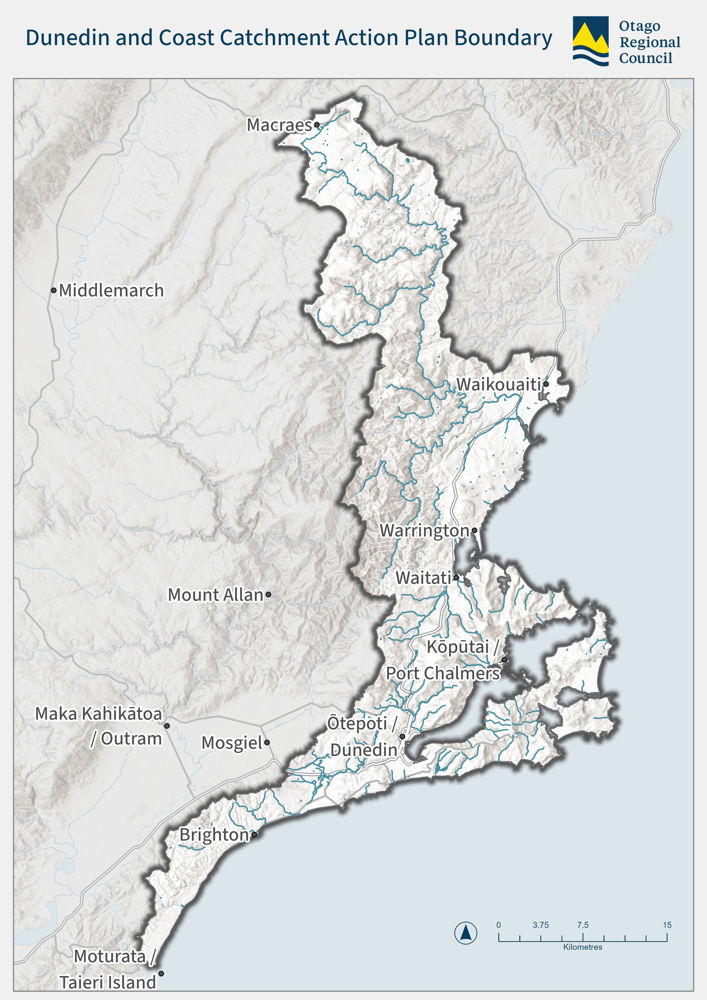
The Catchment Action Plan areas are:
*Exact boundary line to be decided after community discussions
Otago Regional Council’s Integrated Catchment Management programme followed decisions in the Long-Term Plan 2021-31. The Catlins was chosen as the pilot area, and in August 2023, the council agreed to develop the Upper Lakes and Taieri/Taiari plans. Following a review of the programme at the end of 2025, the council endorsed a plan to reduce the number of remaining Catchment Action Plan areas from six to four and reshape the governance structure. The updated approach retains the programme's intent at no extra cost to ratepayers, maintains the core development process, and allows time for community participation.
Integrated Catchment Management is a whole-of-landscape approach that uses the catchment as the boundary. Managing the environment at a catchment scale looks at the landscape from the mountains or headwaters of the catchment down to the sea, reflecting a 'Te Ao Māori' concept of inextricable connection between people and their environment, and between every element of our natural world – ki uta ki tai / mountains to the sea. This approach turns plans into on-the-ground results, ensures local support and shared ownership, and reduces duplication while building community and partner capacity to lead implementation.
For more information about the ICM programme and how to get involved, visit: orc.govt.nz/ICM



