Media release
New African feather grass incursion
Friday 26 June 2026
Council drop-in for pest plan review alerts locals to presence of plant pest.
Friday 26 June 2026
Council drop-in for pest plan review alerts locals to presence of plant pest.
After an incursion was discovered in the Wainakarua area earlier this year, the pest plant African feather grass has been spotted in the Ngapara area.
ORC biosecurity staff visited the site, and a sample was collected for formal identification. Bioeconomy Science Institute staff have confirmed that the species is in fact, African feather grass.
After talking to the landowners, staff will make a plan for next steps.
“Again, we want to thank the landowners for their amazing response,” says portfolio lead Cr Andrew Noone.
“And also thank our biosecurity, engagement and communications teams – it turns out the landowners saw a factsheet with African feather grass on it at the Ōamaru session of our regional pest management plan review drop ins and identified it there.”
A wider survey of the surrounding properties will be undertaken by ORC to see whether there are any more plants in the area. Once the full extent of the issue is known an incursion response plan will be developed in consultation with the landowners.
African feather grass produces large amounts of seeds carried by wind and water or caught in animal hair and clothing by barbed bristles. It also spreads through rhizomes (an underground fleshy stem) moved by machinery, cultivation, or dumped plant material and soil. The plant can spread quickly, crowding out other low-growing plant species. It can also impact our production and economic values.
What does it look like?


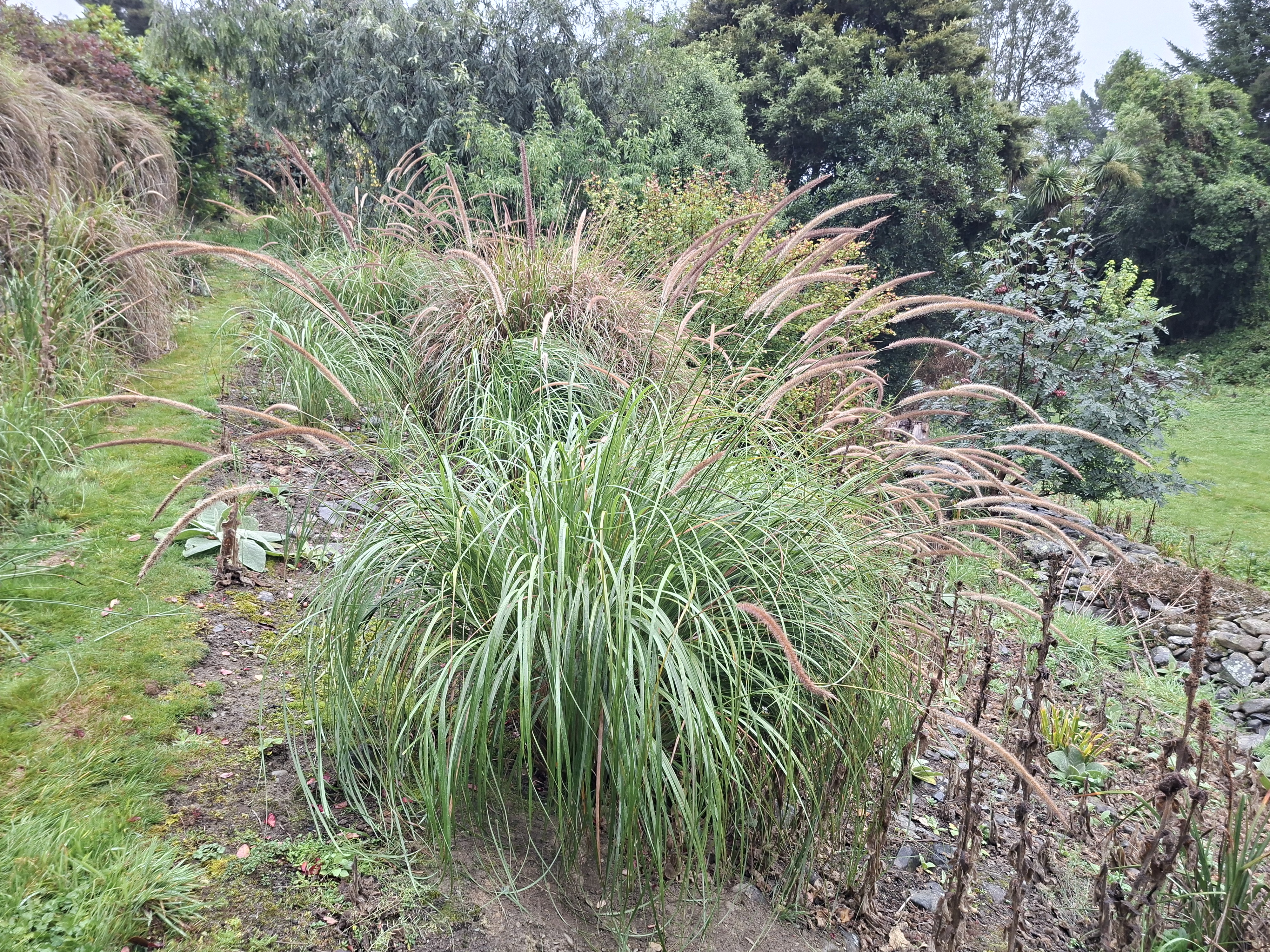
Size: African feather grass is a tussocky grass and forms thick clumps up to 2 metres high.
Leaves: Whitish green on top, ribbed, and dark green underneath. The leaf edges feel rough when touched, and the casing is covered in hairs.
Flowers/seeds: The flowers form a long, thin, straw-yellow colour spike, sometimes with a purplish tinge. The seeds have bristles that allow them to become easily attached to clothing, animal hair or wool.
Root system: African feather grass produces lengthy, fibre-like roots and stems that will form new shoots.
Habitat: Includes open areas, shrubland, grassland, coastal areas, cliffs, riparian margins, gravel beds, wasteland, and roadsides.
Do not attempt to undertake control of African feather grass yourself. If you think you have found it, please let us know by reporting it (or any other pest) online at orc.govt.nz/reportpests
You can also contact Otago Regional Council on 0800 474 082

If you think you have seen this pest, we need to know. Please report it.



