Farm waste is material generated through everyday farming activities. This can include everything from plastics and packaging to organic matter and old equipment.
The “big four” farm waste plastic types are small sacks and bags, large bulk bags, bale and silage wrap, and agrichemical containers and drums. These farm plastic types are commonly used across rural properties and can be collected and recycled through Agrecovery and Plasback’s nationwide programmes.
Farm waste also includes organic materials like compost and dead animals, and other items such as scrap metal, fencing wire, timber, tyres, sharps, paper, cardboard, electrical parts, and vehicle batteries. These items often have specific waste management routes which may vary depending on the area you live in.
Managing farm waste responsibly helps to protect the environment, looks after our waterways, and can improve farm safety.

If not managed effectively, farm waste can risk contamination of freshwater ecosystems and posts a risk to animal and human health.
Farm waste risks:
- leaching to groundwater or run-off to surface water
- soil contamination; non-biodegradable waste build up
- injury to animals
- air pollution from burning
Biohazard material risks:
- animal or human injury from incorrectly stored needles
- risk of illness from exposure to biohazard
Chemical storage and management risks:
- human or animal health risks from chemical spills (including fuel) or chemical residue if incorrectly stored
- contamination to waterways, groundwater and soils
Good management practices for farm waste helps to protect soil, water and farm productivity.
Managing waste properly can:
- Prevent pollution in waterways, groundwater, and soil
- Protect human and animal health from waste and contaminated run-off
- Meet government regulations and industry assurance programmes
- Support good farming practices and reflect pride and care for the land for future generations
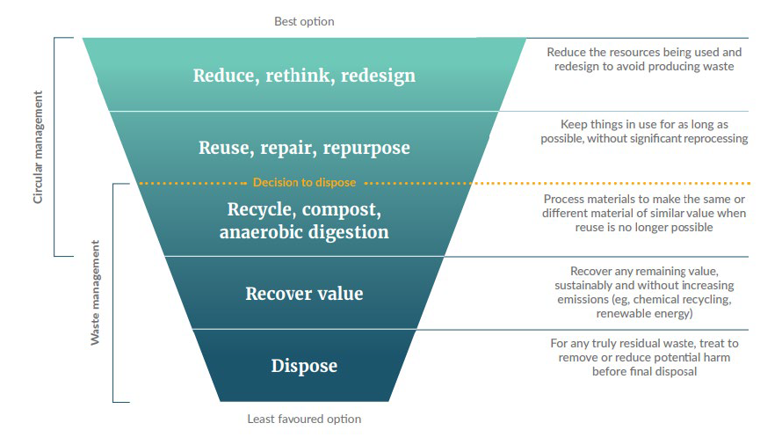
The waste hierarchy is a good framework to reduce and manage farm waste. The top levels focus on circular, sustainable approaches like reducing, reusing, and recycling materials.
The lower levels of the hierarchy are less desirable and cover disposal and treatment options. This internationally recognised framework guides New Zealand’s waste legislation and is reflected in the Otago Regional Council’s Regional Plan for Waste (Waste Minimisation Policy 4.4.2).
“How can I reduce farm waste?”
Small changes can make a big difference and avoiding single-use items where practical can reduce a lot of waste on farms.
For example, could you buy in bulk, like switch to bulk deliveries of feed or fertiliser instead of purchasing smaller single-use woven polypropylene bags, or durable items like refillable drums? Rethinking packaging and consumption is the first step to cutting waste.
“How can I reuse, repair, or repurpose what I already have?”
Old machinery may just need maintenance and repair to keep going, and plastic or metal containers can often be cleaned and reused if they haven’t held harmful chemicals.
Some suppliers and local businesses also offer take-back or reuse and refill schemes. For example, Ravensdown’s “Better Bag” large fertiliser bags can be returned and refilled, costing the buyer less reducing packaging waste. Bulk buying through these systems is often cheaper than single-use packaging.
Check with your local vet, feed supplier, or farm store about whether they offer refill and reuse options for commonly bought products like oil, feed, seed, or animal care supplies. Some businesses may let you return your containers to be refilled with the same product – which can also work out cheaper.
“I’ve reduced and reused what I can. How can I recycle more packaging?”
Recycling is a quick win that can prevent contamination and stop harmful practices like burning or burying recyclables, protecting soil, water, and air. It also supports closed‑loop use of valuable materials on and off the farm.
Agrecovery and Plasback provide nationwide collection systems, including drop-off sites and on-farm collections, to help farmers recycle farm plastic waste including small sacks and bags, large bulk bags, bale and silage wrap, and agrichemical containers and drums. These schemes are now being brought together under a regulated national system — the Rural Recycling Scheme. This industry-led scheme will provide a consistent, free and convenient take-back service for farm plastics across all regions.
Tyrewise manages the nationwide collection and recycling of end-of-life tyres. You can find more information here: tyrewise.co.nz
Quick wins:
- Sign up to Plasback or Agrecovery to recycle the main plastic packaging types — small sacks & bags, silage and bale wrap, and chemical containers & drums.
- Clean and sort waste - Keep waste clean and sorted before recycling. Use clear signage on bins (e.g., “Plastics,” “Cardboard,” “Glass,” “Triple-rinsed Containers”) to make separation easy.
- Separate hazardous and special waste: (like batteries or chemicals) - these often need to go to specific facilities rather than regular recycling. These often need to be stored and labelled in a secure, safe space before being taken to specific facilities for disposal.
- Consider coordinating with your neighbours to plan a trip to drop off separated waste, as landfills and transfer stations can be considerable distance from farms.
- Check with your local council about resource recovery options for other items (e.g., scrap metal, cardboard, glass, batteries, tyres). Many councils provide lists of accepted materials and any charges or preparation steps.
- Know your local transfer station so you know which materials can be taken where. You could ask your neighbours or check with your catchment group for ideas and advice.
“I’ve done what I can. There are some items leftover.”
As a last resort, if your items cannot be recycled, reused or repaired and you are looking to dispose of them, be aware of Otago’s regional rules and guidelines for managing farm waste, like conditions for on-farm landfills, offal pits, and burning waste.
Burying farm waste can leach harmful chemicals into the soil, groundwater and waterways, while burning waste can release carcinogens into the environment. Otago’s rules are in place to protect our soils, waterways, air quality, animal health and human health.
Visit our website to read more about Otago’s regional rules around burning and burying farm waste.
Farm waste management options vary depending on the district or catchment you are in. What works in one area might not be available or appropriate in another.
WasteMINZ has developed a general farm waste guide for managing common items such as bale wrap, silage wrap, sharps and needles, vaccine packs, batteries, treated timber, and more.
This guide is intended as a template for districts and catchments to edit and localise for their own communities, so people know where materials can be taken for local recovery, repair, recycling, or disposal.

When adapting this guide for your own local area, it can be challenging to find the right information for how and where different farm waste items should be managed. A few tips that might help:
- Connect with your local catchment group (if you have one) for more support and to see if they would like to be involved in creating a local community guide (or if one already exists)
- Visit Agrecovery and Plasback’s websites for options and drop off locations for recycling many farm plastic packaging types including small sacks & bags, silage and bale wrap, and chemical containers & drums
- Contact your local council to confirm recycling options and locations for other items (e.g., scrap metal, cardboard, glass, batteries). Many councils provide lists of accepted materials and any charges or preparation steps
- Know your local transfer station or resource recovery centre so you know which materials can be taken where. You can call these centres to to ask for more guidance on specific items.
- Contact your local Catchment Advisor at catchments@orc.govt.nz for more information about farm waste,and rules or good management practices in Otago.


