Friday 5 June 2026
A survey earlier this year asked the public which pests worry them the most. Over 900 responses were received and now the Otago Regional Council (ORC) is asking the public what they think of plans to manage the pests identified.
The top responses of the survey were:
| Rank | Species |
|---|---|
| 1 | Rabbits |
| 2 | Feral cats |
| 3 | Pest conifers |
| 4 | Possums |
| 5 | Mustelids (stoats, ferrets, weasels) |
| 6 | Feral deer |
| 7 | Feral pigs |
| 8 | Rats |
| 9 | Sycamores |
| 10 | Willows |
| 11 | Gorse and broom |
| 12 | Wallabies |
| 13 | Feral goats |
| 14 | Lagarosiphon |
These species have been highlighted as “Spotlight Species” in ORC’s Regional Pest Management Plan (RPMP) discussion document, out today and available online at www.orc.govt.nz/PestFeedback
The Otago Regional Pest Management Plan 2019–2029 sets out how pest plants and animals are managed across Otago under the Biosecurity Act 1993. The plan is now being reviewed to ensure it remains effective and resilient. Learn about purpose of the plan, why the review is needed, and how you can get involved in the process.
Share your thoughts, find more information on the reasons for the review and how ORC will engage with our key stakeholders.
Feedback on the document closes 8 July.
Portfolio lead Cr Andrew Noone says, “A full review of a regional pest management plan requires a lot of thinking around what we have learnt about how effective the current plan has been, what we might improve and what changes are needed. We are extremely grateful for the responses we had to our initial survey, this helped identify the pests Otago residents are most concerned about and has directly contributed to the discussion document, which focuses on ways to manage these species.”
“If you can make it to one of the drop-ins, it will be an opportunity to chat one on one to staff, ask questions and let them know what you think about suggested management options. It’s a good idea to read the discussion document before you come so you know what’s being suggested. We know transport is top of mind for people right now so we have scheduled an online session as well, so you can get involved from home and contribute your thoughts. Any way you choose to participate will be of benefit and help create a pest plan that works for all of our communities.”
Read the discussion document, then come join us for a 1:1 chat about how pests should be managed in Otago.
Our biosecurity and policy teams will be there to answer your questions.
Come and have your say — your feedback will help shape the draft RPMP before formal consultation begins. If you can't make it to one of these, an online session is being held on Tuesday 30 June.
The most important thing is to get involved!
| Date | Time | Location |
|---|---|---|
| Monday 15 June | 3–6pm |
Aonui, Otago Regional Council (Reception), |
| Wednesday 17 June | 10am–1pm |
Owaka Community Centre, |
| Wednesday 17 June | 3–6pm |
Te Pou Ō Mata Au | Clutha District War Memorial & Community Centre, |
| Monday 22 June | 3–6pm |
Wanaka Community Hub, |
| Tuesday 23 June | 3–6pm |
Scottish Hall, |
| Tuesday 30 June | 7–8pm |
Online |
| Wednesday 1 July | 3–6pm |
Alexandra Community House, |
| Thursday 2 July | 1–4pm |
Queenstown Events Centre, |
| Monday 6 July | 3–6pm |
Maniototo Park Stadium and Rugby Clubrooms |
Background
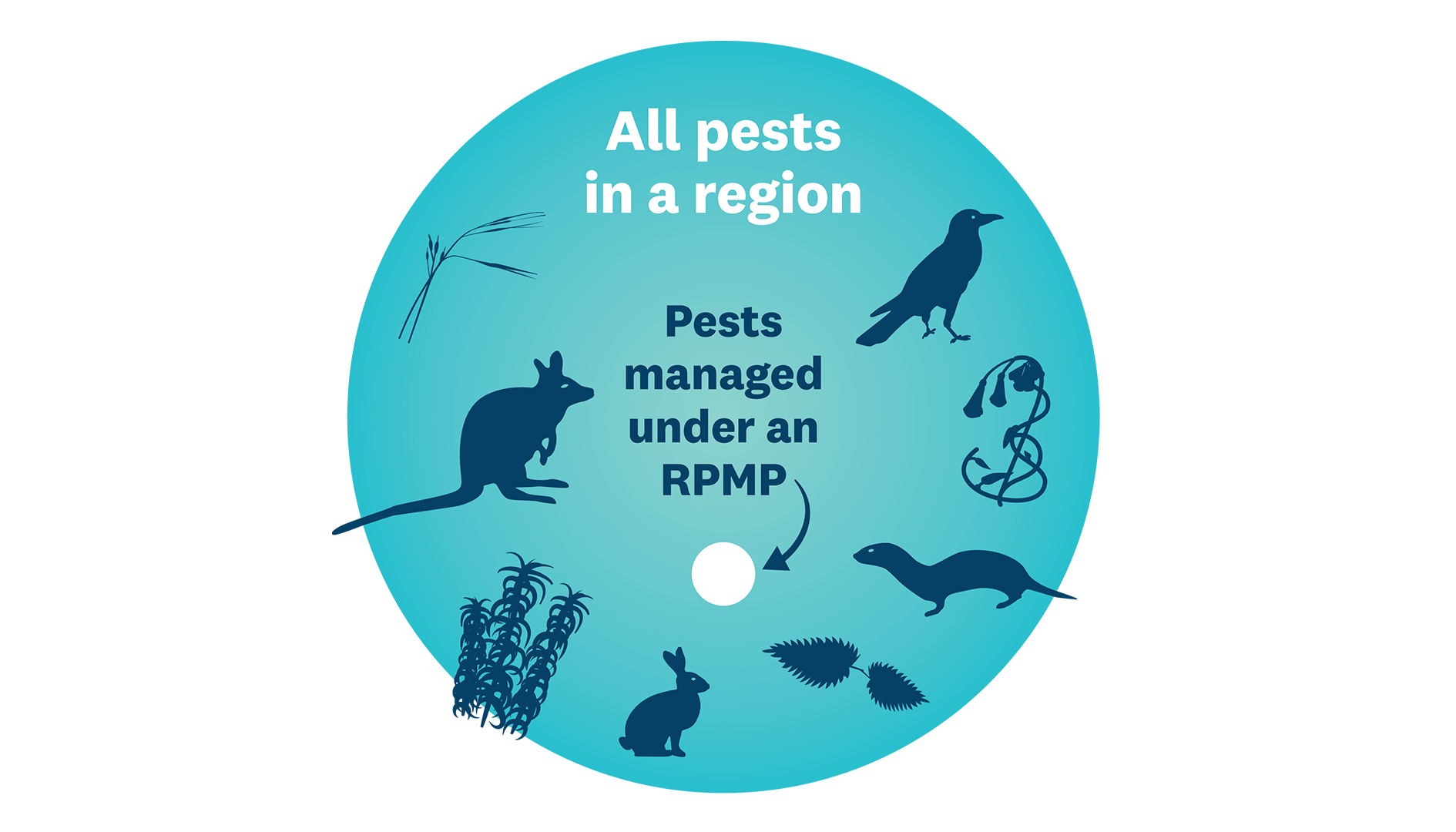
ORC is reviewing its Regional Pest Management Plan. The plan identifies pests in the region and sets goals to either keep these pests out of Otago, get rid of them, or reduce them. The plan also makes rules for people to follow.
There are many pest species that can impact Otago's diverse environment, communities and economy. Under the current plan 51 species are managed. Pest plans are required to be reviewed every ten years. The current pest plan was established by Council in 2019.
Next steps
Once feedback from the discussion document has been collated, the full proposal for the draft plan will go out for consultation in early 2027, followed by a submission period and hearings related to those submissions. Once council has approved the draft and the plan is notified, it is expected to be operational in mid-2028.
For more information and to keep up to date with the pest plan progress, head to www.orc.govt.nz/pestplanreview