-
-
-
-
-
-
-
-
-
-
-
The Source - Spring
-
-
-
-
-
-
-
-

 It’s been around a year since councillors were elected to their roles. Together we’ve been working towards a thriving, prosperous and well-managed region, with strong environmental safeguards.
Supporting this, earlier this year councillors agreed on 34 priority actions — the focus for the next two years.
There’s been good progress towards these, including starting a review of flood and drainage rating structures to ensure equity across catchments, and finalising an Environmental Fund framework to ensure funding is directed toward agreed priority actions and outcomes.
There are also some exciting things happening with public transport, with some significant pieces of work in this space.
A new Ōamaru bus service started this month, replacing a successful community trial and reflecting what councillors are here to do — we’ve enabled, listened and delivered.
In Dunedin, more electric buses have replaced diesel this month, the swap of dozens of buses meaning 77% of the city’s buses are now electric — helping to reduce congestion and reducing carbon emissions.
Following recent completion of business cases, public transport trials for both Wānaka / Upper Clutha and Central Otago will be considered for inclusion in the draft Long-Term Plan.
If included in the draft, it will provide an opportunity for the community to have their say on the proposals, including how they could be funded.
Meanwhile, Government has paused further Local Government reform work until after the election.
There’s still plenty of important work to be done to protect the environment and provide public transport services, and we’ll continue to focus on delivering value for money and the best outcomes for Otago.
Hilary Calvert,
ORC Chairperson
A new Ōamaru bus service launched earlier this month, providing a new public transport option for people travelling between Ōamaru, the Waikouaiti Coast and Dunedin.
 The Route 1 extension provides a daily return trip, stopping at nine locations across Ōamaru, as well as Maheno, Hampden, Palmerston, Waikouaiti and Waitati. The service leaves North Ōamaru at 8.21am, heading south, and returns from Dunedin, leaving at 5.05pm.
Councillors have agreed on changes to bus fares and zones. Trips on the Ōamaru–Dunedin service in October will be available at an introductory fare of $2.50 per trip for adults using a Bee Card.
From 1 November, fares will change when the new zones are introduced. Adult Bee Card fares for the Route 1 Ōamaru/Palmerston–Dunedin service will range from $2.50 to $10.
Changes have also been made to the Dunedin Orbus network, including updated timetables, increased frequency, route changes, additional school-day services and more electric buses. The changes are designed to improve reliability, connections and services.
Find out more about zones and fares at orc.govt.nz/DNbuschanges
What’s next for electric buses and public transport in Central Otago and Wānaka?
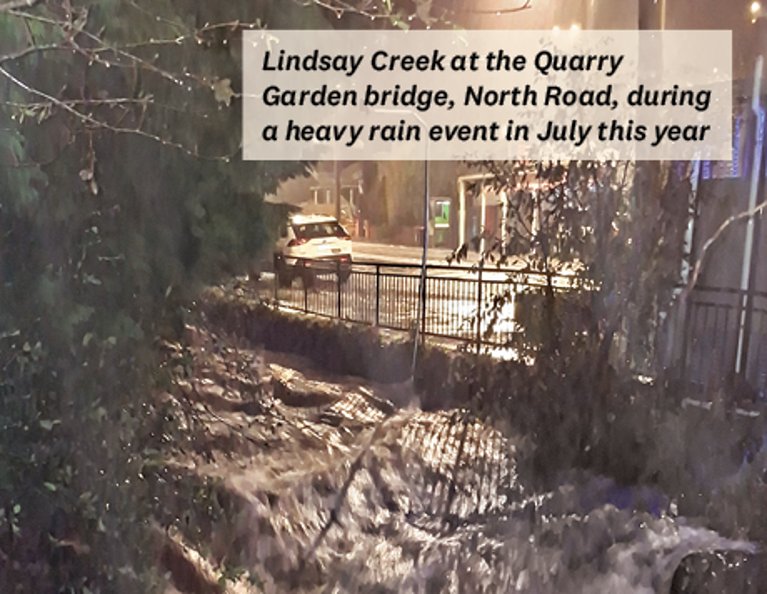
Lindsay Creek runs through Dunedin’s North East Valley.
A lot of people wouldn’t know there is a creek right next to the road here and that it can flood rapidly when there’s heavy rain in the catchment.
Flooding has happened in the 1890s, 1930s, 1970s, right through to recent times.
A lot more people live in the valley these days; in fact, a few hundred properties and hundreds of people could be impacted by a major Lindsay Creek flood, along with businesses, infrastructure and roads — including North Road, the main access to the valley.
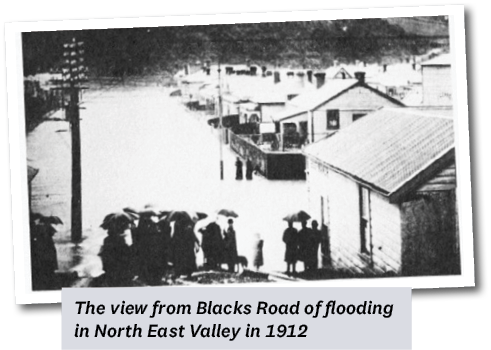 A new report updating what we know about the flooding hazard has been completed. We’ll be talking about the findings with the community at a public meeting at North East Valley Bowling Club on Wednesday, 21 October 2026. A drop-in session will run 3–6pm, and there will be a community presentation from 6.30pm to 8.30pm.
Find out more: orc.govt.nz/lindsaycreek
New technology at Lake Hāwea completes ORC’s monitoring network across Otago’s four deep high-country lakes — Wānaka, Hāwea, Whakatipu and Waiwhakaata / Lake Hayes.
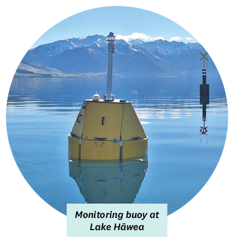 The new buoy provides valuable information about one of Otago’s most important freshwater systems. The four lakes form a significant part of the headwaters of the Clutha River/Mata-Au, New Zealand’s largest catchment by both area and water volume.
The buoys collect data at different depths, measuring water temperature, dissolved oxygen, chlorophyll, phycocyanin, turbidity, pH, conductivity and weather conditions.
As well as the buoys, ORC’s wider deep-lakes monitoring programme includes sensors to measure temperature and oxygen near the lakebed, while monthly water-quality profiles provide information from the surface to near the lakebed.
Near-real-time data from the monitoring buoys is available on ORC’s Environmental Data Portal at orc.govt.nz/edportal
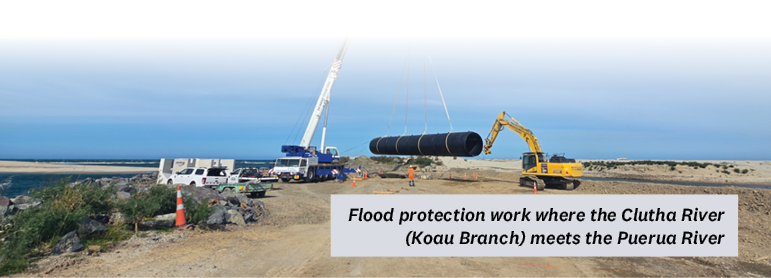
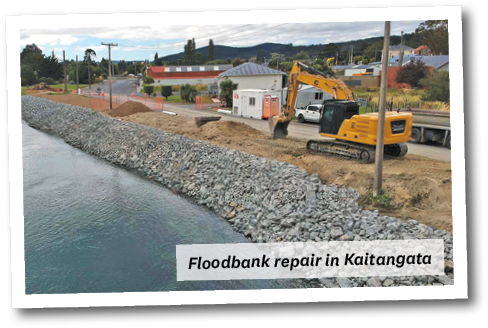
A $2.9 million upgrade to flood protection infrastructure at the mouth of the Clutha River south of Balclutha has been completed.
The improvements are designed to help maintain the Lower Clutha Flood Protection and Drainage Scheme’s performance, protecting the surrounding community, farmland, roads, rail and other essential infrastructure.
The work on the Puerua outfall structure included upgrading culverts and strengthening rock walls to control river flows to the sea and preventing the river mouth from shifting along the coast.
Work started in late 2025, with weather and water being the biggest challenges on site — monitoring the river and sea while keeping watch on tides and weather patterns. The project was co-funded by a loan of up to $1.2 million from the Government’s Regional Investment Fund.
The Lower Clutha Flood Protection and Drainage Scheme was built between 1960 and 1991 to protect the towns of Balclutha, Kaitangata and Stirling as well as low-lying farmland.
Dunedin’s transition to a more sustainable public transport fleet is continuing, with 37 new electric buses recently joining the Orbus network.

The new buses replace diesel buses on Go Bus routes, bringing the total number of electric buses in Dunedin to around 77% of the fleet!
Switching more buses from diesel to electric is expected to cut around 1,170 tonnes of carbon emissions each year in Dunedin — that’s the equivalent of taking hundreds of petrol cars off the road! Over the space of a year, these new electric buses will also replace around 1.7 million kilometres of diesel bus travel.
The Dunedin bus fleet is expected to be fully electric by 2028, marking a significant step towards Otago Regional Council’s goal of a zero-emission public transport fleet.
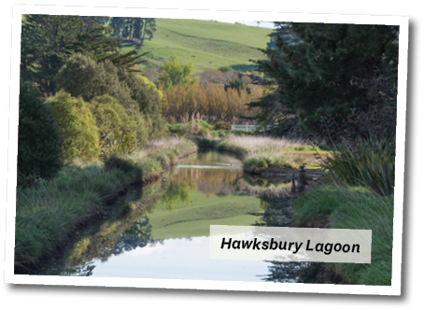 A New Zealand-first region-wide programme to improve catchment health across Otago has reached its halfway milestone, with completion on track for December 2027.
The Integrated Catchment Management programme, in partnership with mana whenua, brings communities, agencies, landowners and organisations together to care for the places we depend on.
The programme recognises the connections between water, land, biodiversity, climate resilience and people, ki uta ki tai — from the mountains to the sea. It supports communities to develop catchment action plans that guide local action, set priorities, coordinate investment and deliver long-term environmental improvements.
Through a whole-of-catchment approach, communities across Otago are working together to create healthier waterways, stronger ecosystems and more resilient landscapes for future generations.
Find out more at orc.govt.nz/icm
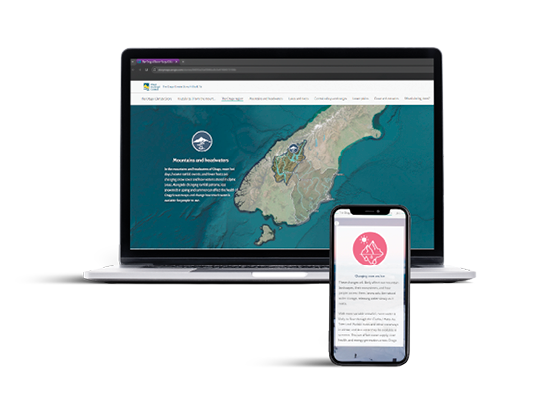
The Otago Climate Story: Ki Uta Ki Tai is a new interactive online resource to help people better understand the future impacts of climate change.
As well as an overview for the whole of the region, individual summaries are provided for Queenstown Lakes, Central Otago, Waitaki, Clutha and Dunedin.
It explores how climate change could impact everyday life, businesses, and the services communities depend on. Detailing the risks and opportunities on a map-based platform, the climate story follows the effects of climate change from the mountains to the sea.
The new resource was developed with mana whenua and Otago’s territorial authorities.
Find more information on climate change where you live at orc.govt.nz/climatestory
At this time of year, our 24/7 Pollution Hotline gets lots of calls about ‘paint spills’ in gutters, puddles and streams. Often, the culprit is actually pollen.
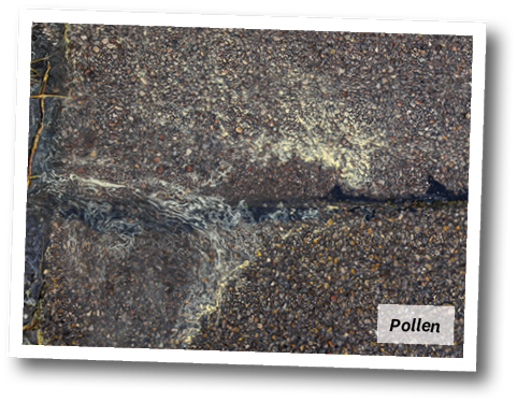 At this time of year, our 24/7 Pollution Hotline gets lots of calls about ‘paint spills’ in gutters, puddles and streams. Often, the culprit is actually pollen.
Pollen looks like a yellow or greenish dust, often forming swirls or patches on the surface. It may have a light floral smell and usually washes away after rain or blows away in the wind.
Pollen can be found on footpaths or flushed through stormwater systems, so you may see yellow dust in nearby gutters or puddles. It often builds up in wet areas. On rivers and lakes, it is sometimes mistaken for toxic algal blooms.
If you’re unsure whether it’s pollen or something else, you can still use our 24/7 Pollution Hotline — call 0800 800 033 or visit orc.govt.nz/reportpollution
Hearings will be held in November to consider feedback on proposed changes to how the costs of the Lower Clutha/Mata-Au and Lower Taieri flood protection and drainage schemes are shared.
 A review proposed changes to how the costs of the Lower Clutha/Mata-Au and Lower Taieri flood protection and drainage schemes are shared.
The proposed approach would separate flood protection and drainage costs, with flood protection costs based on the level of benefit a property receives and drainage costs based on factors including land area, land use and drainage demand.
People were asked to give feedback. That’s currently being reviewed following consultation. The next step is hearings for those who requested to speak to their submission.
Following the hearings, councillors will consider the proposal and feedback. Any change is likely to form part of the Long-Term Plan 2027–37 process. If approved, any changes to rates would take effect from 1 July 2027.
Find out more: orc.govt.nz/schemerates

Are you subscribed to our monthly e-newsletter On Stream? Would you like to be? Get ORC’s monthly news fresh to your inbox:
 Stop for the bus!
The law has changed, and since 1 October, drivers must stop and give way to buses leaving bus stops. This rule applies to all buses and road users in areas where the speed limit is 60 km/h or lower.
 Rates reminder
Please remember to pay your ORC rates by 31 October to avoid the 10% penalty applied to rates that remain unpaid on 1 November.
Also, have you considered setting up a direct debit so you don’t forget?
Find out more: orc.govt.nz/directdebit
 Be alert for bird flu
When you’re out enjoying Otago’s beautiful nature, please be on alert.
Bird flu is a highly contagious viral disease.
Keep yourself and pets away from sick or dead wildlife.
Wash your hands and gear after being outdoors.
If you see three or more sick or dead wild birds in a group, call 0800 80 99 66 or report it online at report.mpi.govt.nz
 Signed up for ShakeOut?
On Wednesday, 21 October at 1.30pm, we’ll be taking part in ShakeOut, a self-run earthquake and tsunami drill.
All you need to do is Drop, Cover and Hold for 60 seconds and practice your evacuation if you are in a tsunami evacuation zone.
Sign up and be in to win at getready.govt.nz/sign-up


