-
-
-
-
-
-
-
-
-
-
Plan development
-
-
-
-
-
-
-
-
-
-
-
Developing the Plan
Here we outline how we worked together in a collaborative setting to create the first iteration of The Catlins Catchment Action Plan, and describe how the plan will be updated annually to ensure it is fit for purpose to meet our goals for the environment in the Otago part of The Catlins.
In this part of the plan development, the Catlins Integrated Catchment Group identified environmental values and discussed the services that they provide to the people of the area.
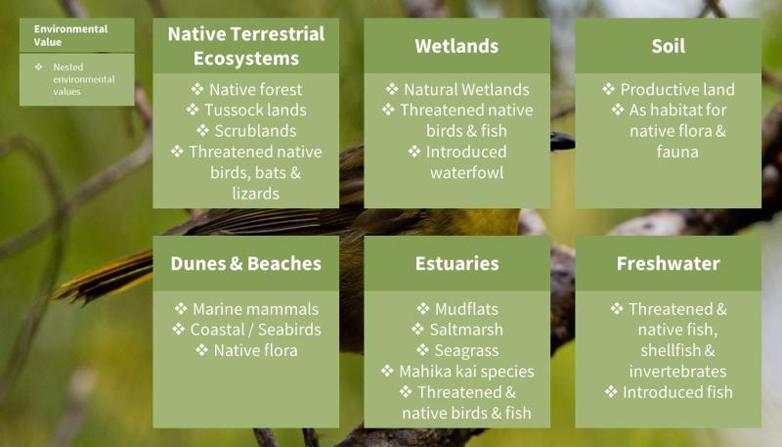
- Native forests
- Native tussocklands
- Native shrublands
- Developed land
- The native wildlife that these habitats support
- Productive Land
- Soils as habitat that supports native flora & fauna
- Streams
- Rivers
- Lakes
- Native freshwater wildlife
- Valued introduced freshwater species
- Bogs
- Swamps
- Marshes
- Native wetland species
- Valued introduced wetland species
- Saltmarsh
- Seagrass meadows
- Native estuarine wildlife
- Beach systems
- Dune systems
- Marine mammal habitats
- Seabird habitats
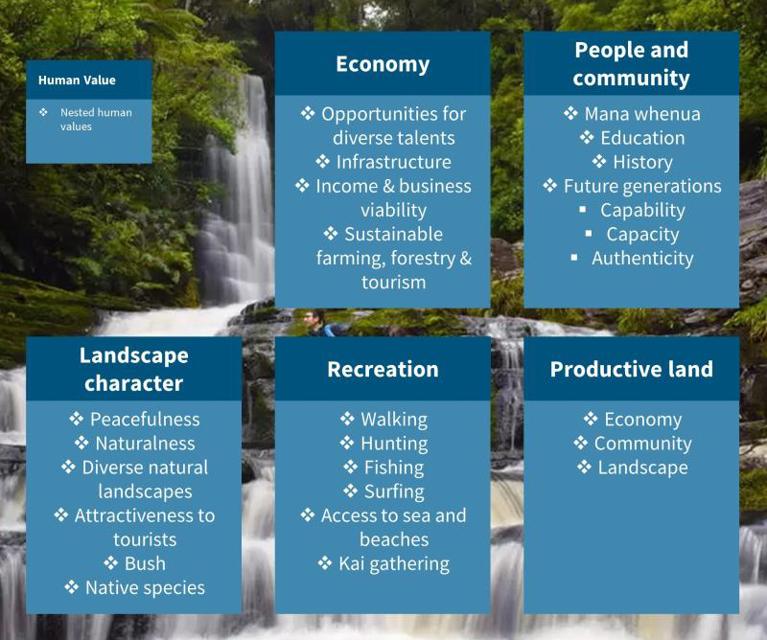
This includes the regions' diverse landscapes that provide peacefulness and naturalness, as well as attract tourists to the area.
This includes the many ways in which the community lives in The Catlins, as well as mana whenua's access to mahika kai, wāhi tāpuna, and the protection of taoka species.
This includes the diverse ways in which The Catlins people make a living, such as forestry, farming and tourism.
This includes walking, fishing, kai gathering, surfing and hunting, which are all enjoyed and accessible.
This includes the regions' farming and forestry land that and the economic and social benefits that these industries provide.
The Catlins Integrated Catchment Group worked together to identify and develop our environmental values in a workshop facilitated by ORC's Integrated Catchment Management team. Several ideas came up, and similarities between these allowed the team to group ideas into the values presented above.
The group also worked on identifying attributes relating to each value. In the future, we will measure these attributes to track the health of our values.
Pressures are primarily human activities that can degrade and put stress on our environmental values. In this part of the plan, we identified pressures in the catchment and how these activities are negatively impacting values' health.
Introduced mammals, fish, birds and plants impact all of the values in the area, as well as unsustainable land use, litter and plastics.
Poor tourism and recreation practices, poorly maintained septic systems, and overharvesting all contribute to degrading some of our values.
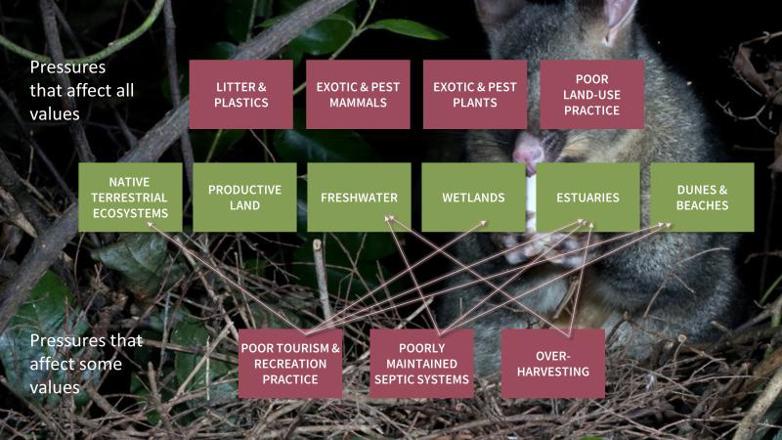
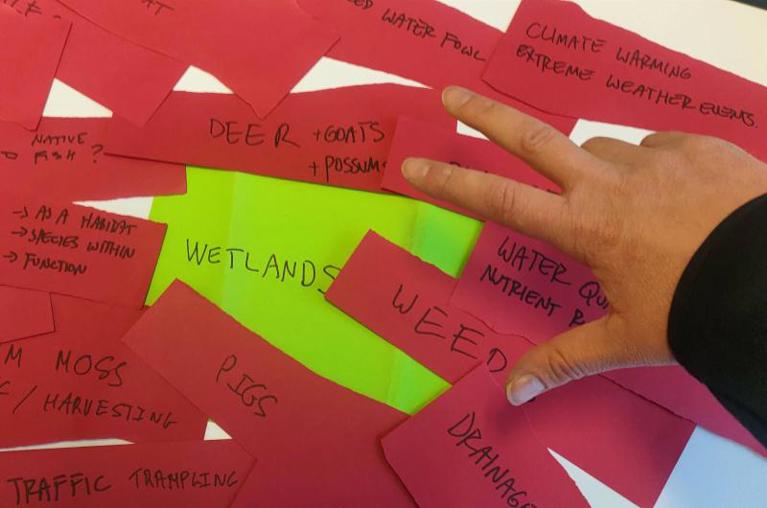
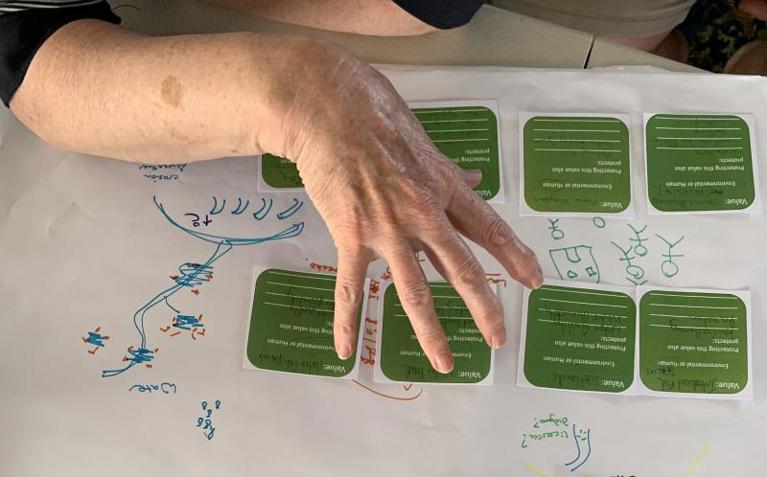
The Catlins Integrated Catchment Group worked in teams, each focusing on one value, in a workshop facilitated by ORC's Integrated Catchment Management team. They identified a large number of pressures that degrade and put stress on the values. The ORC team helped to organise pressures caused by the same activity into a logical sequence.
The group also rated each pressure according to severity, scale and how hard it would be to reverse it.