Delivery of actions will not rest with our group alone; a shared responsibility and resourcing model reflects the collective impact approach at the heart of the CAP, where success depends on many hands working together.
We acknowledge that strategy development must be grounded in meaningful partnership with mana whenua; this is an initial plan that will adapt to changing pressures with ongoing mana whenua direction and guidance.
An Upper Lakes CAP Governance Group, comprising core members (including mana whenua) and a wider circle of collaborators, will operate under clear terms of reference.
Delivery will be led by conservation and catchment groups, mana whenua, agencies (including ORC), landholders, and industry, supported by ORC programmes and CAP coordination; resourcing will draw on contestable funds, agency budgets, other funding, and the significant value of volunteer and in-kind contributions.
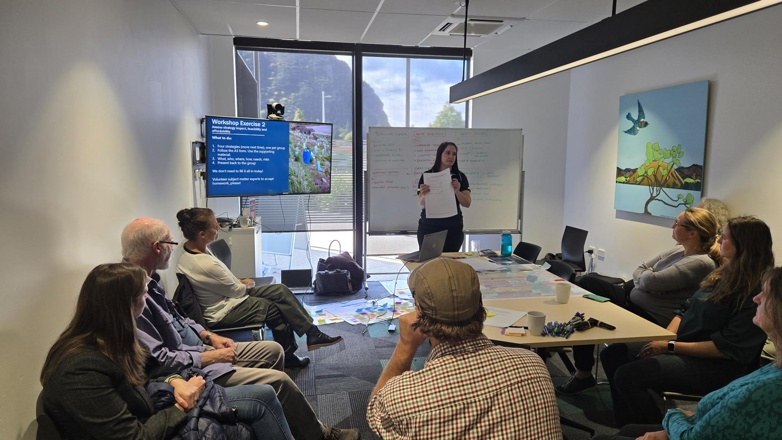
 Develop a long-term and diverse framework that sustains funding that will support actions
Objective: Develop a long-term, sustainable, and diverse funding framework to deliver CAP strategies and support proactive, community-led restoration.
Impact: Supporting impact
Feasibility: Medium feasibility
- Funding that recognises landscape-scale action is a long game: Advocate for long-term funding that supports landscape-scale actions such as predator control and plantings.
- Investable restoration actions: Measure economic value of restoration benefits and create investable projects for self-sustaining action.
- Cost-benefit-based early intervention: Prioritise early interventions where cost-benefit shows effectiveness and reduced long-term costs.
- Help land holders fund action:Provide funding tools like co-funding, loans, levies, and credit systems for landholder restoration.
 Increase science, research and knowledge sharing for the community
Objective: Identify and bridge knowledge gaps, and provide accessible science to enable evidence-based management and support CAP strategies.
Impact: Supporting impact
Feasibility: High feasibility
- Deep Lakes research programme: Research deepwater lake trajectories, nutrient budgets, food webs and invasive species; apply the results to management of land use.
- Build on current community science opportunities: Support community monitoring with coordination, robust methods, advice, and data storage.
- Develop an interactive CAP data system:Create a digital mapping platform for real-time data and community observations.
- Establish a knowledge sharing network: Build a collaborative network linking groups, mana whenua, scientists, and experts.
 Strengthen our mana whenua partnership in the Upper Lakes area
Objective: Continue to build partnerships between mana whenua, government, and conservation groups to uphold Kāi Tahu values and shared aspirations.
Impact: Supporting impact
Feasibility: Very high feasibility
- Support development of meaningful mana whenua partnership engagements: Develop a partnership plan that ensures genuine and meaningful korero (discussions) and mahi (work) that reflects partnership commitments and to ensure mana whenua are appropriately resourced and enabled to participate to the extent they wish.
- Reflect the Waiwhakaata Rautaki (strategy) in our work together: Use the rautaki as a pathway to position the mauri (life force) and mana (prestige) of te taiao (the environment) and the catchments as the central priority for what we do in partnership.
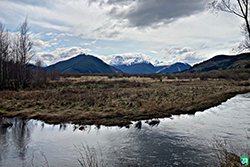 Improve environmental conditions for mahika kai and enable safe use
Objective: Strengthen understanding of mahika kai, improve conditions at sites, and increase species abundance.
Impact: Supporting impact
Feasibility: Midium feasibility
- Strengthen community education on mahika kai: Strengthen community knowledge and awareness of mahika kai practices, along with increasing the broader understanding of what mahika kai is, and its importance in Kāi Tahu life and identity, as determined by mana whenua.
- Integrate mahika kai across actions: Invest in mana whenua-led plans, designs and/or guidelines, to ensure mahika kai resources, habitats, and practices are appropriately built into large-scale restoration and enhancement projects
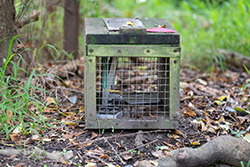
Control introduced predator mammals
Objective: Reduce predator mammal populations to increase native wildlife, enhance mahika kai, and protect uncommon ecosystems.
Impact: High impact
Feasibility: Medium feasibility
- Use advanced and innovative trapping and monitoring tools: Expand use of smart traps, sensors, and real-time monitoring.
- Enhance current core-buffer-corridor control operations: Intensify predator control in core areas, buffer zones, and wildlife corridors.
- Establish a predator elimination zone in 5–10 years: Create a 10,000 ha predator elimination zone with aerial baiting and perimeter trapping.
- Expand community engagement and trapping in urban/semi-rural areas: Grow backyard trapping groups and trap libraries with training and support.
- Support responsible companion cat ownership and policy interventions: Promote responsible cat ownership through education and policy advocacy.
- Strengthen feral cat control: Develop targeted feral cat control plans guided by monitoring data.
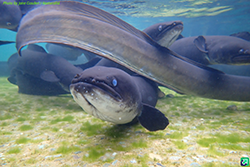 Assist tuna kuwharuwharu (longfin eel) and kanakana (lamprey) migration, in partnership with mana whenua
Objective: Support tuna (eel) and kanakana (lamprey) migration to enhance wildlife, mahika kai, freshwater ecosystems, and ki uta ki tai.
Impact: High impact
Feasibility: High feasibility
- Mana whenua-led collaboration with key partners to increase tuna (eel) trap and transfer: Strengthen partnerships to expand elver and adult tuna trap and transfer up and downstream of dams.
- Support mana whenua-led tuna research: connect with and support mana whenua-led research on elver arrival, survival, and health of transferred tuna.
- Monitor tuna (eel) health in the deepwater lakes: Develop a mana whenua-led monitoring plan with community involvement.
- Support a kanakana assisted passage programme: Understand mātauraka of kanakana in the Upper Lakes CAP area and support mana whenua-led research that can lead to a trial of assisted passage.
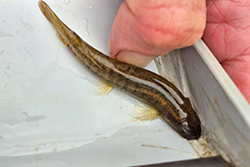 Protect and enhance galaxiid habitats
Objective: Reduce interactions between introduced fish and galaxiids to boost native wildlife and freshwater ecosystem health.
Impact: Very high impact
Feasibility: Very high feasibility
- Determine galaxiid distribution with mātauraka (Kai Tahu knowledge) and eDNA: Form a clearer picture of non-migratory galaxiid distribution, building on recent work using eDNA analysis, along with mātauraka.
- Provide on-site community and visitor education on galaxiids: Install educational storyboard signage on galaxiids at tracks and rest stops.
- Undertake galaxiid habitat restoration: Improve habitats with barriers, trout removal, culvert fixes, and planting.
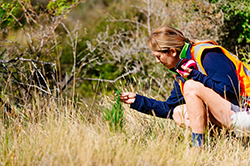 Control wilding conifers (pines and firs) and terrestrial weeds
Objective: Reduce wilding conifers and terrestrial weeds to improve vegetation, expand natives, and protect ecosystems.
Impact: Very high impact
Feasibility: Medium feasibility
- Build community weeds knowledge: Expand education on pest plant identification, impacts of weeds, and effective control methods. Bring our community along with us, for coordinated control work.
- Maintain a wilding conifer spread map: Update and maintain data on the spread of wilding conifers and develop a dynamic digital heatmap identifying seed sources and dispersal hotspots.
- Replace conifer seed sources with native plants or non-spreading exotics: Promote the phased removal of conifer shelterbelts, woodlots, and visual screening plantings that pose a risk of wilding spread. Replace with natives or non-spreading exotics.
- Support and enable collaborative weed control: Share crews, resources, and expertise across groups for effective control. Coordinate control work across landholders for collective impact.
- Address emerging weed pressures: Proactively manage fast-spreading weeds recognising the cost-benefit of early intervention to stop spread.
- Control weeds in braided rivers: Manage weeds that alter river dynamics and nesting habitats.
- “Right plant, right place” and targeted control approach: Focus weed control efforts based on risk to native ecosystems, functioning of waterways, mahika kai and catchment landscapes. Apply control methods carefully using precision techniques.
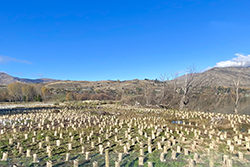 Protect, restore and enhance native vegetation
Objective: Protect existing native vegetation, expand planting, and reduce browsing by introduced herbivores.
Impact: Medium impact
Feasibility: Medium feasibility
- Ensure our native plantings are adequately maintained: Fund maintenance for at least 3 years to ensure survival and growth. Ensure projects are not “plant and walk away”.
- Support community nurseries: Strengthen native seedling nurseries for propagation, non-restrictive eco-sourcing, and climate resilience.
- Improve public access to eco-sourced native plants: Promote and improve public access to diverse, non-restrictive eco-sourced native plant seedlings for residential use
- Develop a spatial native vegetation restoration plan: Model where planting, regeneration, and protection should occur for long-term ecological connectivity, climate resilience.
- Incentivise retirement of marginal land and protection of habitats: Provide incentives to retire land and covenant sensitive habitats.
- Coordinate goat and pig control: Facilitate coordinated control between landholders and across boundaries to reduce browsing.
- Increase rabbit and hare control: Fund rabbit-proof fencing, rabbit guards for seedlings, and coordinated control efforts.
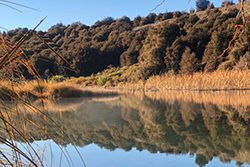 Protect, restore and enhance wetlands
Objective: Protect and restore wetlands to increase extent, function, biodiversity, and downstream water quality.
Impact: Very high impact
Feasibility: Medium feasibility
- Build community wetland knowledge: Build community knowledge and awareness of wetland values - nutrient cycling, flow regulation, native biodiversity, and mahika kai.
- Share wetland restoration guidance: Provide best practice guidance on wetland restoration and mana whenua-led guidance on wetland mahika kai enhancement.
- Provide a start-to-finish support package for wetland restoration: Provide a package of start-to-finish support including access to experts, planting design, coordination of on-the-groundwork and on-going maintenance support.
- Control willows in wetlands: Enable phased willow removal with streamlined consents and experienced operators.
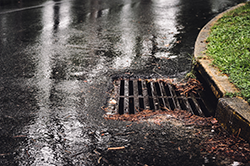 Reduce contaminants from stormwater and wastewater
Objective: Reduce stormwater and wastewater contaminants to improve water quality, freshwater ecosystems, and mahika kai.
Impact: Medium impact
Feasibility: Medium feasibility
- Build community stormwater awareness: increase delivery of community education programmes such as "our drains are streams", "adopt a drain", and rain garden workshops.
- Enable property level water-sensitive solutions: Enable residential/commercial property-level water sensitive solutions - rain tanks, greywater systems, rain gardens, and permeable surfaces.
- Encourage best practice stormwater design: Partner with residential and commercial developers to celebrate best practice stormwater design, and examples of water sensitive urban design.
- Investigate stormwater contamination sources: Understand sources of stormwater contamination to deepwater lakes though a scientific study .
- Advocate for wastewater discharge to land: Promote best practice land disposal and oppose wastewater discharges to water.
 Reduce contaminant losses from land use
Objective: Reduce sediments, nutrients, pathogens, and agrichemicals from land use entering freshwater
Impact: High impact
Feasibility: Medium feasibility
- Provide a start-to-finish support package for contaminant management: Enable fencing, planting out gullies, buffer strips, sediment traps, wetlands and riparian planting – Provide start-to-finish support including access to experts, design, easy consenting.
- Develop a co-funding programme for contaminant management: Help landholders co-fund runoff and sediment measures across diverse land uses.
- Support contaminant management with advice, data and modelling tools: Encourage on-the-ground observations during heavy rain events and provide follow-up advice for mitigation, with an “education over regulation” approach.
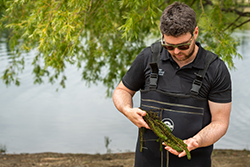 Reinforce freshwater biosecurity in deepwater lakes
Objective: Reduce risk of new invasives and contain/remove lagarosiphon to protect ecosystems and mahika kai.
Impact: High impact
Feasibility: Very high feasibility
- Build community awareness of invasive freshwater organisms: Increase signage, leaflets and community events focusing on best practice check, clean and dry practices.
- Build check, clean, dry capacity with the tourism and visitor industry: Work with tourism operators and visitor-based businesses to provide visitors with access to cleaning equipment, and train key tourism staff to share 'Check, Clean, Dry' knowledge.
- Continue work to contain and remove lagarosiphon: Contain and remove lagarosiphon from Whakatipu Waimāori and northern Lake Wānaka. Continue progressive containment and sustained control action in southern Lake Wanaka and upper Kawarau River.
- Increase lagarosiphon surveillance and infestation prevention: Ensure detection and delimitation of lagarosiphon infestation with divers and cameras, as a key management step. Provide cleaning facilities for vessels entering deepwater lakes.
Finally, we turned our ideas into action. We identified the points where interventions could make the biggest difference, and grouped these into strategies and programmes.
These strategies are now shaping an operational work plan, along with monitoring and funding pathways, to turn our vision into reality.

Upper Lakes Catchment Action Plan
The Upper Lakes Integrated Catchment Group has been supported by the Otago Regional Council to create a Catchment Action Plan for the Upper Lakes area. The Group will shortly be putting their plan into action.

Story map of the plan
How we made our plan, and how you can get involved.

Plan development
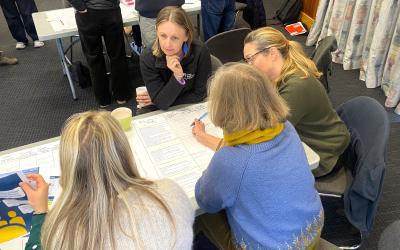
We came together in workshops to shape a shared mission and craft a vision story that reflects our hopes for the Upper Lakes.

Goals & Objectives
Environmental health goals show us what we are aiming for and highlight what we need to achieve to get there.

Strategies
Delivery of actions will not rest with our group alone; a shared responsibility and resourcing model reflects the collective impact approach at the heart of the CAP, where success depends on many hands working together.


