-
-
-
-
-
-
-
-
-
-
-
Lake Hayes community rabbit management programme
-
-
-
-
-
-
-
-
-
-
-
Lake Hayes community rabbit management programme
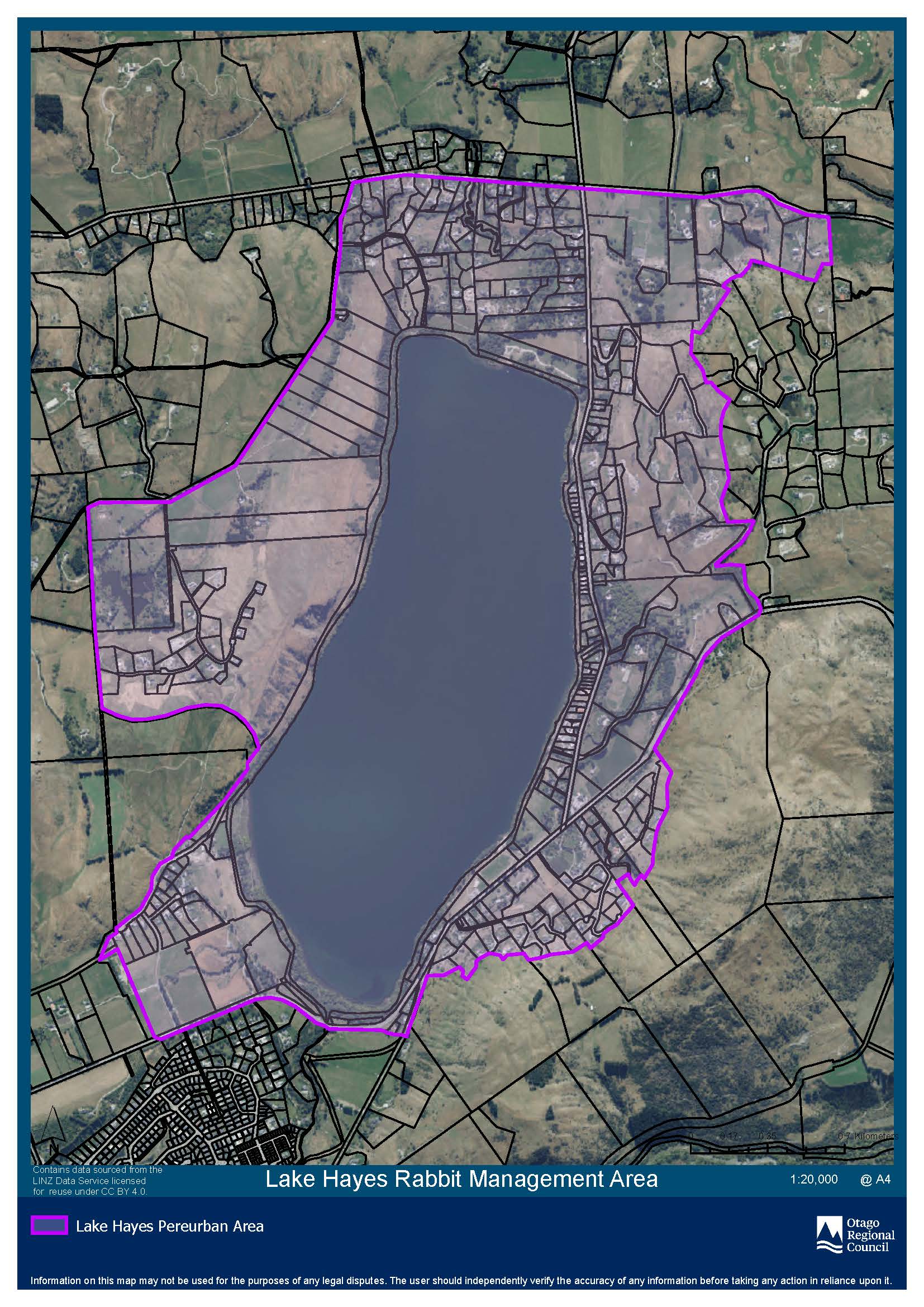
In early 2021, the Otago Regional Council (ORC) initiated the Lake Hayes Community Rabbit Management Programme. The objectives include identifying areas of Lake Hayes that are particularly prone to rabbit and understanding why, providing education about roles and responsibilities related to rabbit management, and offering guidance on effective rabbit management approaches.
In October 2021, we conducted inspections and visits on 230 public and privately-owned properties in the Lake Hayes area to identify locations most affected by rabbits, assess which properties were managing rabbits effectively, and determine which required a greater level of control.
Of these, 150 properties were assessed as compliant, while 80 were found to require further control to comply with the relevant rules in the Regional Pest Management Plan 2019-2029 (RPMP). Owners/occupiers of the non-compliant properties were asked to submit a rabbit management plan detailing how they would effectively manage rabbit numbers on their properties. This included several properties owned by Queenstown Lakes District Council (QLDC) and the Department of Conservation (DoC).
In September 2022, we reinspected these 80 properties and were pleased to see a reduction in rabbit densities, with nearly half (36) achieving compliance with the relevant RPMP rules.
In September 2023, 7 of the the 44 properties re-inspected were assessed as compliant with the relevant RPMP rules.
In September 2024, 11 of the 34 properties re-inspected were assessed as compliant.
At the last round of property rabbit re-inspections in September 2025, a further 14 properties were assessed as compliant. This means that over the last four years of re-inspections, 95% of the properties inspected were compliant upon their last re-inspection with the relevant rules in the RPMP. ORC will continue to work with the remaining 5% of non-compliant properties in the area.
We have observed positive outcomes from the community throughout the Lake Hayes Community Rabbit Management Programme. ORC will review the results of this programme to provide directions on how we can support other communities with similar programmes in the future. We will inform you of any changes or updates as part of the review.
In the meantime, as rabbit management remains an ongoing challenge, we will continue to facilitate the programme and monitor the effectiveness of landowner efforts in managing rabbit populations to a low level.
For more information about rabbits and available management techniques, visit orc.govt.nz/rabbits.
July 2021
PDF | 516 KB
Workshop Programme • Introductions • Part 1: Long term rabbit management • Part 2: Community-led action • Part 3: Short term rabbit management
July 2022
PDF | 137 KB
Notes from the Second Workshop, 14 July 2021
Next steps
We have seen a range of positive steps being taken by many property owners/occupiers such as installation of rabbit fencing, engaging contractors for multi-year sustained control efforts, and coordination of efforts between neighbouring properties.
Given that rabbit management is an ongoing challenge, the council will continue to facilitate a Community-Led Rabbit Management Programme in Lake Hayes and continue to work with the remaining properties to encourage them to take more action and/or to plan and coordinate their efforts more effectively.
We will continue to offer guidance on effective rabbit management options to land owners/occupiers. We will also be undertaking further inspections and following up with compliance action for some properties. This is to ensure that the hard work being undertaken by most property owners/occupiers is not jeopardised by lack of action from others.
For more information on rabbit management and the RPMP rules, visit our Pest Hub.
Register your interest in a community-led rabbit management programme
Fencing
We have been promoting the installation of rabbit fencing as an effective measure to prolong the impact of any rabbit control work undertaken. These recommendations are supported by our observations in the field, which are that rabbit numbers throughout Lake Hayes are generally lower in areas where there is more rabbit fencing in place.
We will continue to promote and strongly recommend rabbit fencing as the first step in an effective, long-term, sustainable rabbit management plan. Even if it is not feasible to fence the entire property boundary all at once, strategic fencing along boundaries that are most prone to reinvasion can still go a long way towards keeping rabbit numbers down to a manageable level.
Tips for Smaller Properties
Our work to date has been focussed on properties greater than 5,000 m² in size, but we are aware that rabbits on smaller properties are also contributing to the area’s problem. If rabbits are able to graze, hide or even just pass through these properties then there are measures that the property owner/occupier could take to contribute to the wider collective rabbit management effort. These measures include:
- Rabbit exclusion fencing
- Pruning the bottom of shrubs and hedges to reduce the amount of suitable shelter for rabbits
- Ensuring that any gaps under buildings and sheds are blocked to prevent rabbit access
- Removing any piles of wood, rubbish or vegetation that offer rabbits protection from the weather and predators
Control methods on smaller properties and in urban settings can also include the use of Pindone rabbit pellets in bait stations, fumigation of burrows (using Magtoxin) as well as follow up shooting (in appropriate locations) by experienced contractors. For more information on any of these methods please visit this webpage in the first instance and email or call if you have any further questions.
Email: biosecurity@orc.govt.nz
Phone: 0800 474 082
Please note that any toxic agents (i.e. Pindone and Magtoxin) must only be used in accordance with manufacturer’s instructions to minimise the risk of harm to children, pets, stock and native wildlife.
You can find more information about rabbits and available management techniques here.
If you would like further information, please contact biosecurity@orc.govt.nz.
For more information on control methods visit our Pests and Biosecurity page.
If you have further questions, call 0800 474 082 or email biosecurity@orc.govt.nz.


