COMMUNITY UPDATE | DECEMBER 2023


Tēnā koutou katoa
Welcome to our last issue of the Toitū Te Hakapupu newsletter for 2023.
We have more updates to share with you on the work happening in Te Hakapupu/Pleasant River, including plantings, fencing and key findings from scientific studies, as well as the chance to meet more of the project team.
If you have any questions, please feel free to get in touch with us. You’ll find the project partners and their contact details at the end of this newsletter.
For our new subscribers and those who would like to know more about the project, you can learn more on our dedicated project webpage .

Planting days a huge success
A community planting day was held in September on landowner Steven Foote’s property, corner of Jefferis Road and State Highway 1. This event kicked off the 2023 planting season and saw the first plants go in the ground as part of the project.
More than 50 people attended, and the community planted 1200 natives, contributing to the improvement of water quality in the area.
Well done!
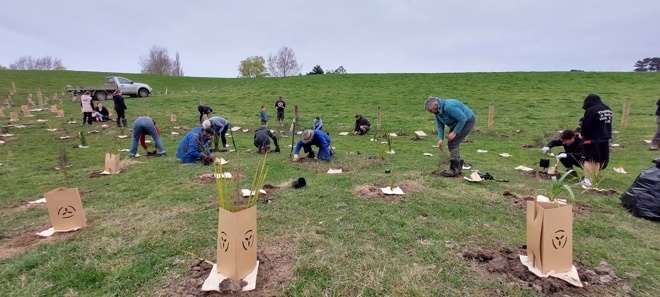
The community hard at work during the September planting day.
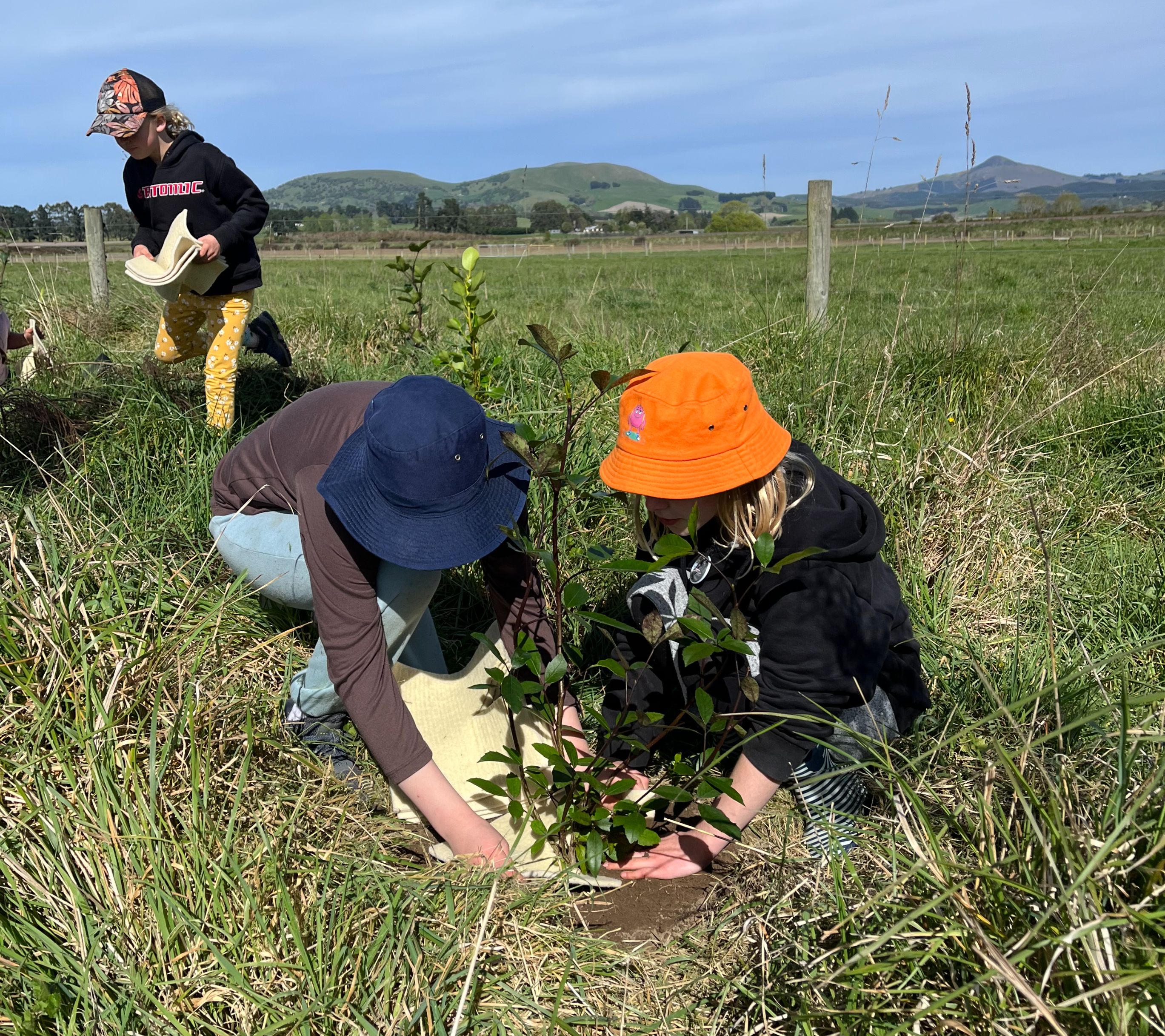
In October, more than 30 Year 5 and 6 students from Karitāne and Waikouaiti schools in East Otago took part in another planting day just north of Waikouaiti.
A regionally significant wetland had been fenced off on a piece of private land to protect it from stock, and the children helped plant over 100 native trees along the riverbank on this property.
They also learnt about the health of the river from one of ORC’s catchment advisors, Jack Mathieson, did some water quality testing, and saw some taoka (treasured) species in the river including kōura (crayfish) and tuna (eels).
The children also took part in a cultural health discussion with local mana whenua representative, Julia Rata-Te Raki.
Ka pai, kids!
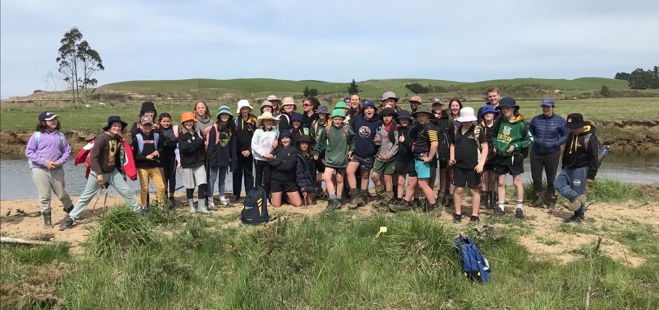
Students from Kāritane and Waikouaiti schools near the Pleasant River Estuary.

Meet some of the team
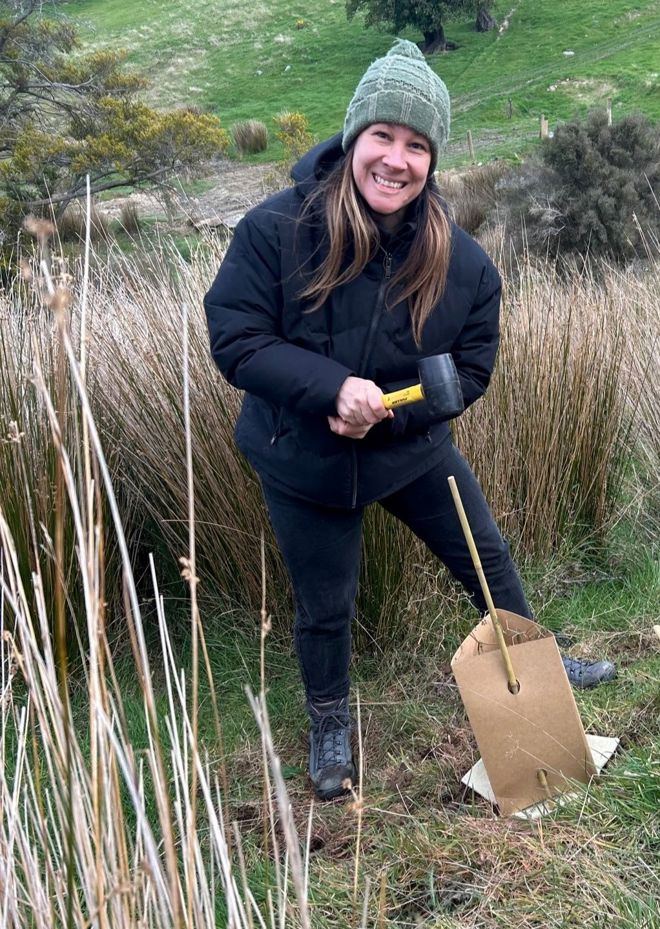
Soraya Engelken
Otago Regional Council - Project Engagement Officer
What’s your background?
Soraya: I was born in the Netherlands and moved to New Zealand at 6 years old. I spent most of my life in Christchurch and Dunedin before moving to Brisbane in 2017. The majority of my working life has been spent in hospitality management, in cafes and stadiums.
I took a career turn when I began working for Brisbane Sustainability Agency as an officer on a flood resilience project. In May this year, I returned home to Dunedin and began working for Otago Regional Council on the Toitū Te Hakapupu project.
What excites you most about this project?
Soraya: So far this has been an amazing experience, and I am constantly learning about the environment and how we are taking positive action to protect it. Engaging with landowners and community members is a real highlight for me. The people in this catchment are so friendly and hospitable!
I am excited to see the impact the project is making now and even more excited to see the benefits for this beautiful catchment in the years ahead. To think, the work we are doing today will enhance biodiversity and improve the quality of the rivers and estuary for future generations to enjoy to its full capacity, and we are playing a part in this happening — that's the real winner for me.
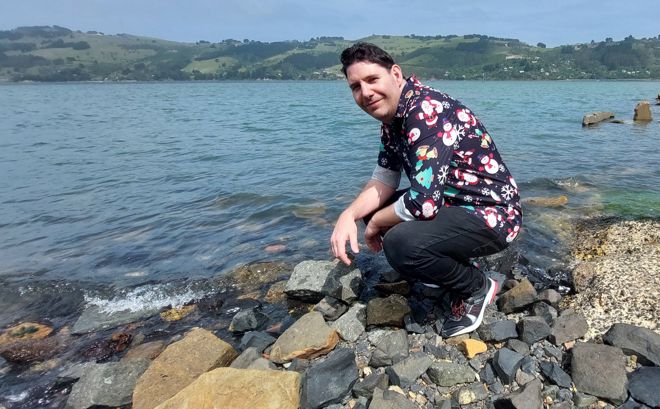
Tim Ware
Otago Regional Council – Communications Advisor
What’s your background?
Tim: I’ve lived in the lower South Island all my life; growing up in Mosgiel, Dunedin and Ōamaru and now having settled in Dunedin again for more than 20 years. I’ve spent nearly all of that time in communications, most of it in the radio and digital space, managing a creative team for over 10 years and more recently joining the Communications team at Otago Regional Council.
I’ve really enjoyed the opportunity to learn more about Otago and the environment in my current role and how we can protect and enhance it; some of this from the Toitū Te Hakapupu Restoration Project.
What excites you most about this project?
Tim: I love how here in New Zealand we have access to such beautiful locations right here on our doorstep: walks, beaches and bush just a short drive away, or if we’re lucky enough, within walking distance from where we live.
I live on the West Harbour in Dunedin and love the views and the water. My kids go sailing with their local Sea Scouts, I go kayaking when I can, and we have a number of options here in Dunedin for a beach day. I wish these same opportunities for the community and visitors of Te Hakapupu: to be able to enjoy a beautiful catchment where it’s safe to be in the water, to fish, to swim and enjoy some time out in nature.
The restoration and improvements to water quality and biodiversity in Te Hakapupu are not going to happen overnight. These will take time, hard work and efforts from the project team, contractors, and the community to turn things around and return this beautiful river catchment to its former glory. I look forward to seeing the improvements, however big or small, and how the community continues to contribute ideas and efforts upon the completion of the project and the handing over of the Catchment Action Plan to the community.

The work never stops
We’ve seen a lot of work on the ground completed this year and are excited at the potential to do even more next year!
- We have worked on 13 properties in the catchment in 2023
- 4.5 km of fencing will have been constructed before the end of the year
- Over 22,000 trees have been planted thanks to the Aukaha planting team and the community
- At this point, we have interest from 17 landowners for work on their property in 2024
- We’re looking to kick off next year’s planting season in May/June 2024
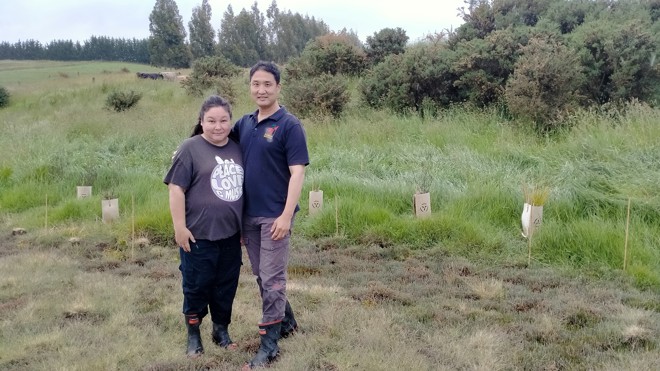
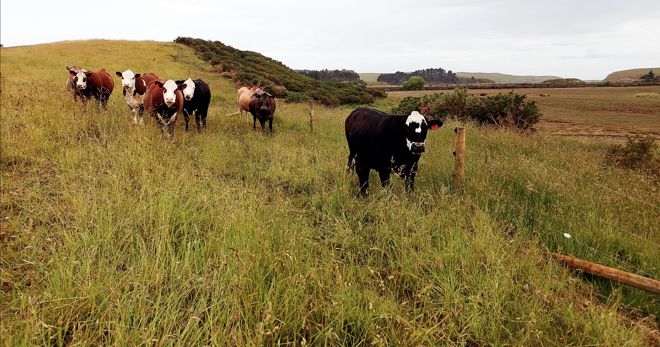
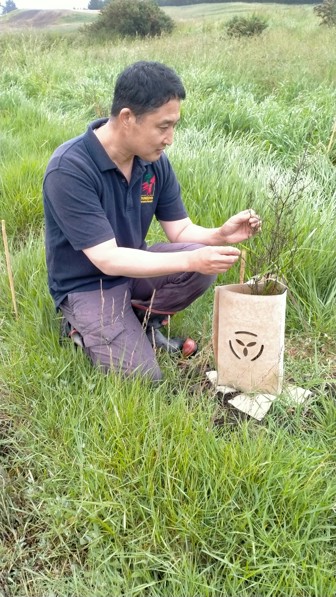
“Ben and I are very happy with the planting by our wetlands near Te Hakapupu/Pleasant River Estuary. Daniel and his team from Aukaha were great to work with, and we enjoyed being a part of the planting process as well.
“Grant and his team from All Fencing Solutions, who fenced off the regionally significant wetland on our property to prevent cattle access, were great to work with, too.”
- Lauren and Ben
Life in Te Hakapupu

The restoration of Te Hakapupu/Pleasant River catchment benefits more than just the community, landowners and those who value this beautiful East Otago river.
There are other species that live here that will thrive from improvements in the catchment’s water quality. Meet some of them below:

Poaka / pied stilt (himantopus leucocephalus)
Photo: JJ Harrison
Poaka / pied stilt, also known as the white-headed stilt, is a waterbird that feeds in shallow water, largely on aquatic insects and small molluscs. It can grow to just over 30 cm and emits a repeated yelping cry as it flies, swaying from side to side with its legs trailing. The poaka breeds in spring, choosing nesting sites of sand or shingle by an estuary or dried-up riverbed, usually on a flat bit of coast or in a grassy field near the sea.

Matuku moana / white-faced heron (egretta novaehollandiae)
Photo: Colin Trainor
Matuku moana / white-faced heron, also known as the white-fronted heron, is a bird common throughout most of Australasia that grows to nearly 70 cm. It is a medium-sized heron, pale, slightly bluish grey, with yellow legs and white facial markings. It can be found near shallow water — fresh or salt, and while it is quick to flee the scene when disturbed, it will boldly raid suburban fishponds.

Kawaupaka / little shag (microcarbo melanoleucos)
Photo: JJ Harrison
Kawaupaka / little shag, known as the little pied cormorant in Australia, is a common Australasian waterbird found around coasts, islands, estuaries, and inland waters. It is a small, short-billed cormorant, usually black above and white below with a yellow bill and small crest and grows to nearly 60 cm. A mostly black, white-throated form is most prominent in New Zealand. There are also three subspecies.
 What’s the plan?
The Toitū Te Hakapupu Catchment Action Plan is taking shape and will continue to develop in the coming year. An initial draft developed by Ahikā Consulting Ltd was provided to the Otago Regional Council for review in mid-November. This draft is the culmination of engagement with the community and Kāti Huirapa Rūnaka ki Puketeraki throughout the year, plus scientific monitoring and investigation into all aspects of Te Hakapupu/Pleasant River catchment.
The plan has several levels, including a core vision for the catchment at the top, under which sit key catchment values: freshwater, biodiversity, mana whenua, and the community. The plan sets out challenges (pressures) facing the catchment along with strategies to address them and enhance the catchment values. Finally, it details the actions and tasks involved in those strategies.
The draft of the plan will soon be brought to the community and to Kāti Huirapa Rūnaka ki Puketeraki for further refinement. This will help stakeholders become familiar with the plan, ensure it reflects their expectations and help engage them in the process of keeping the plan alive into the future.
Extra learning from scientific monitoring planned for 2024 and the Forestry Action Plan will be incorporated too. By the final completion date of March 2025, the plan will have achieved its final form of a living document to guide restoration of the Hakapupu catchment both at present and in the years ahead.
 How can you get involved in the project?
If you’re a landowner with part of Te Hakapupu / Pleasant River running through your property and are keen to find out how you can be part of this project in 2024 and help improve the health of the river, you can register your interest here.
If you’re curious about what other landowners have achieved so far or are still on the fence and want to know more, feel free to drop an email to the team at tth@orc.govt.nz
We are in the final stages of developing a draft Catchment Action Plan. If you couldn’t make it to our community hui held earlier, or have had additional thoughts you’d like to add that may help us develop this plan, please share your ideas with the project team by completing this survey.
There will also be a chance to be involved in environmental monitoring, for example, vegetation and bird surveys, eDNA sampling and water quality testing. We’ll also need volunteers for planting days.
Keep up to date on the project by subscribing to this newsletter if you aren’t already and watching for the latest news on Facebook at Otago Regional Council, Kāti Huirapa Rūnaka ki Puketeraki and East Otago Catchment Group.
 Contacts
If you have any questions or would like to talk with us, please don’t hesitate to get in touch.
Otago Regional Council Project Delivery Specialist
Melanie White
Email melanie.white@orc.govt.nz
Ph 027 357 2568
Otago Regional Council Project Engagement Officer
Soraya Engelken
Email soraya.engelken@orc.govt.nz
Ph 022 452 3818
Kāti Huirapa Rūnaka ki Puketeraki Representative
Katharina Ruckstuhl
Email katharina.ruckstuhl@otago.ac.nz
East Otago Catchment Group
Steph Scott
Email eocatchmentgroup@gmail.com
Ph 027 438 7875
Disclaimer
The Ministry for the Environment does not necessarily endorse or support the content of the publication in anyway.
Copyright
This work is copyright. The copying, adaptation, or issuing of this work to the public on a non-profit basis is welcomed. No other use of this work is permitted without the prior consent of the copyright holder(s).


