
COMMUNITY UPDATE | JULY 2024


Tēnā koutou katoa
Welcome to the July issue of the Toitū Te Hakapupu newsletter.
We have more updates to share with you on the progress of work happening in Te Hakapupu / Pleasant River, including updates on how the project has implemented some sediment traps on one property, recent ecological monitoring, where the catchment action plan is at, as well as the chance to meet more of the project team.
If you have any questions, please feel free to get in touch with us. You’ll find the project partners and their contact details at the end of this newsletter.
For our new subscribers and those who would like to know more about the project, you can learn more on our dedicated project webpage . You’ll also find past newsletters to catch you up on the journey so far.
Progress to date
Planting
35,120 plants completed.
Twenty-five thousand more have been approved for planting this season, and it’s proposed to plant another 25,000 before the end of the project in 2025.
Fencing
10km of fencing completed.
A further 12km is currently in progress, and another 13.5km is proposed for completion by the end of the project.
Important dates
Next event:
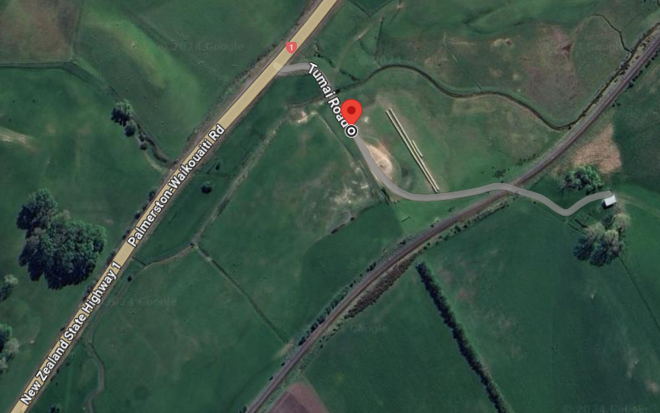
Community Planting Day | 18 August from 11am
Hagan property on Tumai Road (this is a paper road off Palmerston-Waikouaiti Road SH1)
Upcoming events and activities:
School Catchment Day September 25
We also have plans for another Community Science Day in February or March 2025
Fish passage information field trip TBC
Sediment trap information field trip TBC
Sediment traps installed summer 2025
Erosion planting April-June 2025
Five fish passage barriers improved by June 2025
Water quality monitoring summer 2024/25
Working with forestry on actions to protect water quality ongoing
Sediment traps are set
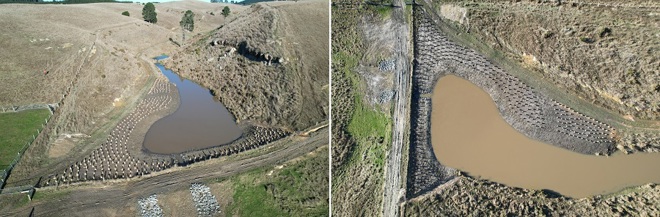
In addition to planting and fencing works throughout the lower catchment to improve water quality, the Toitū Te Hakapupu project has undertaken to reduce sediment loss in the mid-catchment by installing sediment traps.
A series of sediment traps have been installed in three gullies on a high-priority property which has had significant erosion in the past — associated with the removal of vegetation.
The purpose of sediment traps is to reduce the build-up of silt, sand and soil in the downstream river and estuary by trapping it close to the source.
Sediment build-up in a stream and estuary is particularly damaging for the environment, and can smother the bed of these water bodies, leading to poorer ecosystems and the build-up of weeds that can choke waterways.
Sediment traps can capture much of the sediment mobilised by rainfall near the source and reduce these negative downstream impacts.
They need to be regularly monitored to ensure they are working correctly, and once they have filled, will need to be cleared out with an excavator.
Sediment trap installation is one part of a larger objective to reduce sediment loss on this property.
Ecological monitoring discoveries
Water quality and ecological monitoring in Te Hakapupu / Pleasant River and its main tributaries Owhakaoho/Trotters Creek and Watkin Creek has been underway since early 2023.
Fish monitoring was undertaken by Kāti Huirapa Rūnaka ki Puketeraki in March using hīnaki (fyke nets) in the river and drag nets in the estuary.
Longfin tuna (eels) were present at all four freshwater sites, while shortfin eels (tuna), īnaka, common bully, and European perch were also recorded.
Pātiki (sand flounder) were present in the estuary.
The catchment’s waterways change during the drier summer and autumn months, shifting from flowing continuously to isolated pools.
To help the catchment’s freshwater fish species, it is important that these pools are conserved and enhanced through planting and fencing.
How can you get involved in the project?
If you’re a landowner with part of Te Hakapupu / Pleasant River running through your property, you can register your interest here .
If you’re curious, email the team at tth@orc.govt.nz.
Keep up to date by subscribing to this newsletter and following:
Otago Regional Council, Kāti Huirapa Rūnaka ki Puketeraki, East Otago Catchment Group
You can catch up on previous newsletters here .
Disclaimer
The Ministry for the Environment does not necessarily endorse or support the content of the publication in anyway.
Copyright
This work is copyright. The copying, adaptation, or issuing of this work to the public on a non-profit basis is welcomed. No other use of this work is permitted without the prior consent of the copyright holder(s).


