
COMMUNITY UPDATE | DECEMBER 2024


Tēnā koutou katoa
Welcome to the December issue of the Toitū Te Hakapupu newsletter.
We have more updates to share with you on the work happening in Te Hakapupu/Pleasant River, including upcoming events, improvements to fish passage, and a nature-based solutions engagement study.
For our new subscribers and those who would like to know more about the project, you can learn more on our dedicated project webpage. You’ll also find past newsletters to catch you up on the journey so far.
If you have any questions, please feel free to get in touch with us. You’ll find the project partners and their contact details at the end of this newsletter.
From the Toitū Te Hakapupu Project Team ... have a safe and happy holiday season!

Progress to date
Planting
68,000 plants completed.
25,000 more will be planted before the end of the project in June 2025.
Fencing
29.5 km of fencing completed.
A further 3.3 km is currently in progress, and another 6 km is proposed for completion by the end of the project.
Fish passage
Two fish passage barriers have been improved.
Three more fish passages will be completed by the end of the project.

Important dates
Water quality monitoring — summer 2024/25
We also have plans for another community science day in February or March 2025 and an end-of-project planting day and celebration in June 2025
Working with forestry on actions to protect water quality — ongoing

Term 3 planting day for local schools
In September, Waikouaiti School and Macraes Moonlight School were invited to participate in a planting day to learn more about Te Hakapupu / Pleasant River and do some planting of their own to support the catchment.
The day, organised by Otago Regional Council and supported by Kāti Huirapa Rūnaka ki Puketeraki and Enviroschools, turned into a beautiful day with enthusiastic ākonga (students) getting their hands in the soil, learning more about the catchment and their place in it, as well as finding tuna (eels) and macroinvertebrates direct from the river itself.
They were able to take the skills they’d been learning in the classroom to the catchment and had decorated their plant guards for some extra beautification for their plants.
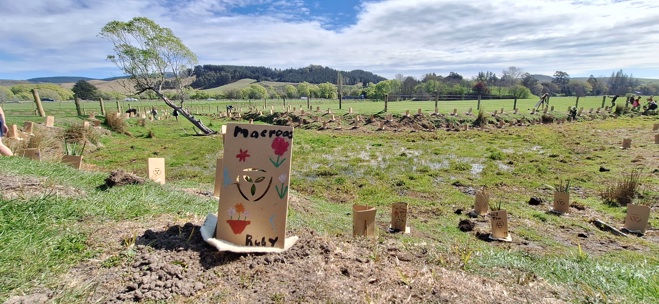
Before planting, ākonga from both schools decorated their plant guards in preparation for their day.

Life in Te Hakapupu — īnaka
Īnaka, or īnanga, are the most common of the five “whitebait” species and make up the bulk of the whitebait catch around Otago. Growing up to 11 cm, these small silver-bellied fish are much smaller than some of their larger cousins such as the giant kokopū, which can grow up to 50 cm.
Historically, takata whenua would harvest the larger egg-laden adults when they would migrate to the coast, as well as the returning juveniles which are the focus of today’s whitebait fishery.
Īnaka are mostly found in the lower reaches of river catchments and are often in larger shoals near the coast. Although native and found across New Zealand, īnaka are also all over the southern hemisphere including Australia, the Pacific Islands and South America.
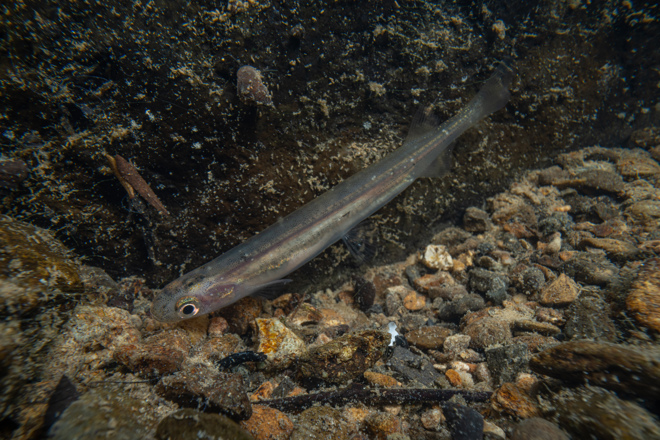
A transforming juvenile īnaka. Photo: Shaun Lee.
During very high spring tides, īnaka can access grassed riverbanks where they lay up to 13,000 eggs, which, upon the next spring tide, hatch, and the larvae are taken out to sea. After six months, these larvae come back as juvenile whitebait — the most popular part of the lifecycle. Once back in fresh water, they spend another six or so months there before repeating the cycle. This reproduction in fresh water with a saltwater phase is known as amphidromy.
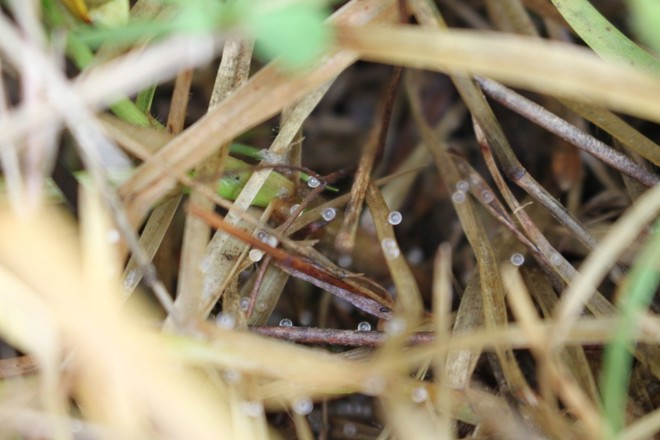
Īnaka eggs laid in grass (occurs in late summer and autumn). Photo: Sophie Tweddle.
Although still locally abundant in some areas, īnaka are at risk of declining due to loss of habitat from overgrazing of riparian grasses, wetland drainage, pollution, barriers to migration such as culverts, and predation from introduced species like brown trout.
You can protect īnaka on your property by ensuring:
- banks of waterways are excluded from grazing to allow for spawning habitat
- fish passage is not impeded
- shade is provided over streams to reduce water temperatures.
Whitebait numbers soar after fish passage improvements
The project team has been working with Waitaki District Council to make improvements to the fish passage at Brooklands Road ford.
Melanie White (Project Delivery Specialist), along with Pete Ravenscroft (ORC fish passage expert), Matt Dale (fish passage consultant) and some community members, were at the ford to place rocks and help with the concrete pour.
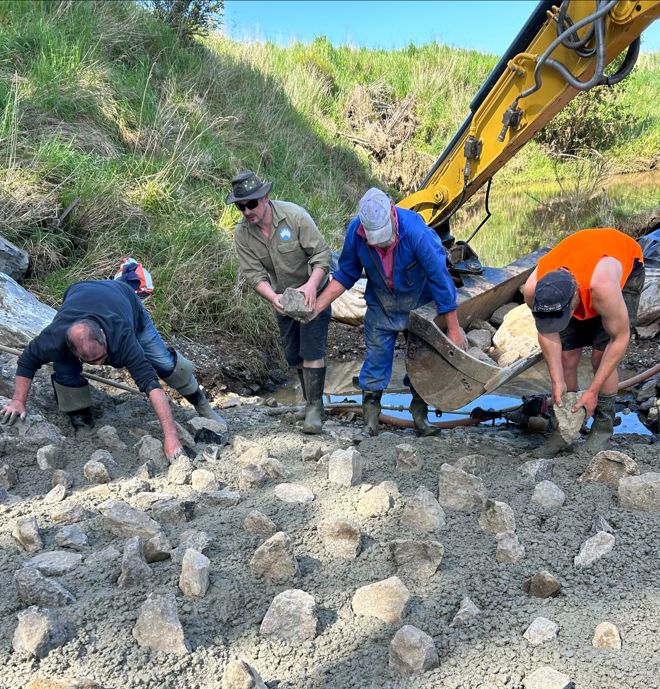
Rocks being placed during the concrete pour in mid-November.
A whitebait count carried out prior to the modifications found 12 whitebait upstream of the ford. On the Monday following the concrete pour, in mid-November, monitoring found 600 whitebait upstream of the ford.
Locals have been spotted sitting on the ford watching the whitebait migrate up the newly formed ramps and were cheering them on as they popped through to the upstream side.
This is an amazing success!
Willows — helpful or hindrance?
Willows are a group of introduced tree species that were brought to Aotearoa New Zealand in the early 1800s and widely planted for bank stability. Since then, willows have replaced native wetland and riverbank vegetation in many places.
If well managed, or the right species, willows can contribute to bank stability and offer positive benefits to wildlife. However, in the wrong place, willows can block streams, causing flooding, and scour stream banks.
Looking to remove willows from in or around a river, lake or wetland? First, check the rules on willow removal and, while you’re at it, see where some willow management projects in Otago have been successful.
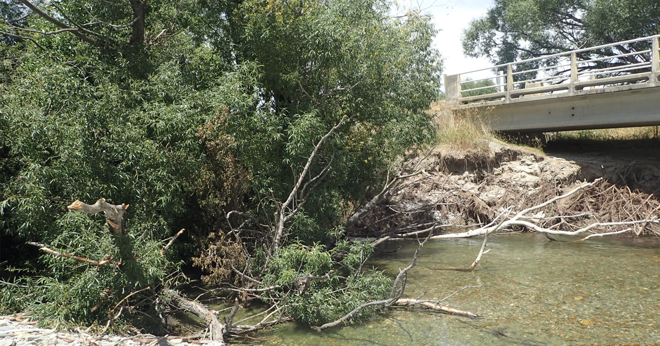
A willow’s fallen branches beginning to pile up in a stream.
Nature-based solutions engagement study
ORC is exploring nature-based solutions to reduce flooding and improve biodiversity.
Email Melanie.White@orc.govt.nz to get involved.
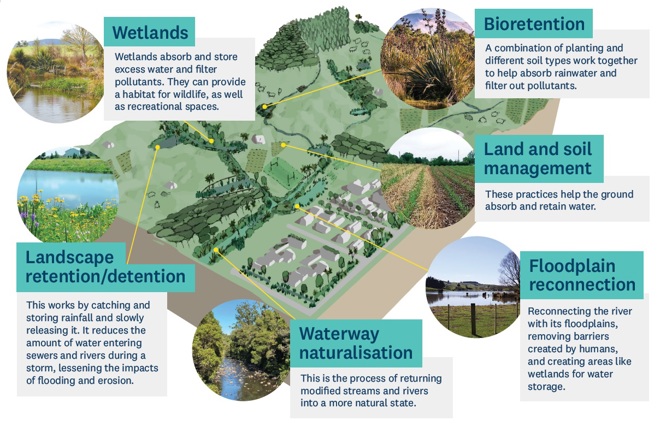

How can you get involved in Toitū Te Hakapupu?
If you’re a landowner with part of Te Hakapupu / Pleasant River running through your property and are keen to find out how you can be part of the work happening in 2025 to help improve the health of the river, you can register your interest here.
If you’re curious about what other landowners have achieved so far or are still on the fence and want to know more, feel free to drop an email to the team at tth@orc.govt.nz.
There will also be a chance to be involved in environmental monitoring, for example, vegetation and bird surveys, eDNA sampling and water quality testing. We’ll also need volunteers for planting days.
Keep up to date on the project by subscribing to this newsletter, if you haven’t already, and watching for the latest news on Facebook at Otago Regional Council, Kāti Huirapa Rūnaka ki Puketeraki andEast Otago Catchment Group.
You can catch up on the journey so far in our previous newsletters.
Contacts
If you have any questions or would like to talk with us, please don’t hesitate to get in touch.
Otago Regional Council Project Delivery Specialist
Melanie White
Email melanie.white@orc.govt.nz
Ph 027 357 2568
Otago Regional Council Project Assistant
Soraya Engelken
Email soraya.engelken@orc.govt.nz
Ph 022 452 3818
Kāti Huirapa Rūnaka ki Puketeraki Representative
Katharina Ruckstuhl
Email katharina.ruckstuhl@otago.ac.nz
East Otago Catchment Group
Steph Scott
Email eocatchmentgroup@gmail.com
Ph 027 438 7875
Disclaimer
The Ministry for the Environment does not necessarily endorse the content.
Copyright
This work is copyright. Non-profit reuse is permitted.


