-
-
-
-
-
-
-
-
-
-
-
-
-
-
-
-
-
-
-
-
Upper Lakes Rohe
-
-
-
-
-
-
-
-
-
-
-
-
-
-
-

Under national legislation, regional councils must manage waterways at an appropriate scale for setting freshwater objectives and limits.
We have set five Freshwater Management Units (FMUs) and divided the Clutha/Mata-Au FMU into five rohe (areas) as it is the largest river in the country, by catchment and volume.
The Upper Lakes Rohe is around 7,000 square kilometres. It contains glacial lakes Wānaka, Hāwea and Whakatipu, their tributaries, the Southern Alps to the north and terraced valleys in the south.
Its scenery attracts thousands of visitors each year, who enjoy views of budding orchard trees, snow-covered mountains and stunning lakes.
Catchments include the Greenstone, Dart and Rees Rivers, the Makarora, Matukituki and Hunter Rivers, and several smaller tributaries to the lakes, including Bullock Creek, Minaret Burn, Timaru River and the Von and Locky Rivers. The lakes’ upper catchments have very high natural values, extending into Mt Aspiring National Park. Because a large part of the Upper Lakes is untouched nature, changes in land use could affect water quality in the area and the rest of the Clutha/Mata-Au catchment downstream. The Upper Lakes Rohe is also vulnerable to climate change, which may influence the amount and timing of water availability in the area and downstream.
The lakes have deep spiritual significance for Kāi Tahu, associated with their creation traditions and their importance as a source of very pure freshwater. They supported permanent and seasonal settlements and plentiful mahika kai. Pounamu was also gathered near the head of Lake Wānaka, and the Dart and Routeburn Valleys.
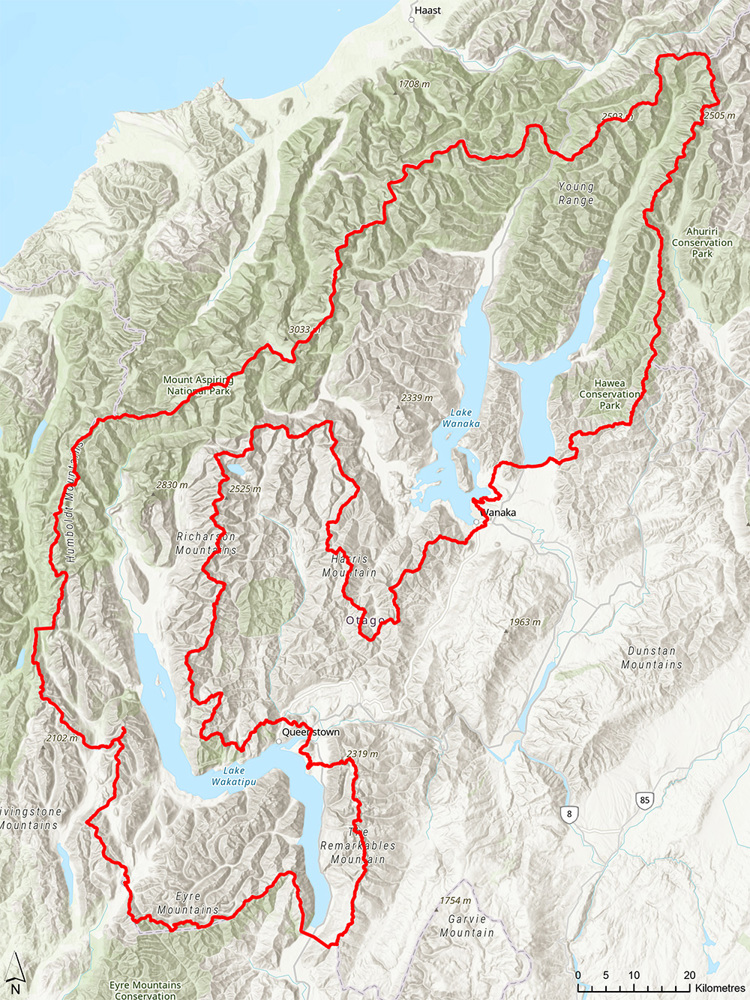
While freshwater policies might be designed and applied specifically to the Upper Lakes Rohe, their impacts may be felt beyond. Hence the Upper Lakes Rohe and the neighbouring Dunstan Rohe are combined when considering socio-economic information. These communities have close economic ties, i.e., residents are likely to live in one of the areas while working/spending in the other areas.
In 2018, the Upper Lakes Rohe and Dunstan Rohe were home to around 47,400 residents (21% of Otago’s population). In the previous 12 years, the population in these Rohe increased by 19,300 people (or 69%) from 28,000 residents in 2006. This rapid population growth is putting increasing pressure on water use (water takes and discharges of pollutants or contaminants) and its infrastructure. Overall, these Rohe have relatively low social deprivation, when considering factors such as income, home ownership, employment, access to transport and communications, and access to internet.
The local communities and the economy in the Upper Lakes and Dunstan Rohe are especially reliant on water resources. The most populated towns in this Rohe are built around the lakes. Tourism, the most important industry sector in the Rohe, relies on fresh water in some way or form (including snow, which is essential for the ski resorts operating in the Rohe). Agricultural activities, mainly dry stock (incl. deer and with little/no dairy in the Upper Lakes Rohe) and horticulture/viticulture operations, are dependent on freshwater supplies.
An understanding of Māori history and the Māori economy is essential for policy development and policy impact assessment. Not only does pre-European Māori history help shape modern day New Zealand, but the Māori economy is also integral to the New Zealand economic system. A report prepared by Aukaha, with support from ORC provides a Kāi Tahu assessment of the socio-economic impacts of freshwater management in Otago.
Land cover is largely tussock grasslands, followed by indigenous forests and gravel/rock. The primary soil type is brown soil, with raw and podzol soils accounting for a further quarter of the Upper Lakes, which lie in the north along the Southern Alps. Brown soils are well-drained and ideal for forests and both native and exotic grasslands. High, wet altitudes over schist bedrock have podzol soil, with raw soils found on steep, rocky slopes in the mountains that experience intense erosion.
Conservation estate (45%) and sheep and beef dry-stock farming (24%) dominate the Upper Lakes area. Lakes and rivers cover 11%, and mixed dry-stock farming, which is mostly deer, sheep and beef, covers 12% of the Upper Lakes. Over the past 30 years, conservation land has increased by 74% as indigenous forest and tussock grasslands became protected under covenants. Sheep and beef dry-stock farming have decreased by 26%.
Upper Lakes Rohe land use summary
The Upper Lakes Rohe has a steep rainfall gradient, and the highest precipitation rates are in the mountains to the north. These mountains drain to the alpine lakes, which are significant water reservoirs with higher levels in spring due to snowmelt. The rohe provides most of the flow to the downstream Clutha/Mata-au catchment.
ORC monitors water flow at six sites in the rohe, with access to historical records for other sites and sites monitored by NIWA. Hydrological modelling provides water allocation information for un-monitored rivers and streams. The main water use is non-consumptive hydro-electricity production, followed by water supply. The area has very little irrigation.
ORC monitors water quality and ecology in rivers and streams. The results can show the state of the environment for a location. Water quality in the Upper Lakes is monitored at 23 river/stream sites and three lakes, while ecological monitoring is done at nine river sites and nine lake sites.
Monitoring results show that water quality in the Upper Lakes is the best in Otago. Only a couple of streams in urban areas experience high E. coli counts due to stormwater run-off and wildfowl. Clarity is reduced in some of the glacier-fed rivers, but this is a natural process.
The lake monitoring sites at Wānaka, Hāwea and Whakatipu also have excellent water quality results. However, these sites show persistent growth of the introduced algae Lindavia intermedia, which produces a glue-like substance called lake snow. Although not harmful to people and animals, it is a nuisance and thrives in lakes with very low nutrient levels such as those in the Upper Lakes
Introduction to water quality
Upper Lakes Rohe water quality summary
Groundwater use in the Upper Lakes is generally low, with most water used for community and domestic supplies. The Glenorchy and Kingston townships have Ground Water Management Zones (GWMZ) around them, composed of shallow alluvial aquifers.
ORC monitors groundwater quality in five bores across the two GWMZ. The data shows elevated E. coli, nutrients and arsenic levels. Elevated E. coli and nutrients are likely due to high septic tank density and shallow bore heads. Elevated arsenic is likely due to its presence in local schist rock.
The Upper Lakes has extensive freshwater biodiversity values, including rare and threatened ecosystems and species. Examples of rare and vulnerable ecosystems are ephemeral wetlands, braided rivers and wetlands.
These ecosystems contribute a lot to national biodiversity, but are often threatened by land use change and invasive species. We often know little about their extent and/or condition.
The Upper Lakes FMU has a diverse range of native freshwater fish, invertebrates, birds, plants and a bat that depend on freshwater ecosystems. The seven native freshwater fishes are three non-migratory galaxias, one migratory galaxias – whitebait – one eel and two bullies. All the non-migratory galaxias are threatened. Freshwater invertebrates include freshwater crayfish and freshwater mussels.
Many native birds in the area depend on freshwater ecosystems, either as permanent or mobile residents. Threatened birds are the Australasian bittern, black-billed gull, blue duck and Australasian crested grebe.
Many plants are freshwater-dependent, including the threatened Brachyscome linearis, Crassula peduncularis, Crassula multicaulis and Carex strictissima. Introduced sports fishes are brown trout, rainbow trout and chinook salmon. Many native freshwater species are under threat and continue to decline. We lack information about species, particularly for freshwater invertebrates, non-vascular plants and algae
November 2022
PDF | 1 MB

September 2024
Aukaha (1997) Ltd
PDF | 4 MB
This report provides a Kāi Tahu assessment of the socio-economic impacts of freshwater management in Otago, which speaks to the development of a new Land and Water Regional Plan for Otago (LWRP).
Contact your rohe Catchment Advisor for advice and assistance on sustainable land management practices that protect Otago’s waterways.
Sign up to our monthly newsletter On Stream for regular updates
Email customerservices@orc.govt.nz
Tel 0800 474 082


