-
-
-
-
-
-
-
-
-
-
The Source - Winter
-
-
-
-
-
-
-
-
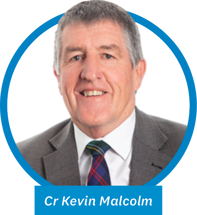 The first local government review since 1989 is underway.
It’s expected that after local elections in 2028, regional, district and city councils will operate under a new model.
The structure and governance model is yet to be determined, but I have no doubt that regional council functions will carry on and should be the foundation blocks of any new entity.
Our environmental monitoring of over 350 sites throughout Otago, integrated catchment management plans, pest management, biosecurity programmes, flood forecasting and 24/7 pollution response services are essential.
Operating and maintaining our 218 kilometres of floodbanks and 535 kilometres of drains; river management; civil defence and emergency management; harbourmaster functions; and public transport delivery all enhance resilience and connectivity.
Our focus, both councillors and staff, is to ensure we continue to drive for efficiencies and deliver the very best value for money services for Otago.
A review of our Regional Pest Management Plan is underway, and be it a rabbit, wallaby, wilding pine or some niggly gorse, let us know your thoughts so we can work together to deal to our pests.
We have to complete a Long-Term Plan for 2027 to 2037. Our focus will be on our priority deliverables up to 2028 and ensuring a robust forecast of infrastructure and critical function demands to 2037.
No matter what the future shape of local government, we are determined to deliver the best for Otago.
Kevin Malcolm,
ORC Deputy Chairperson
An upgrade of flood protection in West Taieri is progressing, with a $9 million redevelopment of West Taieri Contour Channel flood protection moving closer to completion.

Work involves reconstruction of a 6.5-kilometre section of floodbank near Outram to improve floodbank resilience and provide ongoing protection for critical infrastructure, the community and farming activities in the West Taieri area.
The project is funded by the Government’s Regional Infrastructure Fund and Otago Regional Council, $5.4 million and $3.6 million respectively.
The floodbank is made from locally sourced fill material with a new filter fabric layer added to increase its performance. The project includes the replacement of up to three bridges, so it’s a huge piece of work.
It requires approximately 57,000 cubic metres of material to construct — enough to fill an Olympic-sized pool around 23 times!
The project is on track to be finished by December 2027.
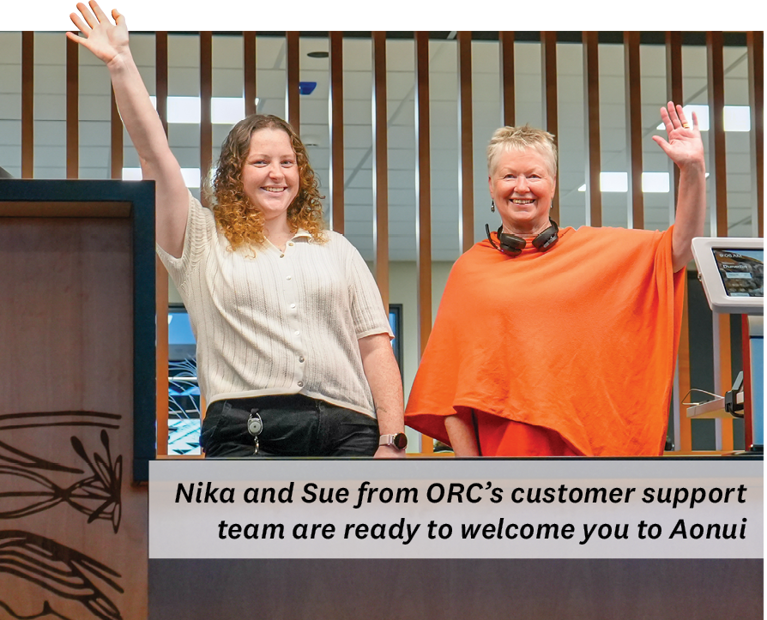
ORC’s Dunedin-based teams are now all together in one central location at Aonui, 180 High Street.
The central city location offers customer support for all enquiries, including Orbus services, along with dedicated on-site accessible parking.
ORC’s other offices, depots and services across the region remain unchanged.
The building, owned and redeveloped by Port Otago, has been designed in partnership with mana whenua, with cultural elements developed alongside Aukaha and artworks by Kāi Tahu artists featured throughout.
Bird flu (also known as H5N1) is a highly contagious viral disease that affects birds and can also infect some mammals.
 While H5N1 has not been detected in New Zealand, it could arrive here via migratory wild birds.
MPI is leading New Zealand’s preparedness, and we are preparing to support Otago’s communities with information and guidance if the virus is detected. If you see three or more sick or dead wild birds in a group, or a sick or dead marine mammal, do not touch or move them.
Report the sighting to the Exotic Pest and Disease Hotline on 0800 80 99 66 with as much location detail as possible.
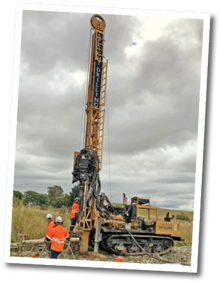
New groundwater monitoring sites are being installed in the Hāwea area to help improve understanding of local groundwater.
Two new monitoring wells at Hāwea and Maungawera Valley will give valuable information about how groundwater systems in the Hāwea area behave over time and how they interact with the wider environment.
Equipment was installed in June, and once up and running, data will be available at orc.govt.nz/edp
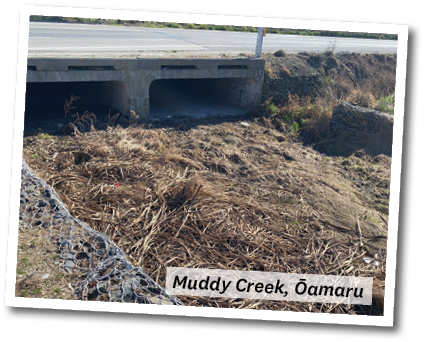 ORC’s Muddy Creek Flood Study will improve understanding of where flooding may occur in the town’s north end and help Ōamaru residents prepare for future weather events.
Muddy Creek is a small waterway at Ōamaru’s north end — the study looked at how the creek might react to weather events, big and small.
Sharing this information is key to the community staying resilient and ensuring all households and businesses have all the information they need for general emergency preparedness.
The study looked at the impacts of flooding for various scenarios:
- ‘10-year flood’ (10% chance of occurring in any given year)
- ‘50-year flood’ (2% chance of occurring in any given year)
- ‘100-year flood’ (1% chance of occurring in any given year)
- The effects of climate change on the flood hazard characteristics
Read more: orc.govt.nz/muddycreek
Subsidies for Total Mobility users will drop from 1 July, meaning costs will increase for passengers.
From 1 July, Government’s Total Mobility subsidy will decrease from 75 percent to 65 percent. At the same time, ORC’s maximum fare eligible for subsidy will drop by 10 percent, from $50 to $45.
This means the maximum subsidy available for a single trip will reduce, and from 1 July a $50 trip will cost the passenger $20.75, compared with $12.50 previously.
The changes are intended to help keep the scheme financially sustainable while continuing to support people who rely on it. Find out more: orc.govt.nz/totalmobility
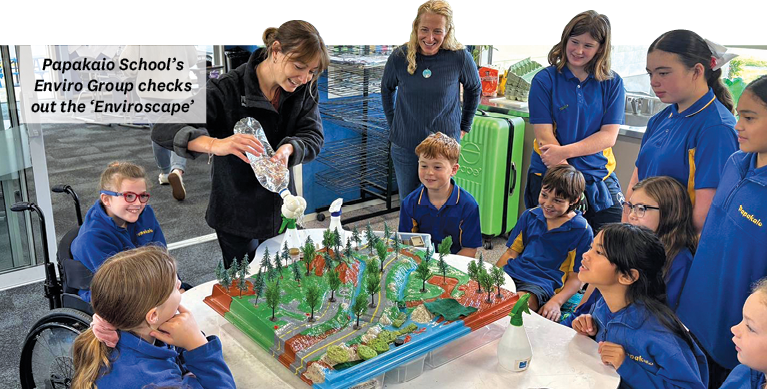
Papakaio School is the first school in North Otago to adopt a drain.
Enviro Group students explored their school’s stormwater system, as well as the groundwater network and their area’s ‘disappearing creeks’.
They learnt that what happens on the surface connects with a much larger hidden system underground, and why making sure ‘only rain’ enters our stormwater drains is so important.
Find out more: orc.govt.nz/adopt-a-drain
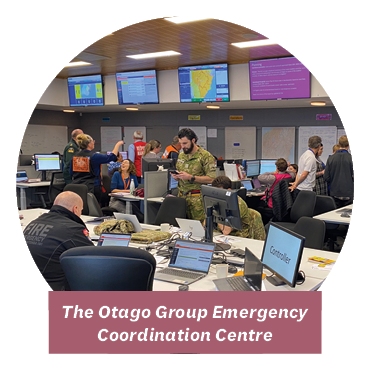 An Emergency Management Otago (EMO) exercise based on a severe snowstorm impacting the entire Otago region recently saw the region’s civil defence responders working together to test systems and processes under pressure.
Approximately 300 people were involved across the region, including 36 ORC staff.
Exercises like this are an important part of ensuring communities, councils and partner agencies are prepared to respond effectively to large-scale emergencies and support community resilience across the region.
Read more about EMO: otagocdem.govt.nz
Otago residents will soon get a chance to have their say on the future of Otago’s Coast — and gain a better understanding of coastal water quality and risks such as natural hazards.
Public engagement will start in July and includes opportunities for people to share their views at in-person events. Feedback will be sought on a range of topics, including natural hazards and climate change, biodiversity, water quality, public access, port activities and aquaculture.
Council is also keen to hear issues with the existing Coastal Plan and current, emerging and future challenges for managing the coastal environment.
Find out more: orc.govt.nz/otagocoast
Using a specialised net, ORC staff have been out collecting freshwater plankton and microscopic free-floating plants across some of our region’s most beautiful waterbodies.
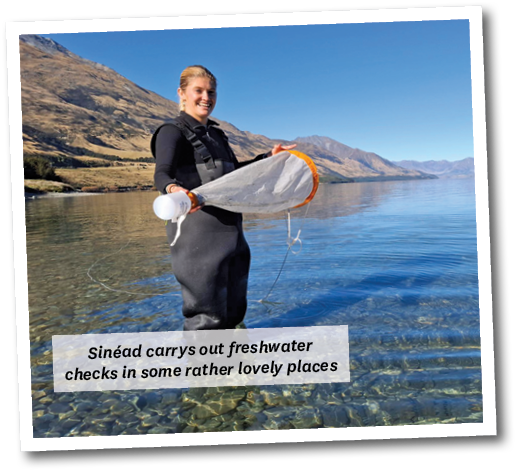 We’ve been sampling for these tiny critters as part of work to keep an eye out for the larvae of the invasive freshwater clam (Corbicula).
The clam has only been found in the North Island so far, and we’re watching for it so we can act promptly if it is found in Otago.
One single clam can release up to 70,000 larvae every year. Before the larvae settle in the sediment, they float freely in the water, so sampling gives us a chance to detect them early.
This is important because if they become established, the clams can clog water infrastructure and have negative impacts on species in our waterways.
Work is coordinated by Biosecurity New Zealand in different parts of the country.
Invasive freshwater clams spread mainly through larvae that hitchhike on wet gear and equipment, so whenever you move your gear (including boats, paddleboards and jet skis) between lakes and rivers, make sure you check, clean and dry to prevent their spread.
Find out how to Check, Clean, Dry at orc.govt.nz/checkcleandry
Now the cold weather has really kicked in, our bus operators are regularly assessing road and driving conditions and informing us of delays, changes and cancellations, which we then share via regular bus alerts.
Please take care while walking to and from your bus stop.
Winter bus tips:
- If it’s dark at your stop — use your phone screen to wave down the driver.
- Roads and footpaths may be slippery — don’t rush to your stop; leave a few minutes earlier.
- Put down your phone when walking — look where you’re going.
- Get a grip — avoid shoes with slippery soles.


Are you subscribed to our monthly e-newsletter On Stream? Would you like to be? Get ORC’s monthly news fresh to your inbox:
New navigational bylaw
 Boat owners should be aware of some new navigational bylaws for Otago’s coastal harbours and Lake Dunstan.
These affect:
- all commercial vessels in Otago Harbour licensed to carry passengers
- all commercial vessels more than 15 metres long
- anyone wanting to anchor in Otago or Ōamaru harbours for more than 14 days.
Find out more: orc.govt.nz/navbylaw
Farm waste minimisation
 A waste minimisation guide has been developed to help with reuse and recycling of farm materials, such as silage wrap, scrap metal, wire and tyres. This Otago guide has been developed so everyone knows where materials can be reused, recycled or safely disposed of locally.
Find out more: orc.govt.nz/farmwaste
South Dunedin Future
 Analysis of flood risk in South Dunedin has provided a comprehensive picture of what it would take to manage flooding in one of Dunedin’s most complex and exposed urban environments. The South Dunedin Future Programme, a partnership between Otago Regional Council and Dunedin City Council, has new technical reports and more detailed information about potential future options for the area.
Find out more: orc.govt.nz/southdunedin


