Regulatory update
Welcome to the second edition of the newsletter for 2022.
Keep reading to get latest news from the Regulatory Team at ORC, meet new staff who are here to help and get updates on changes to process and interpretations.
You are receiving this newsletter because you regularly interact with the Regulatory Group. This newsletter is just one of the ways that we are looking at providing more information to you as a customer of ours. Each issue has updates from the teams and will focus on key themes.
In this issue we:
- Focus on new earthworks rules
- Introduce our public enquiries team and new booking form
- Provide more Intensive Winter Grazing information
- Update on water permit processing, including practice notes
- Case Law and compliance updates
- Link to new resources, including application and booking forms
- And introduce you to more of our team
New earthworks rules
Earthworks are a necessary part of preparing land for residential development, but if the right practices aren’t used, soil can be lost to water bodies.
This sediment can have a range of negative impacts on water quality and ecosystems. Soil can also be contaminated, or soil loss can cause stability issues, and water runoff containing lots of sediment can also be a nuisance to neighbouring landowners.
ORC has rules to manage these effects, introduced through Plan Change 8 to the Regional Plan: Water. These rules became operative on 3 September 2022. Click here to better understand what qualifies as ‘residential’ earthworks and if you need a resource consent. You can also find out how you can minimise the risk of sediment loss.
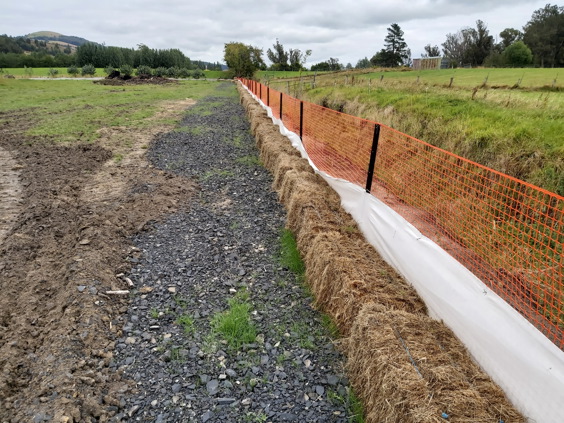
Here’s an example of well-maintained silt fencing. More examples are available in the guidance.
Quick tick list to check if you need a consent:
Consent will not be required if all of the below can be met:
- The area of exposed earth is no larger than 2,500m² per landholding in a 12-month period
- Works are not within ten metres of a water body (such as a river, stream, wetland or lake), drain, water race or the coast
- Exposed earth is stabilised when works are completed
- Works are not on (potentially) contaminated land
- Soils and debris are not placed where sediment can enter waterways or the coastal marine area
- Works will not result in flooding, erosion, land instability, subsidence or property damage
If you cannot meet all these criteria, you will need to apply for a resource consent before you commence works.
Examples that may require a consent from us include earthworks to establish building platforms, driveways and infrastructure (such as pipes, local roads) for residential dwellings or subdivisions in any zone. The rules do not apply to earthworks associated with business activities or developments, such as farm tracks, quarrying, construction of dams, or any works associated with plantation forestry.
Heard about our public enquiries service?

We have a dedicated team to help the public interpret rules and regulations and work out if you need a consent or not.
Our Resource Consent Public Enquiries officers provide advice on rules and plans no matter where you are in the process, saving you time and worry. 40% of the enquiries we deal with don’t even need a consent as they fall under ‘permitted activity’ rules. You can find this out pretty quickly by talking to our team. Ways we can help:
- Chat about an activity that you may be planning or other things you, or your client, would like to do that may require a resource consent from us.
- Explain and help you understand our rules and plans, as well as the Resource Management Act 1991 and other national regulations.
- Provide copies of any existing consents on your property.
- Visit your property.
- Help with pre-application reviews, which is a more dedicated service of reviewing an application before it is formally lodged with ORC.
If you get in touch with us before applying for a resource consent, we can check that you are applying for the right type of consent and that you have included enough information to avoid unnecessary delays or added cost.
The first 30 minutes are free of charge, and that is often enough time to answer most consent queries. Get in touch:
- Email us public.enquiries@orc.govt.nz
- Call us 0800 474 082
- Or fill in our nifty new booking form here
Wetland work
Are you doing work near or in a wetland, or you’re not sure if it’s a wetland?
We have updated our website to provide more information about wetlands, including rules, definitions and advice on consents. You can now search these requirements against activities including vegetation clearance, earthworks, drilling and more.
Not sure what type of wetland it is, or you don’t think it is a wetland? Click here to find out more.
In case of uncertainty or dispute about the existence or extent of a natural inland wetland (which means the NES-F rules apply), a regional council must have regard to the Wetland delineation protocols which can be found here: Wetland delineation protocols (environment.govt.nz).
Intensive Winter Grazing update & forms
The previously deferred regulations in the National Environmental Standards for Freshwater Management relating to intensive winter grazing commence on 1 November 2022, and for those who need consent, these should be in place by 1 May 2023. There are three pathways in the regulations:
Pathways
- Pathway 1 - Intensive winter grazing is permitted if a farmer complies with default conditions set out in the NES-F.
- Pathway 2 - Intensive winter grazing is permitted if a farmer obtains a certified freshwater farm plan that achieves an equivalent (or better) outcome. The farm plan must demonstrate that any adverse effects in relation to the IWG are no greater than those allowed for by the default conditions.
- Pathway 3 - If neither pathways 1 nor 2 can be met, a farmer needs to obtain a resource consent for intensive winter grazing activities.
Pathway 2 is not currently available in Otago and is not likely to be available in time for winter 2023. This means that if farmers cannot meet the default conditions in pathway 1, they will need to apply for a resource consent. Whilst the regulation does not commence until 1 November 2022, farmers can apply for these consents now, recognising that they want to have certainty for the upcoming season.
We have worked closely with other Councils on the development of the consenting pathway and, as part of this, we were aware that Environment Southland was looking into the deemed permitted activity option. We will review this to determine whether it is suitable for Otago. If anyone has any questions in the interim, we encourage them to contact us to discuss their situation.
Application forms
Forms are available on the website here. The application form has been kept as clear as possible and generally focused on those seeking a duration no more than 8-10 years, but primarily in the 3–5-year range. If you have clients who are seeking longer durations, then more information may need to be attached to the form. The focus is on farmers having and developing an intensive winter grazing management plan that includes management options for their paddocks.
A management plan
A management plan should be included in the application. We are not expecting nutrient budgets to come in with these applications, unless they are part of the proposed mitigation measures, or they are for applications for additional or new IWG.
Resources
In order to support the application process, we have several resources available:
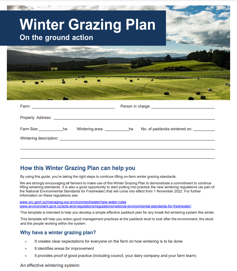
- An intensive winter grazing management plan template – but any template can be used
- A dedicated page on the intensive winter grazing regulations and another on good management practices
- A list of helpful sources and websites for grazing (scroll down to winter grazing)
- Consent process information here
Costs
A deposit of $1,900 will need to be paid with an application. We are aiming to process these as cost effectively as possible and, as with all other applications, will keep applicants up to date on costs. We are also aware of the time pressure with these applications and will be keeping a close eye on time frames.
We can help
Staff are more than happy to attend site visits, meetings or sessions to support people applying for consents. Requests for this, or any questions relating to IWG, can be sent to Consents Public Enquiries public.enquiries@orc.govt.nz. Or click here to book some time with us.
Water processing updates
We are actively processing water permit applications that require consent under Chapter 10 of the Water Plan. This includes those that have been lodged over the last few years and those applications being lodged now to replace consents that expire in upcoming years. New applications for replacement of surface water permits and those groundwater permits hydraulically connected to surface water can use Form 4C.
If you have new ‘replacement’ applications, you can request a Schedule 10A.4 data analysis via the Regulatory.Analysts@orc.govt.nz email address. If you copy in natasha.pritchard@orc.govt.nz, we will follow these requests up with the Data Team and ensure these reviews are completed so you can prepare your application.
What to include:
- Current consent number
- Water meter number
- Period of analysis – up to 30 June 2020 or include most recent data
- Use of water
- Any explanation of how water has been managed if there are multiple consents related to one meter, defined shareholders on the consent or if primary and supplementary water is taken through the same meter
Applications are ideally lodged 6 months before the expiry date of the current consent; therefore, the sooner such requests are made when preparing an application, the better.
The application will need to consider:
- Which rule is being applied under. An application that is not a controlled activity will need more details on historic use.
- Whether there are any retakes of water from water races or reservoirs.
- Whether there are any other activities that require consent – damming of water, discharges of water to water, or instream works.
- Whether the location of the point of take is the same as the current consent.
- Whether the consent holder is the same as the applicant.
Case Law update
In July, the Court of Appeal released a decision on Aotearoa Water Incorporated vs Canterbury Regional Council.
This case related to the granting of consents for water bottling, which had previously been heard in the High Court. The key focus of the decision was on whether separate take and use permits could be granted. In the decision, the Court found that the Council did not have the ability to grant resource consents limited to the use of water, separate from the permit to take the water. Reasoning for this was that the relevant conditions and rules in the plan indicated that take and use should be considered as one activity.
In Otago, rules in the Regional Plan Water, including those introduced via Plan Change 7, talk about the take and use of water and this is carried through to consents. With the regional sector we are considering the wider implications of this case.
Compliance update
New rules about the amount of synthetic nitrogen that can be applied to pastoral land of 20ha or more came into effect on 1 July 2021. The amount of synthetic nitrogen fertiliser must not exceed 190 kilograms of nitrogen per hectare per year, averaged across your grazed land area. To comply with these rules, Otago’s dairy farmers are required to submit their synthetic nitrogen use to ORC.
All Regional Councils are using the same systems for submission of this data.
Data can be submitted in 3 ways:
- Through HawkEye at https://www.hawkeye.farm/
- Through MyBallance at www.myballance.co.nz
- Via the N-Cap Webform at https://n-cap.teurukahika.nz
HawkEye and MyBallance are existing tools which have had functionality added to allow data inputs to be used for calculating the synthetic nitrogen use by farm land-use area.
The Regional Sector Webform (N-Cap) is a separate recording system that requires manual calculation of the same information. A calculation spreadsheet is available for download which guides farmers through how to create the required records.
We are asking all dairy farmers to complete their data submissions by the 23rd of October.
New nifty calculator
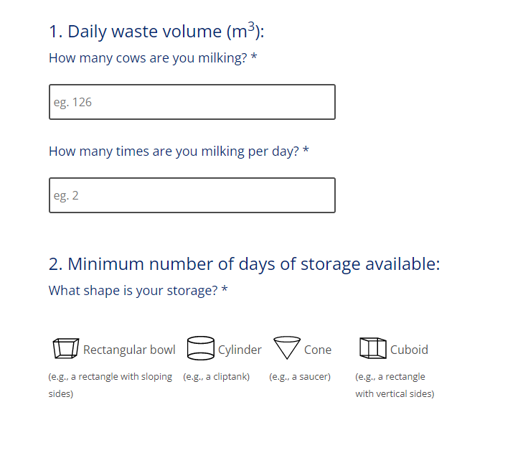
An online calculator has been launched to help farmers calculate how much storage they have on farm for their effluent. This calculator is for the method in schedule 19. It can be found here (scroll down).
We have been updating our water rules pages and the Good Practice page. We have also issued several media releases recently on a range of topics, which you can find here.
Staff profile
Natasha Pritchard, Principal Consents Planner

How long have you worked at ORC?
I have been with ORC since May 2008. I spent my first three weeks in a very cold Dunedin learning the ropes and then began operating from the Alexandra office. At that time, I was the only full-time consents officer in Central Otago. We now have six planning staff in the wider area. Communication with the Dunedin team was mostly by phone and emails, and we even regularly still used the fax machine. Digital technology has certainly helped in recent years!
What is your job at ORC?
As Principal Consents Planner, I support the consents team by helping them with challenging queries and by creating templates and procedures to ensure the smooth processing of consents. I am also a qualified decision-maker so assist with decisions on applications.
What do you like about working at ORC?
There is a wonderful sense of community within the Council and a willingness to support and help one another. The Council also has great flexible working policies, which were strengthened during COVID and enable productive work to be undertaken around family and other commitments.
What has been your most challenging experience so far?
I have had a few challenging work experiences. These typically relate to processing complex consent applications where there is disagreement on interpretation of planning documents, a lack of detail to understand effects or disagreement between the applicant, technical experts and/or interested parties on environmental effects. Support from the wider team, experts and following the consent process always helps with these experiences.
What’s something most people don’t know about your job or that you most enjoy?
I love the experiences I have had and people that I have met on this job. It is interesting to learn about activities in the region and to support applicants with their consent applications. I have seen some varied parts of our wonderful region during site visits; the most exhilarating being a helicopter ride around a Wānaka farm.
Next issue
The next issue of this newsletter will be in early 2023, but we will put out a special issue in advance of this if needed.
If you have questions about anything in this newsletter, please get in touch with us by emailing public.enquiries@orc.govt.nz or call 0800 474 082.


