
Regulatory update
Tēnā koutou katoa,
Welcome to this year’s June edition of ORC’s Regulatory Newsletter.
The Regulatory group includes the Consents, Compliance, Investigations, Harbourmaster and the Regulatory Systems and Data teams.
In this issue, we:
- Update you on the current situation of freshwater farm plans and intensive winter grazing (IWG)
- Share details on effluent workshops held this month
- Bring you up to speed on the new fast track process
- Report back on the success of the Queenstown Earthworks Field Day
- Highlight changes to dam safety regulations
- Remind you to submit your water abstraction data
- And tease some new resources coming soon …
From the Consents and Compliance teams
Freshwater farm plans
Regulations for freshwater farm plans are currently live in parts of Aotearoa New Zealand. However, the rollout across other regions is currently on hold while central government considers changes to the freshwater farm plan system to make it more cost effective and practical for farmers and growers.
Councils are collectively engaging with Government and industry on what improvements to the system could look like, keeping communities and outcomes at the heart of our efforts.
Once this engagement is complete later this year, central government will provide information on the shape of the changes to the freshwater plan system and what Council will then implement.
A meaningful freshwater farm plan system with consistency across the country and some regional influence will benefit freshwater outcomes and our reputation as world-class food producers.
With the rollout of freshwater farm plans on hold, we understand this is a time of uncertainty for rural communities and we are happy to answer any queries from farmers and growers as they come up.
You can reach out to our freshwater farm plans team at farmplans@orc.govt.nz or call us on 0800 474 082.
In the meantime, the catchment context challenges and values are available on the website for the North Otago FMU.

Regional Plan Water — Schedule 5B Assessment in Applications
Schedule 5B in the Regional Plan Water is the method for assessing bore interference for groundwater takes.
Information must be included in an application so that an assessment under Schedule 5B can be completed. This is because the assessment under this schedule is used as part of identifying if a party is affected or not under section 95E.
Intensive winter grazing (IWG)
The Government recently announced that intensive winter grazing (IWG) regulations will be repealed, which will be in place for winter 2025.
ORC wants farmers to continue to operate in line with their resource consents this winter, given the key focus of these was the grazing management plans, which people have already completed. Farmers who do not have a consent need to continue meeting the permitted criteria for the regulations and have a grazing management plan in place which will support good on-farm decisions around grazing.
For winter 2024, ORC’s compliance programme will continue, with a continued focus on education and level of risk assessment.
ORC is already working with primary industry groups, stakeholders, and the Ministry for the Environment.
We are proud of the work completed by farmers engaging with workshops, preparing management plans, following a pragmatic consent process and focusing on good management practice.
The ORC undertakes compliance flights every year to gain a bird’s eye view on land use in districts around the region to identify any potential risks to water quality. The first of ORC’s winter flyovers was scheduled for last week, with a focus on intensive winter grazing practices, forestry sites and mechanical disturbance in waterways.
Following the flyovers, staff assess the information and undertake site visits on any potential high-risk sites to confirm any findings and check compliance.
Effluent workshops
In June we ran dairy farmer effluent workshops in Weston, Milton and Tapanui, with advice on rules and consenting for effluent storage ponds and discharges to land.
The workshops aim was to provide consent and compliance advice on dairy effluent systems and offer guidance from industry experts. Speakers included staff from ORC’s Consents and Compliance teams and technical and best practice advice from industry experts and representatives.
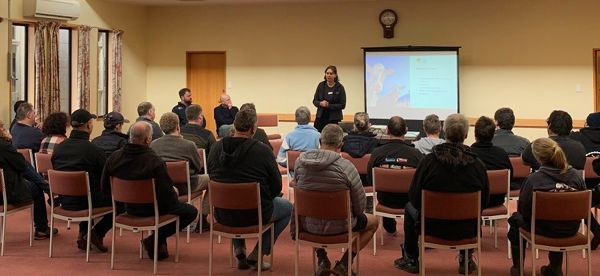
The rules for effluent storage and the discharge of effluent to land apply to several hundred farms around Otago.
Farmers need to be considering:
- the volume of effluent storage they have on their farm
- when they need to potentially install new storage facilities or have the resource consents in place to do so
Some farms may require new effluent infrastructure, which could include engaging engineers and planning for future modifications, replacement or enlargement.
During the past three years, there have been 1,002 dairy farm inspections. ORC’s Compliance staff completed 408 dairy farms inspections this year, compared with 317 for the same time last year.
Full compliance with rules rose from 61% a year ago to 66%, while those in the grade of “significant non-compliance” fell from 3% to 2% for the year.
Fast-track process
The Government released its Fast-track Approvals Bill (Fast-track Bill) on 7 March 2024. The stated objective of the Fast-track Bill is to reduce consenting costs and time frames to enable the efficient implementation of large-scale projects.
This Bill is currently in the parliamentary process. If you, or your clients, are interested in using the fast-track process, then please engage with ORC early in your thinking on your project.
To engage with ORC using this process, a pre-application form must be submitted, along with all relevant information for the proposal. The first 30 minutes of advice is provided free of charge and then cost recovered after that.
A group of representatives across ORC meet regularly to have oversight of all current applications and their status. You can find the pre-application form here: Request for Fast-Track Consent Pre-Application Advice.
Queenstown Earthworks Field Day
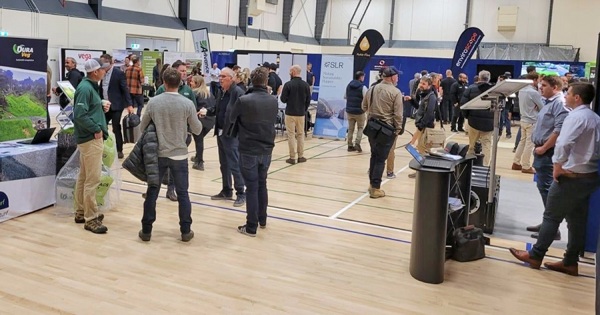
In collaboration with the International Erosion Control Association Australasia, ORC hosted an Earthworks Field Day in Queenstown on 10 April 2024.
The free event brought together industry professionals from around the country to hear from a range of presenters about some interesting projects they’ve worked on, and what they learned along the way.
There were diverse presentations on best practice and good networking with developers, consultants and contractors, with over 200 people attending the event.
The ORC Residential Earthworks Guide provides context to ORC residential earthworks provisions, consent information and on-going consent compliance requirements. This includes content required for Environmental Management Plans and Erosion and Sediment Control Plans necessary for most consents granted by the ORC.
Dam safety regulations
|
|
|
|
|
|
End of the water year
As the end of the water year swiftly approaches, all water abstraction data from dataloggers and manual records for the period of 1 July 2023 to 30 June 2024 must be submitted by 31 July 2024 to watermetering@orc.govt.nz, including the consent number in the email header.
While telemetry data is continuously received, we encourage you to take this opportunity to verify its accuracy through your data service provider portal. Ensuring the precision of your data is essential for regulatory compliance and effective water resource management.
From the Data team
Environmental data
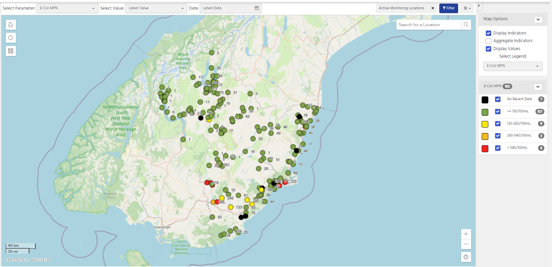
ORC’s Environmental Data Portal has come a long way in the last few months, with a number of new water quality parameters added.
If you're looking for data for consent applications, then we suggest checking out the portal on the link below: https://envdata.orc.govt.nz/AQWebPortal/DataEnvironmental Data Portal.
We also hold a range of data which doesn’t show on the portal, including data relating to specific consents.
If you can’t find what you need, just email watermetering@orc.govt.nz and we’ll check to see what we have on file.
Quick updates and new resources
Fee changes
There will be some changes to fees relating to regulatory services as outlined in the Long-Term Plan. These are:
Regulatory data:
- Most fixed fees are increasing for the first time in three years
- A change to coastal permits, moving away from invoicing every five years, to splitting the costs across five years with annual billing
- Changes to the compliance admin fee to introduce billing for subsequent consents
Compliance:
- Set fees for compliance audits for coastal structures, bore inspections and small on-site wastewater consents
Consents:
- Increases to deposit amounts
Across the board there have been no increases to the charge-out rates.
These details will be available online on our Fees and Charges web page as of 1 July 2024.
Resource management
Coming soon for resource management practitioners:
- Variation practice note
- Retrospective practice note
- Updated non-consumptive water take practice note
We are also in the process of updating all our consent application forms.
New website incoming
In another couple of weeks on Tuesday 9 July we will be launching ORC’s new website.
There have been significant search function updates, including improved navigation and an A-to-Z search to help users find information faster.
http://www.orc.govt.nz/orc.govt.nz
Consents enquiries?
Our Consent Enquiries team are a dedicated team of planners who offer advice on rules, plans and legislation for up to 30 minutes, free of charge.
We’ve recently changed our email address.
You can now reach us on consent.enquiries@orc.govt.nz (formerly public.enquiries) and you can also call us on tel:08004740820800 474 082.
Next issue
The next issue of this newsletter will be in late 2024, but we will put out a special issue in advance of this if needed.
You are receiving this newsletter as you regularly interact with the Regulatory Group. This newsletter is just one of the ways that we are looking at providing more information to you as a customer of the Council.
If you have questions about anything in this newsletter, please get in touch with us by emailing consent.enquiries@orc.govt.nz or call 0800 474 082.


