Regulatory update
Welcome to another edition of our newsletter from the Regulatory group. The Regulatory group includes the Consents, Compliance, Investigations, Harbourmaster and the Regulatory Systems and Data teams.
Keep reading to get the latest news from the Regulatory team at ORC, meet new staff who are here to help and get updates on changes to process and interpretations.
In this issue we:
- Share new information around freshwater farm plans
- Learn about the replacement for the Resource Management Act
- Bring you up to speed on the new National Policy Statement on Indigenous Biodiversity
- Make you aware of updates within the National Environmental Standards for Freshwater
- Link to new resources, including silage stack application forms
- Highlight a hub of handy information – the Farmer’s Guide
- And remind you to submit your water metering data
From the Consents and Compliance Teams
Freshwater Farm Plans
Freshwater farm plans were introduced as part of the Government’s Freshwater Package, introduced in 2020. The freshwater farm plan regulations require properties over a certain size to have a certified and audited freshwater farm plan in place and begin in Otago from 1 February 2024, starting with North Otago.
This order is shown below:
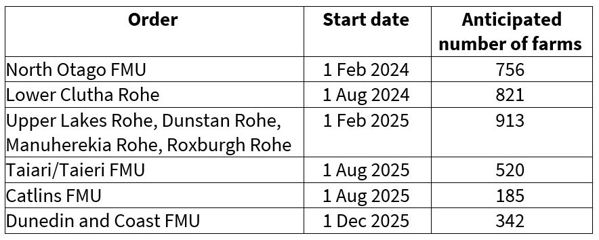
*Otago is divided into five Freshwater Management Units (FMUs).
An FMU is an area with a water body or multiple water bodies of a manageable size where freshwater objectives and limits will be set. Rohe means ‘area’ in te reo, and is used to define smaller distinct areas within larger FMUs.
Many of Otago’s farmers, industry professionals, growers, and catchment groups are leading the way in global farming practices, and ORC is keen to start working with communities to build on the great work already being done, including actions to support and enhance the health of our land and waterways.
ORC will have staff available to help support this implementation over the next couple of years, including workshops and one-on-one meetings with farmers to ensure they understand the process.
Current work underway includes:
- Development of the first catchment context
- Development of resources to support people with farm plans
- Scoping the regional training programme for the certifiers and auditors
- Writing a compliance and monitoring strategy
- Supporting implementation with a number of workshops planned in North Otago in October and November
ORC will soon be calling for expressions of interest from those looking to train as certifiers and auditors of freshwater farm plans in Otago, but in advance of this if you are interested, please email farmplans@orc.govt.nz.
Regular communications to industry groups, catchment groups, rural professionals, consultants, and other stakeholders will also start over the coming months. This may include specific meetings and will include email updates. If you would like to receive these updates, or be included in meetings, please email farmplans@orc.govt.nz.
More information:
Read the Order in Council confirming rollout dates for Otago.
ORC will also be providing more information as it is available through their Freshwater farm plans web page.
Natural and Built Environment Act
The Natural and Built Environment Act (NBEA) was enacted on 23 August 2023. This means it has changed from a Bill to an Act.
The Consents team have been busy working on an implementation package to deliver this information, which includes updates to our website, application forms (Form 1), and internal reports and conditions.
There is now a transition period between the existing Resource Management Act (RMA) and the new Natural and Built Environment Act (NBEA).
There are some changes to be aware of in terms of application processing:
- Some new freshwater-related resource consents under the RMA are subject to duration controls
- Replacement freshwater consents will only be publicly notified if the applicant requests it — council still can limit or non-notify
- Ability to decline applications based on compliance history
- A fast-track consenting process is available for specified applications
- Some compliance, monitoring and enforcement provisions are applied
- Some provisions relating to contaminated land and aquaculture are applied
Applications already in our system or received on or before the day of royal assent will not be affected by these new changes.
Under the NBEA, regions are required to develop their own Regional NBE Plan. ORC is yet to determine when we will start developing our own NBE Plan.
If you have any enquiries relating to this, please get in touch with our Consents Public Enquiries team at public.enquiries@orc.govt.nz.
National Policy Statement on Indigenous Biodiversity (NPS-IB)
The National Policy Statement on Indigenous Biodiversity (NPS-IB) came into force from 4 August 2023 and will be implemented over several years, using set criteria for councils to identify Significant Natural Areas (SNAs).
There is now a clear requirement to maintain indigenous biodiversity across Aotearoa New Zealand so that there is at least no overall loss after the commencement of the NPS.
The NPS-IB is applicable for activities that cause vegetation to be removed. This is relevant to vegetation removal from wetlands and also the earthworks provisions in section 14.5 of the Regional Plan: Water for Otago.
If these activities were to occur within an SNA, then consideration of the Regional Policy Statement and Regional Plan: Water policies, when updated, will be required.
We are updating our templates and processes to accord with the NPS-IB.

National Environmental Standards for Freshwater (NES-F) updates
Late last year, the National Environmental Standards for Freshwater (NES-F) was updated to include new activity types within wetlands.
A consenting pathway is now available for quarrying activities, landfills and clean fill areas, mineral mining (with some additional controls on coal mining) and some urban development.
The forms can be found here.
ORC has developed an online notification form to support the submission of this information to the ORC website here.
If you have any questions about whether you need consent or not, please contact Consents Public Enquiries at public.enquiries@orc.govt.nz.
New silage stack application form
We have recently developed a specific application form for applying to get consent for a silage stack. You can find it here.
A reminder that consent is required where permitted rules for discharging contaminants from silage production to land cannot be met (rule 7.6.14 of the Regional Plan: Waste for Otago).
These include:
- Any excavation is dug in a manner so as to avoid groundwater seepage into the pit
- The silage stack or pit is not within 100 metres horizontally of a well used to provide water for domestic purposes or drinking water for livestock
- Leachate from the silage stack or pit does not enter into any water body
- Any silage stack or pit established after 2 February 1996 is not within 50 metres horizontally of any river, lake, stream, pond, wetland or mean high watersprings
- Silage production is undertaken on production land
- The silage stack or pit is not located within 50 metres horizontally of a property boundary excluding road boundaries
- The silage stack or pit does not cause a nuisance and is not noxious, dangerous, offensive or objectionable beyond the boundaries of the property
If you have any questions about whether you need consent or not, please contact Consents Public Enquiries at public.enquiries@orc.govt.nz.
Farmer’s Guide
In case you missed it, we have a new hub of information — the Farmer’s Guide!
Farmers are faced with many rules and regulations relating to farming activities. The Farmer’s Guide on our website is a useful resource designed specifically to equip farmers with the information they may require.
This guide includes information on a range of activities, such as:
Staff are more than happy to attend site visits, meetings or sessions, or to answer questions about any activities and associated rules. To request any of these services, please contact Consents Public Enquiries at public.enquiries@orc.govt.nz.
Effluent workshops and other upcoming workshops
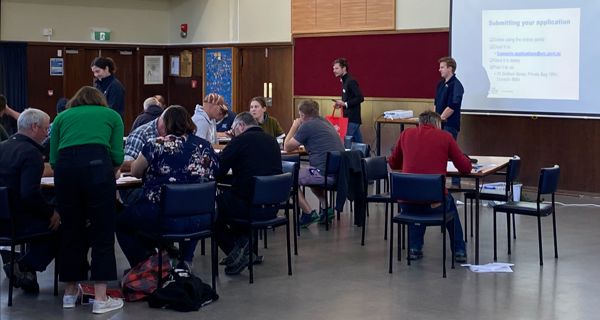
ORC has been running workshops around the region, with a focus on Intensive Winter Grazing and the new rules around effluent storage.
We are looking to host workshops in the near future on identifying wetlands and best practice for managing wetlands and consenting requirements. We will be sending out further details on these later in the year.
From the Data Team
Water metering data for 2022/23
Water metering data for the 2022/23 water year was due by 30 July 2023. Most consent holders have submitted their data, but we strongly encourage anyone who hasn’t yet to submit this information as soon as possible to WaterMetering@orc.govt.nz.
If telemetry is not already required under a resource consent, then the following dates apply:
- If your permit allows 20 or more litres of water per second, telemetry should have been installed from 3 September 2022.
- If your permit allows 10 to 20 litres of water per second, telemetry should be installed from 3 September 2024.
- And if your permit allows 5 to 10 litres of water per second, telemetry should be installed from 3 September 2026.
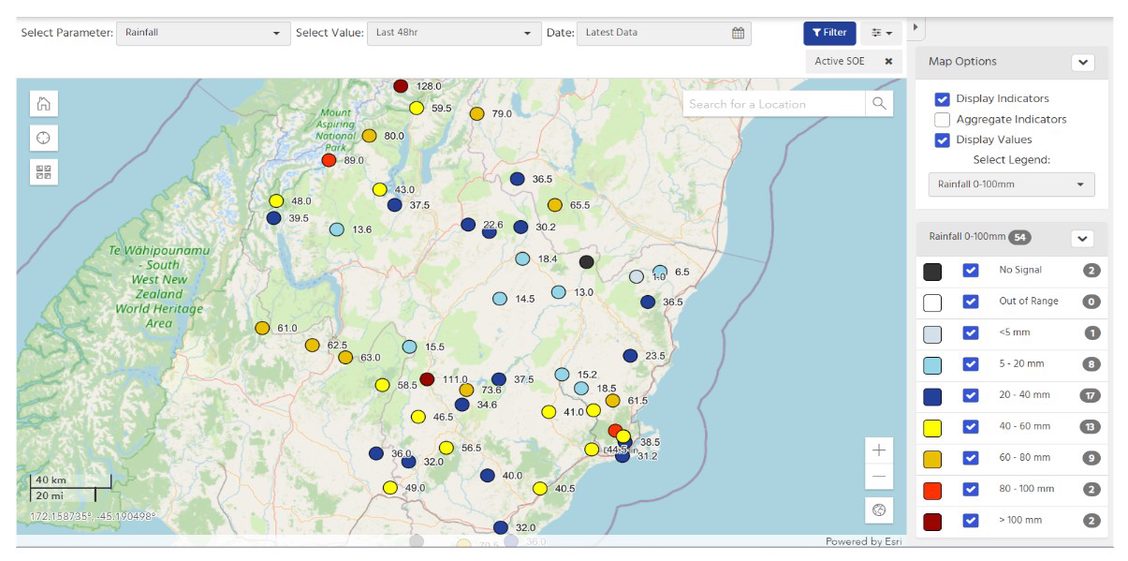
Rainfall data on ORC’s Environmental Data Portal
Next Issue
The next issue of this newsletter will be in early 2024, but we will put out a special issue in advance of this if needed.
You are receiving this newsletter as you regularly interact with the Regulatory Group. This newsletter is just one of the ways that we are looking at providing more information to you as a customer of the Council.
If you have questions about anything in this newsletter, please get in touch with us by emailing public.enquiries@orc.govt.nz or call 0800 474 082.
`


